
Israel Closes Al-Aqsa on Al-Quds Day; Worshippers Pray Outside
Key Takeaways
- Israeli authorities closed Al-Aqsa compound on al-Quds Day.
- Muslim worshippers prayed outside Jerusalem's Al-Aqsa due to the closure.
- Coverage situates the closure amid Israel–Iran tensions.
Al-Aqsa Closure
Israeli authorities closed Jerusalem's Al-Aqsa compound on Al-Quds Day.
“BREAKING Trump says US bombed Iranian military sites on ‘crown jewel’ Kharg IslandUS president warns Iran that Kharg Island oil facilities could be next'Huge blasts' rock central Tehran after thousands rally in defiance of US-Israel Click to pause breaking news tickerpause-square-backgroundClose Breaking News Tickerclose Toggle Play Worshippers pray outside Al-Aqsa amid closure on al-Quds Day Muslim worshippers prayed in the streets outside Jerusalem’s Al-Aqsa compound as Israeli authorities kept holy sites closed amid the Israel–Iran conflict”
Muslim worshippers were forced to pray outside the holy site.
The closure occurred amid the ongoing Gaza genocide.
The decision came during heightened tensions with Iran.
Arab and Islamic countries have widely condemned the closure.
The Israeli restriction affects one of Islam's holiest sites.
This represents an escalation in religious restrictions.
The restrictions were implemented during a sensitive religious period.
Street Prayers
Thousands of Muslim worshippers prayed in the streets outside Al-Aqsa.
They responded to the Israeli closure by demonstrating religious commitment.
Worshippers showed determination to maintain connection to the holy site.
Their presence underscores the deep religious significance of Al-Aqsa.
Street prayers became necessary due to Israeli restrictions.
Israeli authorities maintained the closure despite religious significance.
This occurred amid the broader context of the Gaza genocide.
The situation reflects ongoing regional tensions.
Ramadan Restrictions
Israeli authorities implemented Al-Aqsa closure during Ramadan.
“✕ HOME NEWS SPORTS SHOWBIZ AFRICA WORLD BUSINESS OPINIONS POLITICS LIFESTYLE * HEALTH Close the sidebar Home › ALJazeera 13”
Ramadan is a month of heightened religious significance for Muslims worldwide.
The restrictions have left the mosque largely empty.
Normal worship practices have been disrupted for Palestinians.
Muslims from around the world are affected by the restrictions.
They travel to Jerusalem for this sacred period.
The timing represents an escalation of Israeli restrictions.
This affects religious freedom and access to holy sites.
International Condemnation
The Israeli closure has drawn widespread condemnation.
Arab and Islamic countries have criticized the restrictions.
They view this as part of broader Israeli aggression.
The aggression targets Palestinian religious and cultural sites.
International condemnation shows growing concern about Israeli policies.
These policies systematically restrict Palestinian access to holy sites.
Israel expands Jewish-only settlements in occupied East Jerusalem.
The Al-Quds Day closure coincides with the Gaza genocide.
It also reflects regional tensions with Iran.
Religious Freedom
The Israeli closure represents a significant escalation.
Israel systematically restricts Palestinian religious freedom.
Access to holy sites is being controlled by Israeli authorities.
The closure occurred during the ongoing Gaza genocide.
It reflects Israel's broader strategy in occupied territories.
Israel controls Palestinian life in Jerusalem.
Worshippers praying outside demonstrates Palestinian resilience.
They show commitment to religious and cultural heritage.
This continues despite Israeli attempts to erase their presence.
More on Gaza Genocide
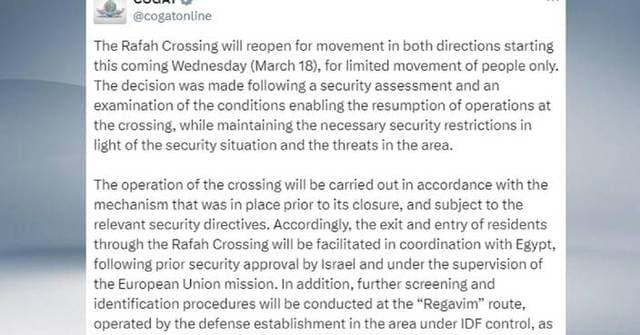
Israel to Partially Reopen Rafah Crossing for Limited Gaza Travel
13 sources compared

Israel Fires on Family Car in Occupied West Bank, Killing Four
14 sources compared

UEFA Cancels Finalissima as Argentina Rejects Alternatives Amid Middle East War
11 sources compared

Israel Fired on Family Car in West Bank, Killing Four, Including Two Children
15 sources compared