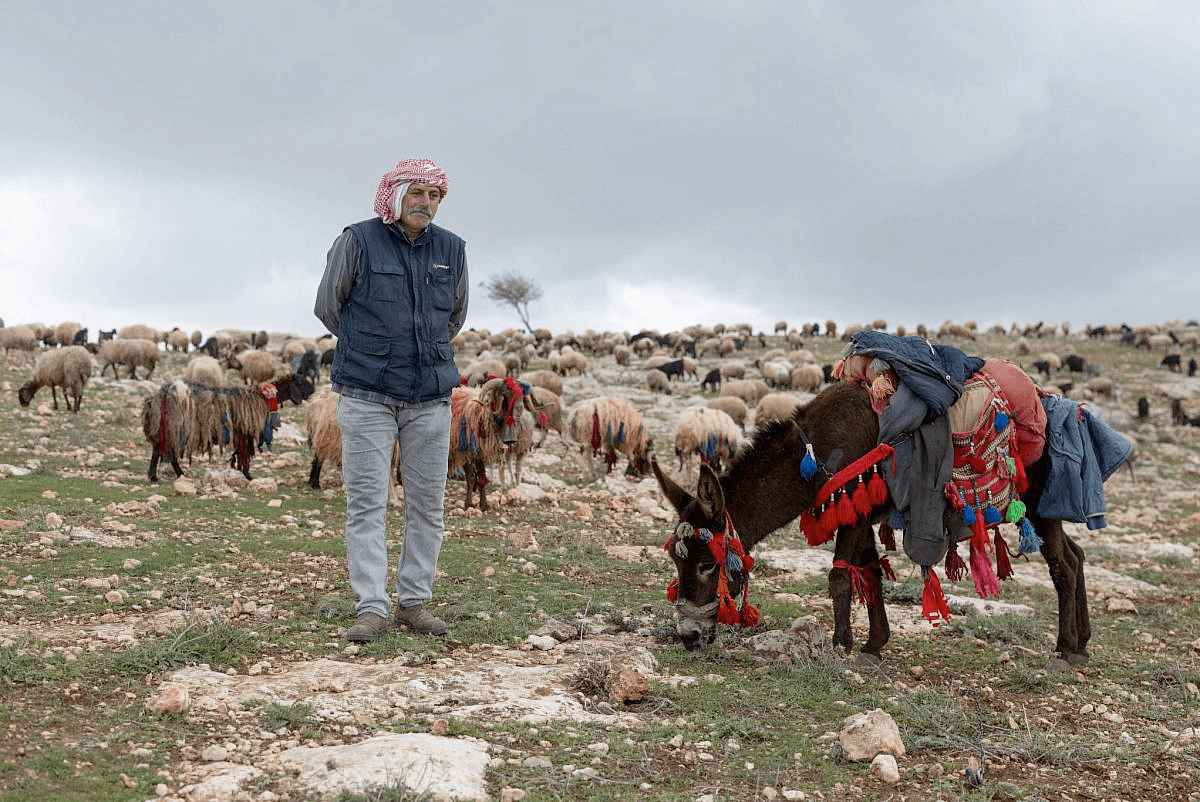
Israel Demolishes Al-Hadidiya Homes Ahead of Netanyahu’s Jordan Valley Annexation Plan
Key Takeaways
- Israel advances barrier in Jordan Valley to isolate it and enable annexation.
- Palestinian communities face evacuation orders and land seizures ahead of annexation plans.
- Demolition orders target Jordan Valley homes; some are contested or halted by courts.
Jordan Valley expulsions
A few days before Prime Minister Benjamin Netanyahu unveils Israel's plan to annex the strategic Jordan Valley, Israel is conducting a campaign to move Palestinian communities off lands it intends to acquire in northern the West Bank, including the rural community of Al-Hadidiya.
“The army is issuing evacuation orders and seizing land to prepare the construction of a massive barrier, part of a broader project aimed at annexing the Palestinian 'granary'”
In Al-Hadidiya, Omar Besharat said Israeli military jeeps arrived at six o'clock in the morning and soldiers told his family to gather belongings and leave without granting a permit, after he said they were not interested in a permit he said they had already filed for.
In less than an hour, Omar's family home was demolished, and five other buildings in the village of Al-Hadidiya were razed, described as the fifth time since 1982 that his house had been demolished by the army.
The article says bulldozing houses is only one tactic, with olive trees uprooted, wheat fields burned, and cisterns demolished, while access to water and sometimes electricity was made impossible.
It also says the uncertainty over demolition timing is deliberate, with residents knowing their house will be destroyed once a demolition order is given but having no idea when, and that the last time Omar's house was demolished was October 2018.
Barrier and isolation
The army is issuing evacuation orders and seizing land to prepare the construction of a massive barrier in the Jordan Valley, described as part of a broader project aimed at annexing the Palestinian 'granary'.
Tawfiq Bani Odeh, a resident of the Palestinian village of Atuf, said, "This mountain is the only place where I can breathe, the only place where I am allowed to pasture my sheep," as he travels daily to Mount Tammun with his herd of several hundred sheep.

The article says Major General Avi Bluth, head of the Israeli Army's Central Command, signed nine land-seizure orders for the construction of a new barrier crossing Mount Tammun, delineating a section from the Tayasir checkpoint to Hamra of what will eventually become a 300-mile barrier from the occupied Golan to the Red Sea.
It adds that the official objective of the project, named 'Crimson Thread', is to prevent weapon smuggling from the eastern border of the West Bank with Jordan and to combat terrorism, and quotes an Israeli army spokesperson saying, "The lands of the Mount Tammun region are, for the most part, state lands."
A complaint filed by several local councils and more than 100 residents with the Israeli High Court is described as arguing the barrier will separate the Jordan Valley from the rest of the West Bank and deprive Palestinians of about 50,000 dunams of their lands.
Court orders and displacement
In the northern Jordan Valley, the Colonization and Wall Resistance Commission and Tubas Governorate secured precautionary court orders freezing Israeli demolition orders targeting residential and educational structures, according to WAFA.
“Photo: Abdullah Bisharat, head of the Atouf local council, one of the villages that will be affected, standing on the planned route of the new wall with the Israeli demolition orders © Zena Al Tahhan Atouf, West Bank — In the village of Atouf, located in the Jordan Valley, Palestinian farmers load ladders, fences, and other agricultural equipment into their pickup, preparing to leave their lands”
Mu'taz Bsharat, the official in charge of the settlement file in Tubas Governorate, said the court orders suspend demolition orders targeting several residential structures and livestock shelters belonging to four Palestinian families in Khirbet Makhoul, and also suspend a demolition order against a school in the village of Kardala.
The article frames the broader barrier project as threatening farmers’ access to land and services, describing how in Atouf Israeli army digging began on March 4, 2026, to build a 22-kilometer-long and 50-meter-wide barrier and a road connecting the Tayyasir military checkpoint near Tubas to Ein Shibli near Nablus.
It quotes Yahya Bisharat saying, "I invested 150,000 NIS [$48,800] to plant these peas," and describes farmers leaving after soldiers and settlers destroyed water infrastructure, with the article saying the problem is not the price of water but having no means to transport it.
The same account says Dror Etkes estimates the army issued nine seizure orders confiscating 1,160 dunams (287 acres) of land in Atouf for unspecified "security" reasons, and that even if openings could be created, the wall erected in 2002 and the army’s control of opening and closing times would remain obstacles.
More on Gaza Genocide
Israeli Raids Injure Palestinian, Arrest Two in Hizma and Hebron West Bank
16 sources compared
Israeli Prosecutors Charge Six Settlers With Terror Offenses After Deir Dibwan Mosque Arson
10 sources compared

Israeli Forces Kill Mustafa Taha Mustafa Al-Khatib and Mohammed Nazem Zayed in West Bank
10 sources compared

Zohran Mamdani-Backed Candidates Sweep New York Democratic House Primaries
16 sources compared