Israel Kills 29 in Lebanon as Attacks Widen, Medical Staff Among Victims
Key Takeaways
- Israeli airstrikes hit multiple areas across Lebanon.
- Casualty tallies differ: 19 civilians vs 29 killed.
- Conflict expanded since March 2 with ongoing Israeli attacks.
Attack Escalation
Israeli airstrikes across Lebanon have resulted in at least 29 deaths since early Saturday, according to Lebanese authorities.
“The intensity of the confrontation on the Lebanon-Israel front escalated in the early hours of Saturday, with exchanges of fire between Hezbollah and the Israeli army, in parallel with Israeli airstrikes that hit several areas in Lebanon, as diplomatic sources spoke of Israel's intention to continue its military operations”
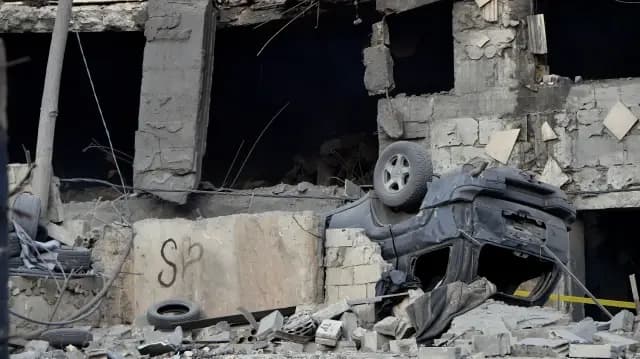
The strikes have targeted multiple residential areas and civilian infrastructure, causing widespread casualties and destruction.

Lebanese authorities reported that Israel's expanded attacks since March 2 have killed a total of 826 people, injured 2,009, and displaced 831,822 individuals.
This indicates a severe humanitarian crisis unfolding in the region.
The intensified Israeli campaign comes amid heightened regional tensions following the assassination of Iranian Supreme Leader Ali Khamenei in Tehran.
The subsequent U.S.-Israeli military campaign against Iran began on February 28.
Civilian Victims
The Israeli airstrikes have specifically targeted civilian populations and medical facilities, resulting in multiple family casualties and the deaths of healthcare workers.
In the town of Mefdoun in southern Lebanon, an airstrike killed five members of one family, including two children.

In the Nabaa area of Beirut, one person was killed and four others injured when an apartment was targeted.
Particularly devastating was the attack on a primary healthcare center in Burj Qalaouiyah in the Bint Jbeil district.
Twelve medical personnel including doctors, paramedics, and nurses were killed in this attack.
Additional strikes in Haret Saida claimed four lives, while another attack in the Al-Rahibat neighborhood resulted in seven more deaths.
These casualties were reported by Lebanese health officials and news agencies.
Conflict Context
The escalation of violence in Lebanon follows Hezbollah's decision to target Israeli military sites on March 2.
“29 killed in Israeli airstrikes on Lebanon since early Saturday Israel’s expanded attacks in Lebanon and killed 826 since March 2, according to authorities ISTANBUL At least 29 people have been killed in separate Israeli airstrikes across Lebanon, including five members of a family and 12 medical personnel, since early Saturday, according to Lebanese authorities”
Hezbollah stated this was a direct response to the assassination of Iranian Supreme Leader Ali Khamenei in Tehran.
The attack was also in response to Israel's ongoing attacks on Lebanon despite a ceasefire agreement reached in November 2024.
According to Lebanese authorities, Israel expanded its military campaign the same day with airstrikes on southern suburbs of Beirut and areas in southern and eastern Lebanon.
The situation further intensified on March 3 when Israel launched a limited ground incursion into southern Lebanon.
This created a complex multi-front conflict involving joint U.S.-Israeli military operations against Iran.
The conflict also involves direct hostilities with Hezbollah forces.
Regional Expansion
Israeli military intentions suggest that the conflict in Lebanon may continue beyond the current campaign against Iran.
Diplomatic sources indicate plans for sustained military operations in Lebanon.
According to Haaretz, a diplomatic source stated that Israel intends to continue the war in Lebanon even after completing its military campaign against Iran.
This potentially signals a significant widening of the regional confrontation.
This development raises concerns about further escalation and humanitarian impact in Lebanon.
Lebanon has already suffered substantial casualties and displacement.
The deliberate targeting of medical facilities and civilian residential areas has drawn international attention and condemnation.
This is particularly concerning given the fragile healthcare infrastructure in the region following years of conflict and economic crisis.
Humanitarian Crisis
The ongoing Israeli military campaign has created a severe humanitarian crisis in Lebanon.
“The Israeli army had warned earlier on Saturday of a possible targeting of ambulances and medical facilities in Lebanon, saying Hezbollah uses them for military purposes illegally, and the party denied those charges”
Hundreds of thousands of civilians have been forced to flee their homes amid escalating violence.
Lebanese authorities report that over 831,000 people have been displaced since March 2.
This adds to the existing challenges facing Lebanon's fragile infrastructure and social services.
The destruction of medical facilities and deaths of healthcare workers have compromised the country's ability to provide essential services.
This is particularly concerning in conflict-affected areas.
Rescue teams continue to search for people trapped under rubble in various locations.
International humanitarian organizations express growing concern about the deteriorating situation.
There is potential for even greater civilian casualties as the conflict shows no signs of de-escalation.