Israel Kills Iranian Intelligence Minister Esmail Khatib
Key Takeaways
- Israel killed Iranian Intelligence Minister Esmail Khatib in Tehran overnight strike.
- Third senior Iranian official killed in about 24 hours amid leadership-targeting campaign.
- Iran pledged retaliation; regional escalation included Beirut strikes and offshore gas-field attacks.
Assassination Confirmed
Israel killed Iranian Intelligence Minister Esmail Khatib in an overnight airstrike Wednesday, marking the third high-profile assassination of Iranian officials in just two days.
“28, some family members of the officials, accompanying personnel, and multiple members of the military and the Basij forces”
Israeli Defense Minister Israel Katz confirmed the elimination of Khatib, stating that 'significant surprises are expected throughout this day on all fronts,' while Prime Minister Benjamin Netanyahu had authorized the military to target senior Iranian officials without requiring additional political approval.

The strike came hours after Iran held funeral ceremonies for previously killed officials Ali Larijani and Gholamreza Soleimani.
While Israel immediately declared success, Iran initially did not confirm Khatib's death, though Iranian President Masoud Pezeshkian later announced the 'cowardly assassination of my dear colleagues,' leaving officials 'heartbroken.'
The coordinated attacks demonstrate Israel's sustained campaign to decapitate Iran's leadership structure amid the ongoing regional conflict that began with the February 28 US-Israeli attack on Iran.
Khatib's Background
Esmail Khatib was a highly influential figure within Iran's security apparatus, described as having 'ticked every box' in Iran's political and religious hierarchy.
A senior cleric with the prestigious title 'Proof of Islam,' one of the highest religious titles in the country, Khatib had decades of experience in intelligence circles after studying under the late Supreme Leader Ali Khamenei at the influential seminary in Qom.

The US Treasury had sanctioned Khatib in 2022, accusing him of directing 'several networks of cyber threat actors involved in cyber espionage and ransomware attacks in support of Iran's political goals,' including attacks on Albanian government websites.
Israeli military officials described him as having been 'a trusted figure close to Iran's new supreme leader, Mojtaba Khamenei,' and claimed he played a significant role in 'directing arrests and killings of protesters and in shaping the regime's situational assessments during recent internal protests in Iran.'
His background as both a religious scholar and intelligence operator made him particularly valuable to Iran's leadership structure.
Leadership Decapitation
The killing of Khatib represents the intensification of Israel's systematic campaign to decapitate Iran's leadership, which began with the February 28 US-Israeli attack that killed Supreme Leader Ayatollah Ali Khamenei and approximately 40 other officials.
“Nearly three weeks into the conflict, there is no sign of de-escalation”
Israeli officials have signaled that such strikes will continue, with Defense Minister Katz stating that 'Israel's policy is clear and unequivocal: no one in Iran has immunity — everyone is a target.'
The pattern of assassinations follows decades of Israeli operations against adversaries, including Hamas leaders Yahya Sinwar and Ismail Haniyeh, Hezbollah leader Hassan Nasrallah, and former Houthi Prime Minister Ahmed Rahawi.
Israeli military analysts have expressed confidence in their intelligence capabilities, with sources claiming that Israel retains 'detailed intelligence on the movements of Iran's leadership inside Tehran, and is able to act on it, leveraging near-total control of Iranian airspace alongside the US to strike with apparent precision.'
This strategy aims to destabilize Iran's political and military establishment at a moment of acute crisis.
Iranian Retaliation
Iran responded swiftly to the assassination campaign, launching missile attacks against Israel that killed two people near Tel Aviv and struck multiple locations including what appeared to be cluster munitions over central Israel.
Iranian Supreme Leader Mojtaba Khamenei vowed revenge in a written statement, declaring that 'All blood has its price that the criminal murderers of the martyrs must pay soon.'

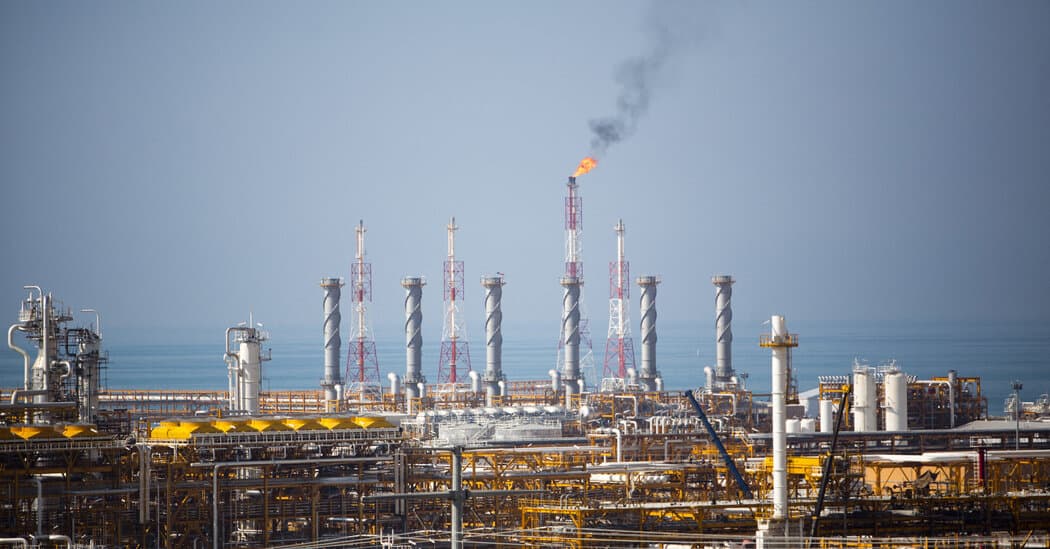
Iran also intensified attacks on Persian Gulf energy infrastructure, targeting facilities in Saudi Arabia, Kuwait, Bahrain, Qatar and the United Arab Emirates.
The Iranian military threatened to 'respond with force' against fuel, energy and gas infrastructure in what it called 'the aggressor country.'
These attacks have contributed to a surge in global oil prices, with Brent crude rising nearly 50% since the war began, as Iran effectively closed the Strait of Hormuz through which one-fifth of the world's oil typically passes.
Global Response
The international community has reacted with concern to the escalating violence and its economic consequences.
“Live Updates: A rare statement from Iran’s supreme leader signals retaliation over Larijani’s killing Major developments we’re following: - The Israeli military killed Iranian Intelligence Minister Esmail Khatib, the latest in a series of high-profile deaths of Iranian leaders that have worked to destabilize the nation’s institutions and industry”
Turkey condemned Israel's political assassinations as 'truly illegal activities outside the normal laws of war,' while Germany expressed reservations about the conflict, with Chancellor Friedrich Merz stating that there is 'still no convincing concept for how this operation could success'.

France's special envoy for Lebanon argued that it is 'unreasonable to expect Lebanon to disarm Hezbollah amid bombing,' noting that Israel previously failed to eradicate Hezbollah's military capacity during its long occupation of Lebanon.
The International Atomic Energy Agency reported that the Bushehr nuclear facility was hit by a drone but suffered no damage, with Director General Rafael Grossi repeatedly calling for 'maximum restraint during the conflict to prevent risk of a nuclear accident.'
Meanwhile, US President Donald Trump suggested on social media that the US might leave security of the Strait of Hormuz to other countries that use it, while simultaneously offering a $10 million reward for information about Iran's new supreme leader and other top officials.
More on Iran

Israel Kills Iran's Intelligence Minister Esmail Khatib
31 sources compared

Israel Kills Ali Larijani and Gen. Gholam Reza Soleimani in Overnight Strikes
31 sources compared

Trump Waives Jones Act for 60 Days to Relieve Oil Price Surge Amid Iran War
10 sources compared

President Trump waives Jones Act to ease fuel costs amid US-Israel war against Iran.
10 sources compared