
Israel Kills Iran’s Supreme Leader Ayatollah Ali Khamenei; Reports Conflict Over Succession
Key Takeaways
- Iran's supreme leader died.
- Iranian clerics convened to choose his successor.
- His son is a leading candidate to succeed him.
Khamenei airstrike reports
Multiple news reports say an airstrike has reportedly killed Iran’s Supreme Leader Ayatollah Ali Khamenei and members of his family, a development that sources say has triggered national mourning and debate about succession.
“Iran’s Supreme Leader Ayatollah Ali Khamenei, who led the Islamic Republic since 1989, is dead at 86 Iran’s Supreme Leader Ayatollah Ali Khamenei, who led the Islamic Republic since 1989, is dead at 86 DUBAI, United Arab Emirates (AP) — Ayatollah Ali Khamenei, who assembled theocratic power in Iran over the decades as its top leader and sought to turn it into a regional powerhouse, bringing it into confrontation with Israel and the United States over its nuclear program while crushing democracy protests, has been killed in U”
The Associated Press reports that U.S. President Donald Trump, as he ordered a Saturday bombing, urged Iranians to "take over your government," saying it might be their only chance for generations.
The Associated Press also reports that "the strike reportedly killed members of Supreme Leader Ali Khamenei’s family — a daughter, son‑in‑law, a grandchild and a daughter‑in‑law, according to the semiofficial Fars news agency — and Iran’s government declared 40 days of mourning and a seven‑day nationwide holiday to commemorate Khamenei’s death."
Devdiscourse likewise notes the report that "his father, Ayatollah Ali Khamenei, was killed in an Israeli airstrike," wording that differs from other accounts and introduces an inconsistency in reference.
NPR frames the story by saying "NPR reports experts debating who will succeed Ayatollah Khamenei and what that would mean for Iran," underscoring the immediate focus on succession.
Khamenei's power and succession
The AP review outlines Khamenei's rise and rule, saying he was 'born in Mashhad, trained under Khomeini, active in the anti-shah movement, president in 1981 and elevated to supreme leader after Khomeini's death despite relatively modest clerical credentials.'
The reporting emphasizes Khamenei's decades-long consolidation of power and the institutional weight he leaves behind.

AP says 'Over more than three decades he built a sprawling clerical-bureaucratic apparatus, strengthened the IRGC's economic and political role, and used appointed networks to limit civilian authority.'
NPR adds that 'Khamenei himself was once seen as pliable but became a highly powerful and shrewd ruler.'
Devdiscourse highlights Mojtaba's 'deep entrenchment in Iran's power networks and his sway over military and nuclear affairs,' and links the succession question to the structures Khamenei shaped.
Iran succession contest
Analysts and outlets describe a contested succession with Mojtaba Khamenei portrayed as a leading but opaque contender and the IRGC positioned as a decisive political force.
“Iranian clerics convene to choose Ayatollah successor As clerics convene to replace Iran's supreme leader Ayatollah Ali Khamenei after his death in an Israeli strike, Iran faces a pivotal choice that could either cement hardline continuity under his son or usher in a fundamentally transformed regime”
NPR reports that "Karim Ostovar says naming Mojtaba Khamenei would signal a desire for continuity, and that most likely successors would be 'status quo' candidates," while the same piece quotes Ali Vaez saying the system is unstable: "war, mass protests and a damaged economy mean the 'Second Republic' is effectively over and any durable legitimacy would require deep structural change."
Jonathan Panikoff warns that "a new supreme leader will probably be less powerful than Khamenei because the Islamic Revolutionary Guard Corps have grown into a dominant force; he warns Iran could end up run by senior Guards officials with a religious leader serving mainly as a figurehead."
Devdiscourse similarly profiles Mojtaba as "a secretive but influential potential successor," and the AP coverage underscores the IRGC's institutional growth, noting that Khamenei "strengthened the IRGC's economic and political role."
Khamenei removal implications
Observers warn that Khamenei’s removal — if reports are accurate — would carry major regional and security implications, given Iran’s proxy networks and advancing nuclear program.
The AP notes that "Under Khamenei Iran pivoted from conventional forces to a proxy strategy — the 'Axis of Resistance' — backing groups such as Hezbollah, the Houthis and militias in Iraq and Syria."
The AP also says "Iran’s nuclear program has advanced toward near‑weapons‑grade levels, underscoring the broader security stakes as the region faces renewed instability."
Devdiscourse stresses that "the world is watching his next moves amid the wider regional conflict."
NPR’s analysis of succession scenarios includes warnings about domestic political instability that could follow.
Vaez says the system is deeply strained and legitimacy would require structural change.
More on Iran
US Bombs Military Sites on Iran's Kharg Island
10 sources compared
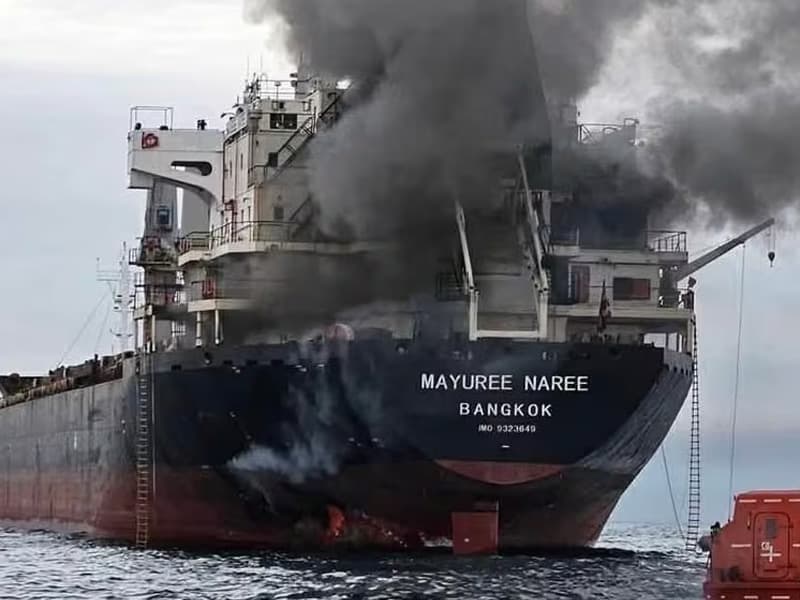
Iran Closes Strait of Hormuz, Chokes Global Shipping and Pushes U.S. Retail Prices Higher
41 sources compared
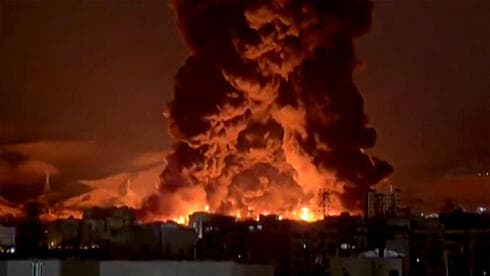
President Donald Trump Orders US Bombing of Iran's Kharg Island, Says Targets 'Totally Obliterated'
18 sources compared
US obliterates military targets on Iran’s Kharg Island, Trump warns
13 sources compared