
Israel-Lebanon Talks In Washington Stall Over Hezbollah-Free Pilot Zones, Ceasefire Extension
Key Takeaways
- Washington talks discuss a US-backed pilot zones plan to transfer southern Lebanon to Lebanese army
- Ceasefire extension on the table; negotiations described as difficult and stalled
- Hezbollah rejects renewed ceasefire and denounces Israeli violations
Pilot zones and ceasefire
The fifth round of negotiations between Israel and Lebanon opened on Tuesday in Washington, with talks centered on creating “pilot areas” where Israeli forces would withdraw so the Lebanese army could prove its ability to disarm Hezbollah.
Hezbollah said the IDF “violated” the ceasefire, claiming soldiers opened fire with “automatic weapons toward a group of civilians” near Nabatiya at approximately 11:30 a.m., and it said two civilians were killed and two more were injured.

Israel’s Ambassador to the United States Leiter said the talks were heading toward “a train wreck,” warning that a ceasefire agreement conditioned on Hezbollah withdrawing northward raised the question of whether it was still binding.
Lebanese President Joseph Aoun told a cabinet meeting that his government would “accept nothing less than the end of the Israeli occupation in southern Lebanon,” as the talks unfolded in Washington.
Naharnet later said Lebanon and Israel reportedly agreed to extend the ceasefire after a second day of direct negotiations in Washington, with sources telling Al-Arabiya that an agreement had been reached on creating military “pilot zones” in south Lebanon.
Rubio, Aoun, and Israel Katz
U.S. Secretary of State Marco Rubio said the Washington talks included the creation of pilot zones where the Lebanese Armed Forces would take control and secure territory before moving on to additional areas, describing the plan as intended to make areas “free of Hezbollah.”
Rubio said, “The more of that area that the Lebanese armed forces is able to secure, the less of it is in Hezbollah’s control, the less Israel will be in Lebanon,” framing the pilot-zone process as a step-by-step reduction of Hezbollah control.

In parallel, Lebanese officials described the negotiations as “difficult and complex,” with The New Arab reporting that Lebanese negotiators insisted Israeli forces must withdraw from areas where the Lebanese army intends to deploy and implement its plan to place all weapons under state authority.
Defense Minister Israel Katz said Israel would not withdraw from southern Lebanon “even if Washington asks us to do so,” reinforcing Israel’s position that it seeks to maintain a military presence in certain areas and along routes it considers strategically important.
The New Arab reported that a senior Israeli official told Channel 13 that Israel had recently occupied additional areas “for the sake of negotiations,” adding that any withdrawal would be limited and intended to give the United States an opportunity to test the pilot zones plan.
What comes next in the talks
As the fifth round continued, L’Orient Today reported that disagreements emerged over where the “pilot zones” would begin, with Lebanon accusing Israel of wanting the process to start in areas it does not actually occupy.
L’Orient Today said the Lebanese military delegation insisted that implementation of the “pilot zones” begin in areas occupied by Israel south of the Litani River, warning that if conditions were not met, the army’s deployment could create internal tensions.
Hezbollah refused to disarm north of the Litani and rejected the principle of “pilot zones,” while Parliament Speaker Nabih Berri called for expanding the zones at the district level, according to L’Orient Today.
The Jerusalem Post reported that Lebanese media said negotiators were discussing returning the remains of missing Israel Air Force navigator Ron Arad in exchange for Lebanese prisoners, while Israeli officials told the Post they were unaware of the development and had no new information on Arad.
France 24 reported that Israel and Lebanon were discussing a US-backed pilot project under which Israeli troops would hand back control over some territory in southern Lebanon to the Lebanese Armed Forces, with the Lebanese troops undergoing US training and vetting and Israel maintaining a buffer zone along the border.
More on Lebanon

Israeli Drone Strike Kills At Least Two Near Kfar Reman As Lebanon-Israel Talks Continue In Washington
13 sources compared

Israeli Drone Strike Kills Two Near Kfar Reman As Israel Targets Yater Outskirts
12 sources compared

Israeli Troops Kill Two Men Near Nabatieh Al-Fawqa After Ceasefire Lull
11 sources compared
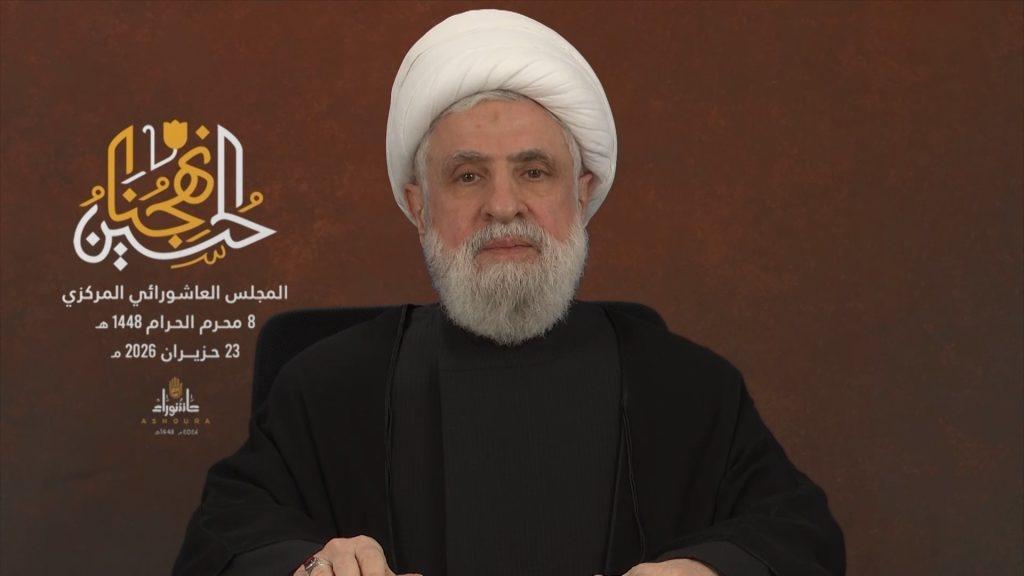
Hezbollah Chief Naim Qassem Demands Israel Fully Withdraw From All Lebanese Territory
13 sources compared