Rights Groups Say Lebanon-Israel Framework Agreement Signed in Washington Threatens War Crimes Victims
Rights groups warn the framework betrays war crimes victims' access to justice. Clause 13 restricts victims' rights to pursue international justice.
Beat 1 · The verdict
Rights groups frame Clause 13 as justice-blocking; other legal analysis limits effects to Lebanon’s acts.
Full story
Deal signed, justice fears
A Lebanon-Israel framework agreement signed in Washington on June 26 has drawn criticism from six prominent human rights and media freedom organisations, which said it “threatens to betray the victims of war crimes” in Lebanon.
“threatens to betray the victims of war crimes”
The groups warned that parts of the text “appear to be aimed at preventing victims of serious international crimes from seeking justice before international forums,” and they singled out clauses 3 and 13 as particularly concerning.

They said Clause 3 would “prevent Lebanon and Israel from having recourse to international courts, including the International Criminal Court and the International Court of Justice,” and they argued it also conditions residents’ return on “successful disarmament of non-state armed groups and dismantlement of their infrastructure.”
The organisations said the agreement comes after “months of hostilities resulting in immense civilian harm,” and they pointed to deaths and displacement, saying the conflict has “killed at least 4,300 people, injured over 12,000 and forced hundreds of thousands from their homes since early March.”
Rights groups vs Lebanon
Amnesty International Secretary General Agnès Callamard said, “Victims of war crimes and other violations deserve justice,” adding that “Any agreement that fails to center their rights to justice, accountability and reparations will falter underneath the very impunity it builds.”
Legal Agenda head of litigation Ghida Frangieh argued, “Accountability and respect for international law are not bargaining chips. They are legal obligations.”

Human Rights Watch also denounced the framework, with L’Orient-Le Jour quoting HRW’s programs director Lama Fakih saying, “It risks depriving victims of justice at a moment when evidence is mounting toward illegal and repeated Israeli attacks.”
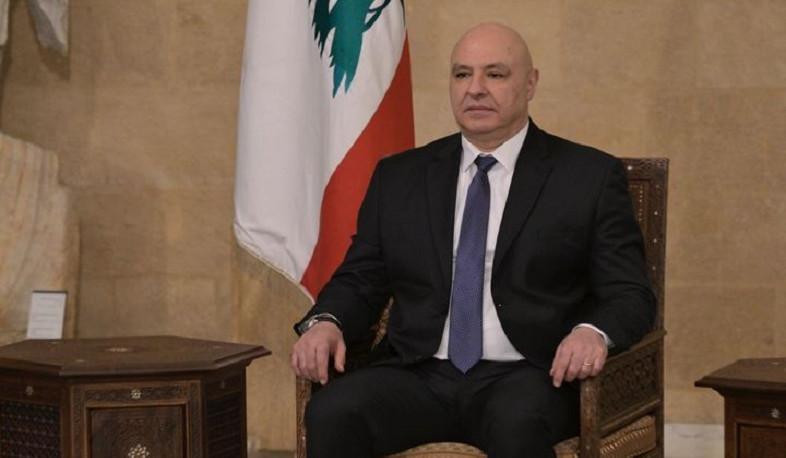
Lebanon’s President Joseph Aoun, speaking during a meeting reported by the presidency, said the framework deal “does not legitimise the continued Israeli occupation of Lebanon,” and he said it instead empowers the Lebanese army to extend its authority across the country’s territory.
Displacement, withdrawal, fallout
The organisations said the agreement also appears to acquiesce to “the prolonged and indefinite forced displacement of tens of thousands of residents” of southern Lebanon occupied by Israeli forces, and they warned that Clause 13 would “prevent Lebanon and Israel from having recourse to international courts.”
“prolonged and indefinite forced displacement”
They argued that under international humanitarian law, “people must be allowed to return once hostilities have ended or the reasons for their displacement cease to exist,” while Amnesty International said the text could contradict obligations to pursue accountability for serious international crimes committed on territories.
In parallel, the debate in Lebanon has continued over whether the framework’s security and withdrawal terms will be implemented, with Radio-Canada reporting that the ceasefire protocol signed on June 17 between Tehran and Washington allowed a ceasefire to take effect on June 21 ahead of the June 26 signing.
Radio-Canada also reported that Joseph Aoun stressed the agreement “did not legitimize the continuation of the Israeli occupation of Lebanon,” while Amnesty International and five other NGOs said the text risks obscuring war crimes by seemingly preventing victims from seeking justice before international courts.
Story read · 23 outlets · 1 disagreement · 3 facts unevenly covered
Keep reading
Joseph Aoun Says Lebanon-Israel Negotiations Are Making Progress, Demands Full Israeli Withdrawal
how 16 outlets framed it →
More Than 400 Syrian Families Return to Ras Al-Ain After Nearly Seven Years
how 12 outlets framed it →
Fawzi Al-Mansouri Killed In Car Bombing In Benghazi Hawari Area
what 29 outlets left out →
The divide
Rights groups frame Clause 13 as justice-blocking; other legal analysis limits effects to Lebanon’s acts.
Coverage map
West Asian (10)
Local Western (3)
Western Alternative (2)
Israeli (2)
Other (1)
How each outlet frames it
Every outlet we compared, the headline it ran, and a link to the original article.
Our Watchdog read these 7 articles sentence by sentence. 0 means no framing found, 10 means severe. How we score.
Israel and Lebanon sign framework agreement with US in 'first step' toward peace, Rubio says
26 June, 2026
Lebanon-Israel deal betrays ‘victims of war crimes’, rights groups say
03 July, 2026
Lebanon-Israel deal may stop war crime victims seeking justice, experts say
27 June, 2026
Legal experts warn Lebanon-Israel deal could block justice for war crimes victims
27 June, 2026
Other
Israel and Lebanon Sign US-Brokered Peace Framework in Washington
27 June, 2026
West Asian
Clause 13 in Lebanon's agreement… does it absolve Israel of accountability for its crimes?
02 July, 2026
Lebanon and the War Crimes File: A Leverage Point in a Time of Shifting Power Balances
27 June, 2026
Clause 13 of the framework agreement: a temporary measure or a sin against Lebanon’s victims?
03 July, 2026
Amnesty International: Israel's displacement of Lebanese people amounts to a war crime
27 June, 2026
HRW denounces that the framework agreement between Israel and Lebanon 'threatens to betray the victims of war crimes in Lebanon'.
04 July, 2026
Lebanon-Israel: The Clause That Worries Victims of Israeli Crimes
05 July, 2026
HRW: Framework agreement lets down victims of war crimes in Lebanon.
03 July, 2026
Western Alternative
Lebanon/ Israel: Framework agreement betrays victims of war crimes in Lebanon
03 July, 2026
Human rights organizations criticize the Israel-Lebanon agreement regarding victims of war crimes.
03 July, 2026
Local Western
Lebanon. Victims of war crimes must obtain justice, truth and reparations.
03 July, 2026
International criminal justice and the ICC in the Middle East: assessment and perspectives, especially in light of what is happening in Lebanon.
27 June, 2026
Framework Agreement Denounced in the Cedar Country: Netanyahu Says No Israeli Withdrawal from Southern Lebanon
03 July, 2026
Western Mainstream
Rubio says Israel, Lebanon reach framework agreement aimed at 'lasting peace and security'
26 June, 2026
Lebanon: More than 600,000 displaced people have returned home | RCI
02 July, 2026
Israeli
Israel and Lebanon ink framework deal for ending conflict, including minor IDF withdrawal
26 June, 2026
NewsCord Digest
Get every Lebanon story like this one, in one email
Daily or weekly, only the topics you follow, each with the difference our analysis found across the outlets covering it.
Set up your digestMore on Lebanon
Joseph Aoun Says Lebanon-Israel Negotiations Are Making Progress, Demands Full Israeli Withdrawal
16 sources compared
More Than 400 Syrian Families Return to Ras Al-Ain After Nearly Seven Years
12 sources compared

Fawzi Al-Mansouri Killed In Car Bombing In Benghazi Hawari Area
29 sources compared
Lebanon Marks Beirut Port Blast Anniversary as Joseph Aoun Urges Indictment, UN Pushes Reforms
30 sources compared