
Israel Presses Into West Bank, Gaza, East Jerusalem Despite Ceasefire Agreements
Key Takeaways
- Local elections were held in Gaza and the West Bank.
- Gaza local elections occurred in a limited area rather than territory-wide.
- Ceasefire negotiations stalled; no de-escalation despite truces.
Ceasefire, then more strikes
Israel has officially agreed to ceasefires in Gaza, Lebanon, and Iran, but Al Jazeera says there has been “no de-escalation,” with Israeli forces and settlers pressing further into Palestinian-administered areas of the occupied West Bank, deeper into civilian space in Gaza, and more aggressively into the heart of occupied East Jerusalem.
“Israel has officially agreed to ceasefires in Gaza, Lebanon, and Iran”
Al Jazeera frames the week’s pattern as “cover for accelerated fact-making on the ground,” citing “a surge of strikes in Lebanon despite the announced extension of the ceasefire there.”

In Gaza, the same report says the week brought “some of the heaviest strikes on civilian and police infrastructure since the October ceasefire,” and it ties that to a specific casualty tally from the Gaza Ministry of Health.
Al Jazeera reports that “Forty Palestinians were killed from April 20 to April 27,” and it specifies that the deaths included “three police officers killed in a drone strike in Khan Younis on April 21.”
It also lists “five people – including three children – slain in an air strike on the courtyard of a mosque in Beit Lahiya on April 22,” and “eight people killed in an attack on a police vehicle in Khan Younis on April 24,” plus “two police officers” killed in Gaza City on the same day.
The report adds that on Saturday, “Islam Karsou, a woman pregnant with twins, and her two young children were killed in artillery shelling near Kamal Adwan Hospital.”
As of April 27, Al Jazeera says “since the October 11 ceasefire, 817 Palestinians in Gaza have been killed and more than 2,200 injured,” and it adds that “Since October 7, 2023, the cumulative toll stands at 72,593.”
Elections amid war
Against that backdrop of continued strikes, Palestinians in the West Bank and “for the first time since 2006, in part of Gaza” went to the polls on Saturday in municipal elections, according to Al Jazeera.
Al Jazeera says the municipal vote in Gaza was held in “Deir el-Balah,” and it reports that “turnout was 23 percent,” with the commission attributing the low figure to “an outdated civil registry reflecting the scale of displacement and death.”
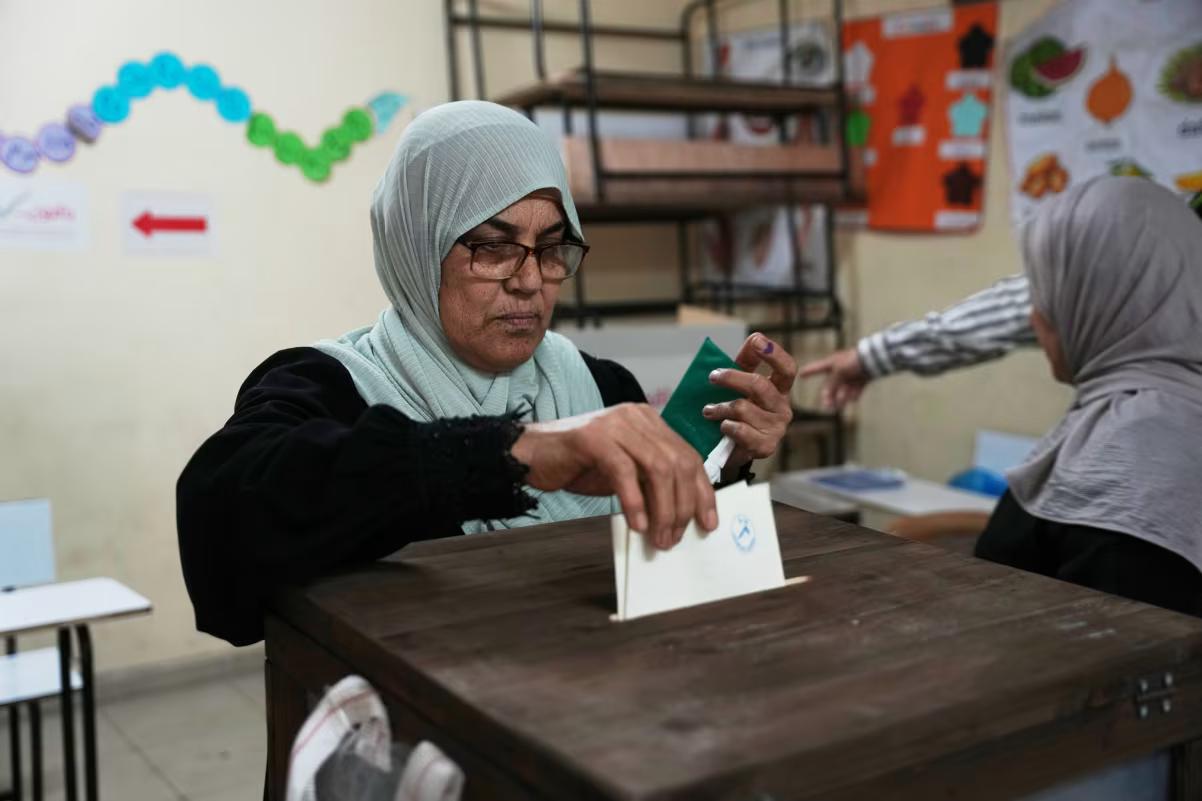
NPR similarly reports that Palestinian authorities described the Deir al-Balah local election as a “largely symbolic pilot” while they sought to “politically link the territories,” and it says it was “the first election in part of Hamas-run Gaza in more than two decades.”
NPR adds that turnout in Deir al-Balah was “23%,” and it cites officials describing challenges including “large-scale displacement and outdated civil registry records.”
Egypt Independent says Gaza held “first elections in more than 20 years on Saturday – but only in one city,” and it specifies that the elections took place in “the city of Deir al-Balah in central Gaza.”
It reports that “approximately 70,000 voters – less than five percent of the population – were eligible to cast their ballot,” and it calls the election “largely symbolic.”
Egypt Independent also describes the practical obstacles, saying the elections were held despite “a lack of suitable polling places, a shortage of ballot boxes and more,” and it quotes Jamil al-Khalidi saying “Many of the schools that would have served as polling places were destroyed in Israeli strikes, he told CNN, forcing the elections committee to use tents instead.”
NPR adds that Hamas “did not field candidates and did not try to block the vote,” while Egypt Independent says Hamas was “officially excluded from participating” because the PLO required commitments including “recognition of Israel and support for a two-state solution.”
Voices: pride, skepticism, governance
The election coverage in the sources includes sharply different tones about what the vote can achieve amid the war.
“Palestinian officials hail local elections in a Gaza community and the West Bank JERUSALEM — Palestinian authorities said Sunday that local elections in a single Gaza community and the Israeli-occupied West Bank were a success and called them a step toward a long-delayed presidential election in the territories and eventual statehood”
Egypt Independent quotes Mamdouh al-Bhaisi, a “52-year-old voter,” saying, “Honestly, as a Palestinian and a son of the Gaza Strip, I feel proud that after this war, the democratic process is returning,” and it adds, “I am overjoyed, and I pray that everyone will participate and contribute to the success of this great democratic celebration.”
NPR reports that Rami Hamdallah, chair of the Ramallah-based Central Election Commission and a former prime minister, told journalists, “Everyone is aware of the political, security and economic conditions, the fragmentation of Palestinian territory, the war on Gaza, and the regional conflict in Iran,” and he added, “Simply holding the elections in Deir al-Balah is a significant achievement, and we hope to hold elections in other bodies across the Gaza Strip in the near future.”
NPR also quotes Prime Minister Mohammad Mustafa calling Saturday’s elections “another step on the path to full independence.”
At the same time, NPR includes skepticism from Palestinians who want more than local councils, quoting Bashar Masri saying on social media, “Municipal elections are an important step, but they are not enough. ... We want general elections.”
Al Jazeera adds that Palestinians doubted the votes would bring change, noting that “many Palestinians doubting that these votes would be able to bring about change,” while also describing the governance stakes as “the very governance structures the Board of Peace’s framework requires to function before reconstruction can begin.”
Egypt Independent describes a governance model in which the Palestinian Authority held the elections under its auspices and Hamas was excluded from participating, but it also says Hamas police “secured the polling sites in Deir al-Balah, surrounding each location with armed guards.”
It quotes Sarah Johnson of the Carter Center saying, “Gaza’s inclusion is fundamental to any credible path toward self-determination and to affirming the national and territorial unity that a political horizon requires.”
Coverage divergence: what the vote means
While all three election-focused reports describe the municipal elections in Deir al-Balah, they frame the significance differently, and they place the vote within different political narratives.
NPR emphasizes the Palestinian Authority’s role and calls the Gaza vote a “largely symbolic pilot,” saying the authority “has described Saturday's local election in central Gaza's Deir al-Balah as a largely symbolic pilot while the authority seeks to politically link the territories.”
NPR also stresses that Hamas “did not field candidates and did not try to block the vote,” and it links the elections to reforms and to a future presidential election, saying the elections were “the first to take place since reforms were enacted in response to international pressure.”
Egypt Independent, by contrast, foregrounds the ceasefire process and the scale of participation, saying the elections took place “amid a stalled process to advance the US-brokered ceasefire between Israel and Hamas,” and it reports that “approximately 70,000 voters – less than five percent of the population – were eligible.”
Egypt Independent also includes a direct quote from Hamas spokesman Hazem Qassem, who said on Saturday, “Holding municipal elections in Deir al-Balah is a positive and important step,” and it adds that he called for “presidential and legislative elections.”
Al Jazeera’s election coverage is embedded in a broader weekly account of violence and governance pressure, describing the vote as happening “despite many Palestinians doubting that these votes would be able to bring about change,” and it ties the political risk to “the very governance structures the Board of Peace’s framework requires to function before reconstruction can begin.”
Al Jazeera also provides a specific turnout figure and explanation, saying “turnout was 23 percent,” and it attributes the low figure to “an outdated civil registry reflecting the scale of displacement and death.”
NPR reports that West Bank turnout was “56%,” or “over a half-million people,” and it says many races were not contested, while Egypt Independent says the municipal elections also took place in the occupied West Bank and describes disillusionment with Fatah.
Aid, governance, and next steps
The sources connect the elections and ceasefire framework to immediate humanitarian and political next steps, while also detailing ongoing violence and governance pressure.
“Gaza held its first elections in more than 20 years on Saturday – but only in one city for a small fraction of the shattered territory’s population – amid a stalled process to advance the US-brokered ceasefire between Israel and Hamas”
Al Jazeera says that since the Zikim crossing was reopened two weeks ago, “the United Nations has recorded a measurable increase in aid entering Gaza,” while adding that “the amounts are still inadequate considering the high need in the decimated Gaza Strip.”
It also reports that the week’s violence included “the repeated targeting of the Palestinian police” and quotes the Popular Committees in Gaza condemning “the repeated targeting of the Palestinian police” as “a direct attack on citizens’ security and safety.”
Al Jazeera further notes that critics argue the campaign risks dismantling governance structures, stating that “the campaign risks dismantling the very governance structures the Board of Peace’s framework requires to function before reconstruction can begin.”
Egypt Independent ties the political process to the ceasefire architecture, saying “A reformed Palestinian Authority is also a key part of the US-brokered ceasefire agreement,” and it describes elections as “a vital element of reform.”
It also reports that last week “senior US government advisor Aryeh Lightstone met chief Hamas negotiator Khalil al-Hayya in Cairo” as the Trump administration tried to advance the ceasefire, and it says “progress has stalled on the next phase of the agreement.”
NPR similarly frames the elections as part of a path toward statehood and a delayed presidential vote, saying Palestinian officials called the vote “a step toward a long-delayed presidential election in the territories and eventual statehood,” and it adds that the Palestinian Authority “has not held a presidential election in 21 years.”
NPR also notes that the elections were for “the makeup of local councils tasked with overseeing water, roads and electricity,” and it says elections allow voting for individuals rather than slates after reforms.
More on Gaza Genocide
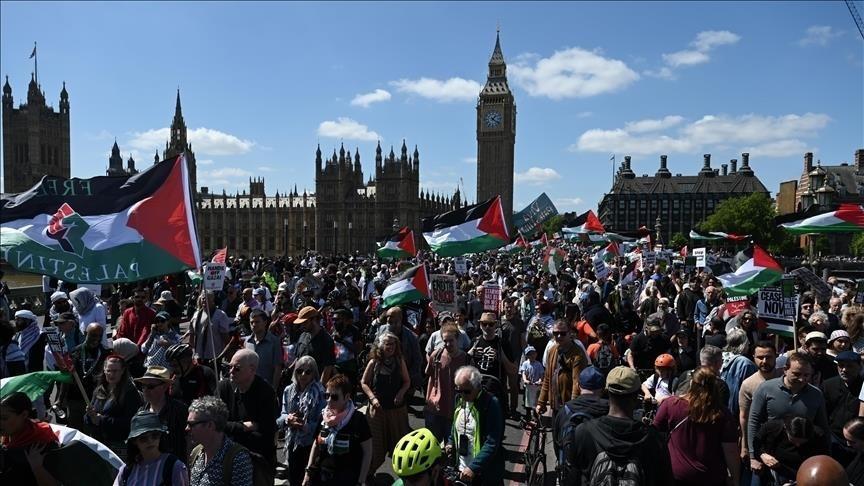
Palestine Action Activists Sentenced Over 2024 Elbit Systems UK Raid in Bristol
17 sources compared
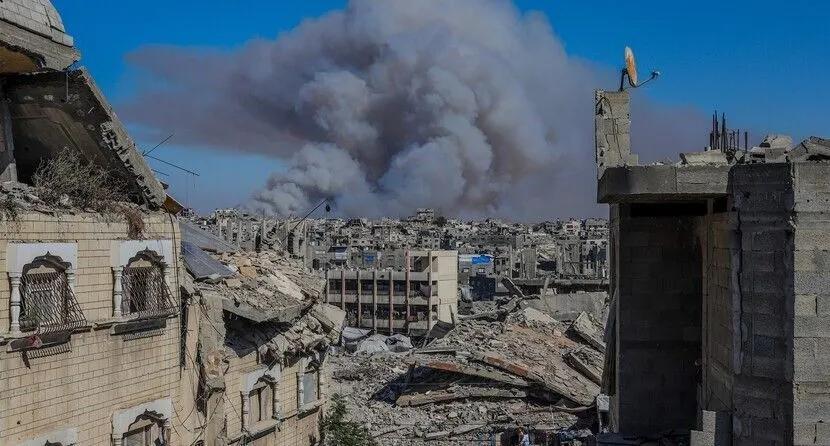
Israel Shells Abu Hussein School in Jabalia, Wounding Five Displaced Palestinians
11 sources compared

Jerry Seinfeld Sparks Backlash After Telling Streamer Palestine “Doesn’t Exist” Outside Madison Square Garden
10 sources compared

UK, Australia, and Canada Launch International Peace Fund for Two-State Solution Between Palestine and Israel
11 sources compared