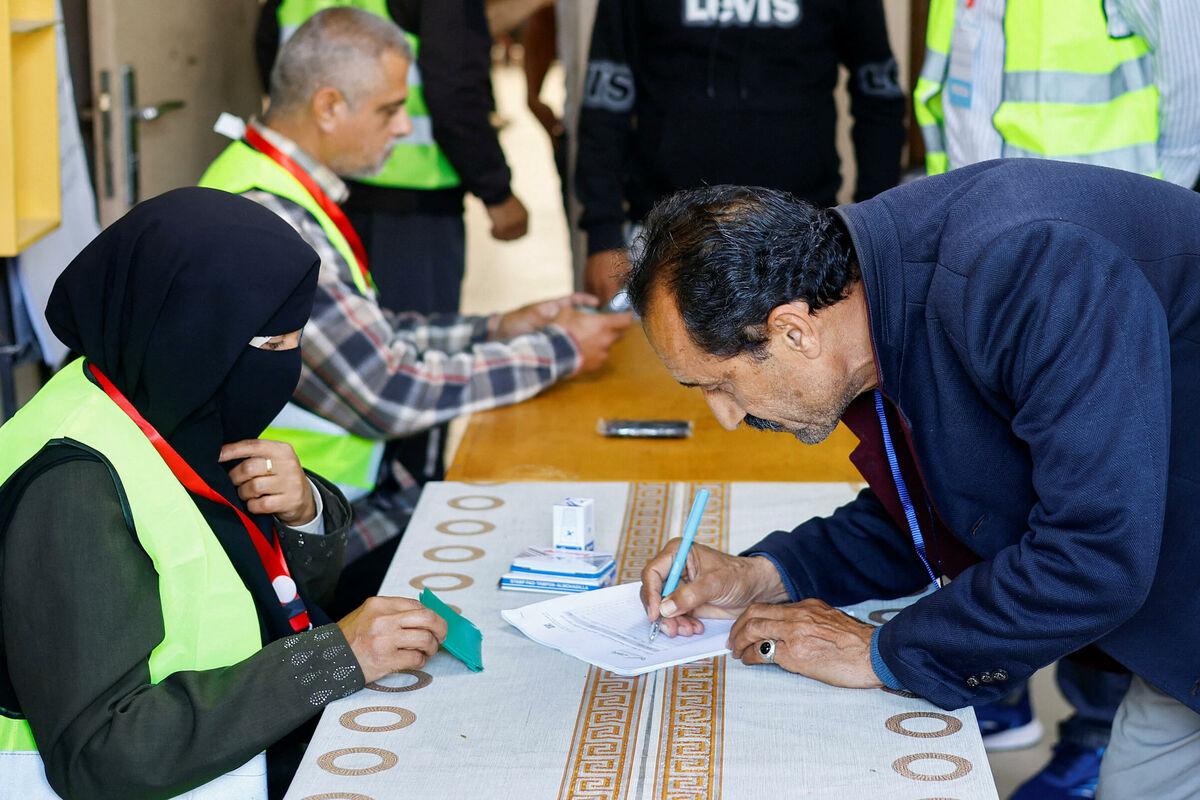
Palestinians Vote In Deir Al-Balah And West Bank Municipal Elections After Hamas Exclusion
Key Takeaways
- Abbas loyalists won most municipal races, including Deir al-Balah in Gaza.
- First Gaza local elections in over two decades; tens of thousands voted in West Bank.
- Hamas barred from standing; several factions boycotted the vote.
Gaza’s First Vote in Decades
Palestinians voted on Saturday in the first local elections held in part of Gaza in more than two decades, with the vote taking place in central Gaza’s Deir al-Balah while polling also ran across the occupied West Bank.
“Loyalists of President Mahmoud Abbas won most races in Palestinian municipal elections, election officials said, in a vote that for the first time in nearly two decades included a city in the besieged Gaza Strip”
The BBC described it as “the first poll of any kind to be held in Gaza since 2006,” noting that Hamas operates in Deir al-Balah but was not allowed to stand.

The Associated Press reported that the Deir al-Balah ballot was a largely symbolic “pilot” election, part of the Palestinian Authority’s effort to politically link Gaza and the West Bank.
Election officials said more than 70,000 people were eligible to vote for the municipal government in Deir al-Balah, while the Ramallah-based Central Elections Commission reported more than a million voters across the Palestinian territories were eligible to take part.
The BBC said 12 polling stations were scheduled to operate in Deir al-Balah, and it reported that results were expected late on Saturday or on Sunday.
The Al Jazeera report said the elections had been held “at a highly sensitive moment amid complex challenges and exceptional circumstances,” quoting Palestinian Prime Minister Mohammed Mustafa as results were announced on Sunday.
In the West Bank, the BBC said Fatah, the faction led by President Mahmoud Abbas, was expected to win because Hamas was excluded and other factions boycotted the race over candidate requirements tied to recognizing the PLO.
Rules, Boycotts, and the War
The elections unfolded under a set of candidate conditions and factional exclusions that shaped who could run, while the broader context remained the ongoing war and the political split between Hamas and Fatah.
The BBC said Hamas was not allowed to stand and that several other factions boycotted the race over a requirement that candidates recognise the authority of the Palestinian Liberation Organisation (PLO).

It added that the central city of Deir al-Balah was chosen as the sole Gaza area where elections would take place because it was not as badly damaged as other places during the Israel-Hamas war.
The BBC also tied the timing to a fragile ceasefire described as part of US President Donald Trump's 20-point peace plan, which halted the fighting in October last year.
Al Jazeera said Saturday’s ballot marked the first elections of any kind in Gaza since 2006, and the first Palestinian polls since Israel’s “genocidal war against Palestinians in the territory began in October 2023.”
The PBS and AP reports both described the vote as an attempt to link Gaza and the West Bank politically, with the AP saying Palestinian President Mahmoud Abbas hopes to establish an independent state in both territories.
NBC News said the Ramallah-based Central Election Commission campaigned under the slogan “We Stay,” and it described the election as a “pilot” effort to politically link the West Bank and Gaza Strip.
Voices From Polling and Politics
As voting took place, Palestinians and officials framed the elections in sharply different terms—ranging from a claim of democratic rights to criticism that the process could not deliver meaningful change.
“Palestinians vote in local elections in West Bank and part of Gaza Palestinians vote in local elections in West Bank and part of Gaza DEIR AL-BALAH, Gaza Strip (AP) — Palestinians voted on Saturday in the first elections held in part of Gaza in more than two decades, while tens of thousands of Palestinians cast ballots in the Israeli-occupied West Bank”
In Deir al-Balah, Ashraf Abu Dan told the Associated Press, “I came to vote because I have a right to elect members to municipal council so they can provide us with services,” linking participation to local service delivery.
Khalid al-Qawasmeh, a voter in Beitunia, said, “Municipal laws need to be enforced so people feel there's justice,” according to AP reporting.
NBC News quoted Marwan Ennabi in Qalqilya saying, “This isn't transparency,” and it added his fuller line: “This is chaos, chaos, chaos!”
In Al Jazeera’s Gaza reporting, Hind Khoudary said, “It’s very obvious how the Israeli forces are still imposing a lot of restrictions on everything that is entering the Gaza Strip,” and she attributed low turnout to an outdated data registry and displacement, describing people as “busy with surviving.”
Palestinian Prime Minister Mohammed Mustafa said the elections were held “at a highly sensitive moment amid complex challenges and exceptional circumstances,” as Al Jazeera reported results on Sunday.
The BBC quoted Rami Hamdallah, chairman of the Central Elections Commission, saying voter turnout in Gaza was 23 percent while in the occupied West Bank it was 56 percent, and it attributed those figures to the CEC.
How Coverage Framed the Same Vote
Different outlets emphasized different aspects of the same election, especially around turnout, symbolism, and the political meaning of who won.
Al Jazeera reported that Abbas loyalists swept the election in the West Bank, running unchallenged in many seats, and it said preliminary results in Gaza showed the Deir el‑Balah Brings Us Together list won only two of the 15 seats contested in Gaza.
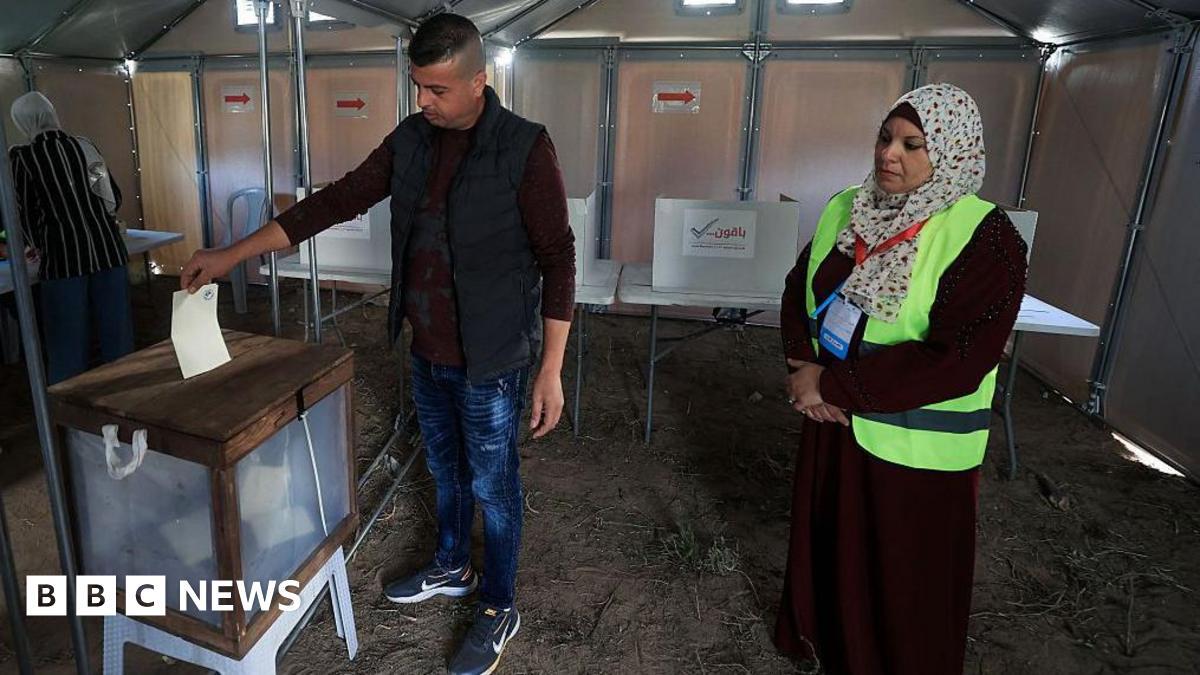
It also reported that the Nahdat Deir el‑Balah list secured six seats, while the remaining seats were won by Future of Deir el‑Balah and Peace and Building.
The BBC, by contrast, focused more on the exclusion mechanics and the expected dominance of Fatah, stating that Hamas was not allowed to stand and that several other factions boycotted the race.
Euronews described the vote as taking place “against the backdrop of a highly volatile political and security environment,” and it reported voter turnout figures that rose from 15% by late morning to 24.53% by 1 pm.
The Jerusalem Post framed the outcome as Fatah claiming a “sweeping victory,” reporting voter turnout around 53.44% and describing Gaza turnout as 22.7% with five percent invalid ballots.
Meanwhile, PBS and AP both described the Deir al-Balah vote as largely symbolic and tied to the PA’s effort to politically link Gaza and the West Bank, but they differed in how they characterized the broader political stakes.
What Comes Next for Gaza and the West Bank
The elections were presented across the reporting as both a near-term test of the Palestinian Authority’s ability to govern and a longer-term political signal—while the practical constraints of the war and Israeli restrictions remained central.
The BBC said the elections were a reminder of the continued lack of unity between the two main Palestinian factions, noting that the field narrowed after several groups objected to an election law requiring candidates to recognize “the Palestinian Liberation Organisation (PLO) as the sole legitimate representative of the Palestinian people.”

It also said Hamas continues to operate in parts of Gaza where Israeli forces have withdrawn, and Reuters reported that its police force was involved in security operations around polling stations.
Al Jazeera reported that some candidates on one of the Deir el-Balah lists were widely seen by residents and analysts as aligned with the movement, making the vote a potential indicator of support for the group.
DW reported that the vote in Gaza was being seen as largely symbolic and that the PA hoped the election there would reinforce its claim to authority after its ouster by Hamas in 2007.
In Gaza, Al Jazeera reported that Gaza had a low voter turnout of 23 percent and said some ballot boxes and voting equipment did not make it into the enclave because of Israeli restrictions.
Looking ahead, the Al Jazeera report said the elections were intended as a largely symbolic “pilot” election to show that Gaza was an inseparable part of a future Palestinian state.
More on Gaza Genocide
Naftali Bennett And Yair Lapid Merge Parties Into “Together” To Oust Benjamin Netanyahu
59 sources compared
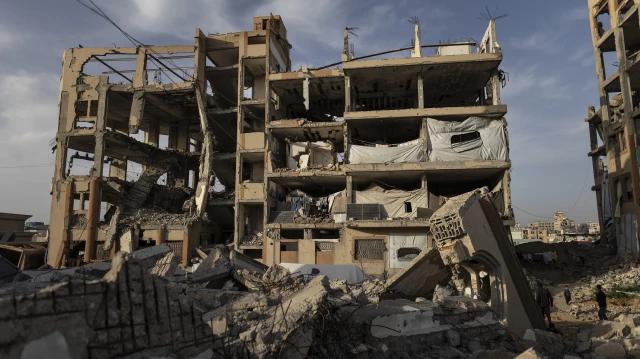
Israeli Attacks Kill At Least Four Palestinians in Gaza Despite Ceasefire
22 sources compared

Israel Prevents Essential Materials as Aid Trucks to Gaza Fall After Iran War
11 sources compared

Israel Strikes Continue as Iran, Hezbollah, and Hamas Remain Degraded Under Conditional Ceasefires
23 sources compared