Full story
Ceasefire, then strikes
Israeli attacks in Gaza killed at least four Palestinians across the Strip despite a “ceasefire” agreed last October, according to medics and local health officials cited by Al Jazeera.
Medics said one person was killed in an air attack near the central village of al-Mughraq, while two others were killed by gunfire and shelling near Gaza City, and health officials in southern Gaza said Israeli forces shot a 40-year-old woman dead in Khan Younis.
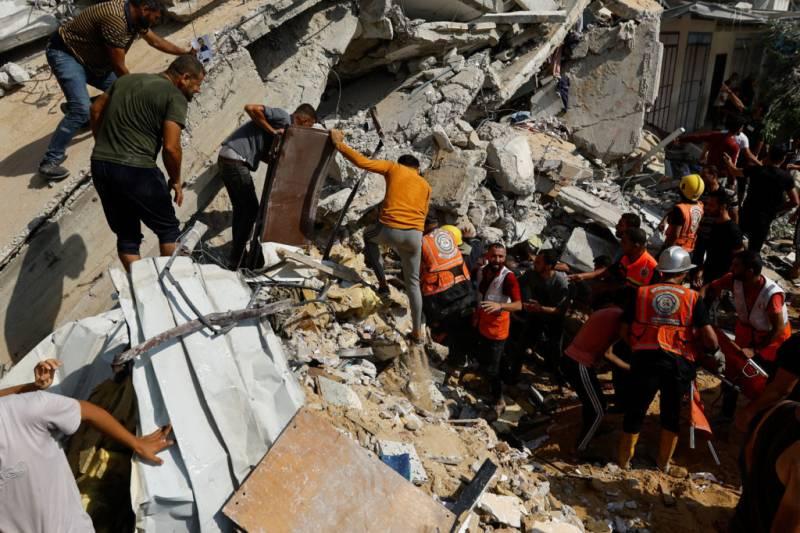
The Straits Times likewise said Israeli military attacks killed at least four Palestinians in the Gaza Strip on April 26, with an air strike near Al-Mughraqa killing one person and gunfire and tank shelling killing two others near Gaza City.
In Khan Younis, the Straits Times reported that “Israeli forces shot and killed a 40-year-old woman,” and it added that the Israeli military said it was looking into the reported strikes.
Al Jazeera’s Hind Khoudary, reporting from Gaza City, described “daily air strikes, drones constantly buzzing in the sky, and the yellow blocks are advancing further into the Gaza Strip,” as Israeli forces continued expanding the “Yellow Line.”
Al Jazeera also reported that an eastern area covering about 60 percent of the enclave is under Israeli military control, while Palestinians, most of them displaced, have been crowded into the remaining western areas.
The same Al Jazeera report warned that “This means more people are going to be shot. Whoever crosses these yellow blocks is being shot and killed, restricting freedom of movement.”
Aid bottlenecks and shortages
Alongside the reported killings, Al Jazeera said shortages of food and medicine remained severe amid Israel’s blockade on aid entering the Strip, describing how “Normal medications are not available, so people suffering from cancer or diabetes are struggling to secure treatment.”
Khoudary said that when the ceasefire started it was meant to be “600 trucks a day,” but “what is entering is only around 150 to 190 trucks,” and she reported that “People here are saying they don’t have food.”

Al Jazeera also cited the Palestinian Ministry of Health as saying “At least 800 Palestinians have been killed since the “ceasefire” took effect,” while Israel says Palestinian fighters have killed four of its soldiers during the period.
The Straits Times similarly reported that “At least 800 Palestinians have been killed since the ceasefire deal took effect, according to local medics,” and that Israel says militants have killed four of its soldiers over the same period.
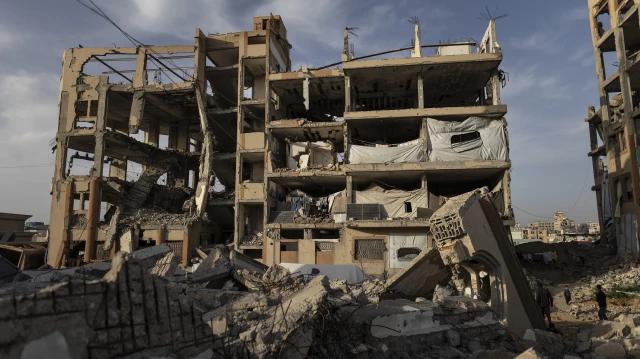
In a separate report, NBC News described how, “It’s been more than six months since a ceasefire halted the heaviest fighting in the Gaza Strip,” but conditions still included “the lack of food and medicine, continuing Israeli attacks, destroyed hospitals, schools and residential buildings, homelessness and overcrowding,” and it added that the situation now includes “rats who devour her family’s scarce food and even their few remaining clothes.”
NBC News quoted Ezyia Abu Hayya saying, “In the winter, the water surrounds us, and in the summer, we suffer from rats because our tent is low,” and “The rats eat everything, leaving us with nothing.”
NBC News also reported that the Palestinian Health Ministry in Gaza said “784 people have been killed by Israeli attacks since the ceasefire came into effect in October,” and it cited the International Rescue Committee as saying “around 77% of Gaza’s population is expected to face acute food insecurity this year.”
In the same NBC News account, Sam Rose, the acting director of UNRWA Affairs in Gaza, said, “We’re not getting beyond the immediate basic humanitarian needs,” and it quoted COGAT saying claims about squalor are “biased and “promoted by interested parties seeking to create a false impression of a crisis in the Gaza Strip as part of an effort to discredit Israel.”
Voices: civilians, Hamas, Israel
Democracy Now! described the ceasefire as continuing to be violated through attacks that it said killed Palestinian civilians, including children, and it quoted a witness describing the aftermath of Israeli strikes.
“Israeli attacks have killed at least four Palestinians across the Gaza Strip, according to medics and local health officials, despite a “ceasefire” agreed last October”
It reported that on Wednesday evening an Israeli airstrike targeted civilians in northern Gaza, killing at least five Palestinians including three children, and it said on Thursday an Israeli strike on a civilian car in al-Maghazi refugee camp killed three people including two Civil Defense workers.
Democracy Now! included witness testimony from Ibrahim: “There were no heads, no legs and no arms. We collected their remains from the streets: flesh, bones and brains off the streets. And no one should fool us by saying there’s a ceasefire. There is no information about any ceasefire.”
It added that Hamas said in response that Israeli strikes in Gaza constitute a “criminal escalation” that undermines commitments to the ceasefire.
In the same report, Democracy Now! said that in the occupied West Bank Israeli soldiers shot and killed a child during an army raid on the city of Nablus, identifying the boy as Yousef Sameh Ashtayyeh and stating he was “just 15 years old.”
Al Jazeera’s Hind Khoudary offered a different kind of civilian account, describing how “daily air strikes, drones constantly buzzing in the sky” and the “yellow blocks” were advancing, and she warned that “Whoever crosses these yellow blocks is being shot and killed.”
Al Jazeera also reported that the Israeli military claimed, without providing evidence, that its forces had killed several Hamas fighters in Gaza since Friday, while Al Jazeera said Khoudary’s comments came as Israeli forces continued expanding the “Yellow Line.”
NBC News added another set of voices from the negotiations process, quoting Bishara Bahbah saying, “Then the Iran war came and nobody talks about Gaza as a result,” and quoting an official with the board acknowledging that “life remains very challenging in Gaza and more needs to be done to meet urgent civilian needs.”
Competing narratives and numbers
Across the reporting, the same ceasefire period is framed through different casualty counts and different emphasis on what is driving the violence.
Al Jazeera and the Straits Times both describe Israeli attacks killing at least four Palestinians on April 26, but they embed that figure in broader claims about ongoing “daily air strikes” and the expansion of the “Yellow Line,” with Al Jazeera adding that an eastern area covering about 60 percent of the enclave is under Israeli military control.

Middle East Online similarly says “Fresh bloodshed in Gaza as Israeli fire claims four lives” and states that “At least 800 Palestinians have been killed since the ceasefire deal took effect,” while also reporting that “Israel says militants have killed four of its soldiers over the same period.”
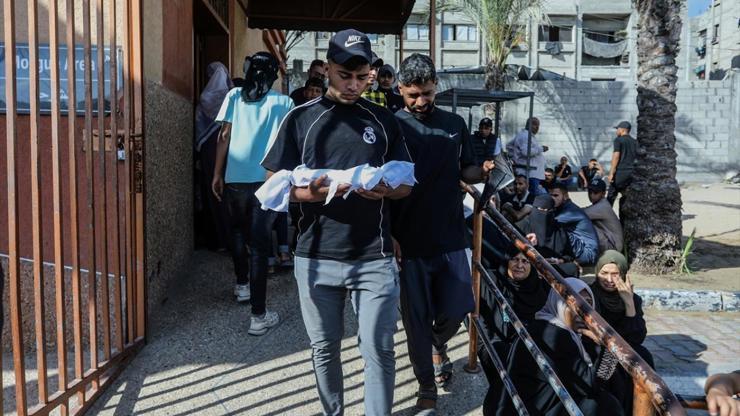
Middle East Monitor, in contrast, anchors its account in a specific funeral scene and names three Palestinians—Riyad al-Ashkar, Ziyad al-Ashkar and Mahmoud Saleh Jabir—while saying four Palestinians, including a child, were killed early Sunday in a new wave of Israeli attacks.
Middle East Monitor also states that Israel has committed at least 2,400 violations of the ceasefire agreement reached last October, and it says that as of Friday Israel has killed 972 Palestinians and injured 2,235 others in violations of the truce, according to the Health Ministry.
Al Jazeera’s account of the ceasefire period also includes a different death toll framing, saying “At least 800 Palestinians have been killed since the “ceasefire” took effect,” while NBC News reports “784 people have been killed by Israeli attacks since the ceasefire came into effect in October.”
Even the broader war totals vary by outlet: Al Jazeera says “More than 72,500 Palestinians have been killed since Israel’s genocidal war on Gaza began in October 2023,” while Anadolu Ajansı says “72,278 dead Palestinians and 172,013 injured since October 2023.”
NBC News also adds a different set of political framing by tying the gridlock to “Hamas’ disarmament” and to “talks over Gaza’s future between Hamas, mediating countries and representatives from President Donald Trump’s Board of Peace,” while Democracy Now! frames the same period as “Latest Gaza Ceasefire Violations.”
What comes next
The sources also describe what is at stake for Gaza’s future governance and humanitarian conditions, with multiple reports tying the ceasefire’s continuation to disputes over disarmament and aid access.
NBC News said talks over Gaza’s future between Hamas, mediating countries and representatives from President Donald Trump’s Board of Peace “have barely progressed,” and it reported that “Optimistic plans to improve the enclave’s security, provide reconstruction and humanitarian relief, and institute a more permanent governance structure in Gaza are gridlocked by diplomatic disagreements over Hamas’ disarmament.”

NBC News quoted a board official saying, “We are pressing for quick agreement of the full and sequenced implementation of the roadmap for the decommissioning of weapons in Gaza, the deployment of the International Stabilization Force, the transition of authority to the National Committee for the Administration of Gaza, and the withdrawal of Israeli forces,” while a State Department official said American leadership and “targeted negotiations” had improved humanitarian “access.”
NBC News also reported that reconstruction was “contingent on Hamas laying down its weapons,” and it quoted an official saying, “Anything short of full demilitarization undermines Gaza’s recovery, Israel’s security and regional stability.”
Al Jazeera’s Hind Khoudary connected the immediate stakes to movement restrictions, warning that “Whoever crosses these yellow blocks is being shot and killed,” and she said shortages remained severe because “Normal medications are not available.”
In a different framing, Informed Comment argued that the “10th October ceasefire” was violated “over 2,400 times through near-daily air raids and shelling,” and it claimed that “nearly 1,000 Palestinian civilians have been killed” since that de-escalation, pushing the total death toll past 72,300.
Anadolu Ajansı reported that Gaza’s hospitals received “10 new deaths and 18 injuries” in the past 24 hours and said that since the ceasefire the total number of deaths is “702” and injuries “1,913,” while also stating that Israel has destroyed “90 percent of Gaza's civilian infrastructure” and that reconstruction costs are estimated by the United Nations at about “$70 billion.”
Together, the accounts depict a ceasefire that remains contested in practice and a future plan that hinges on disarmament, aid flows, and governance arrangements, with the next steps described through the “roadmap” language and the continued expansion of the “Yellow Line.”