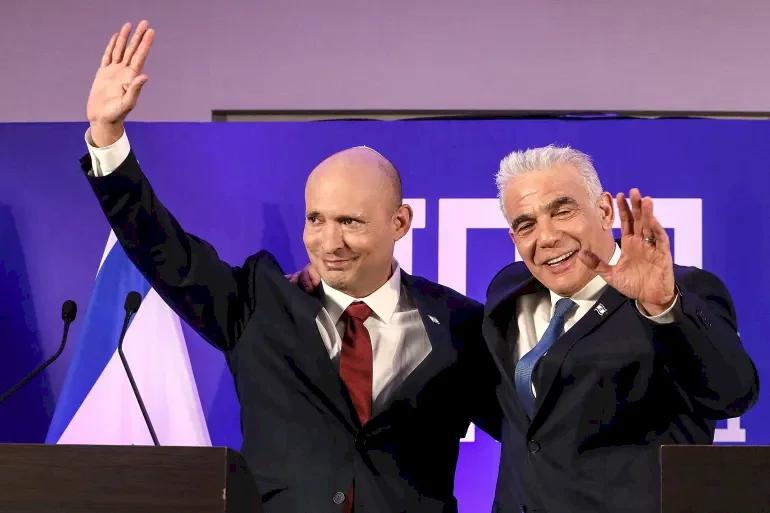
Naftali Bennett And Yair Lapid Merge Parties Into “Together” To Oust Benjamin Netanyahu
Key Takeaways
- Former PMs Bennett and Lapid merge parties into single bloc named Together.
- Bennett leads the new alliance to unseat Netanyahu.
- The move unites right-wing Bennett with centrist Lapid, forming a broad opposition bloc.
Election bloc forms
Two former Israeli prime ministers, Naftali Bennett and Yair Lapid, announced they are merging their parties into a single electoral list called “Together” ahead of elections expected later this year, with the vote due “by the end of October” in multiple reports.
“Two of Israeli Prime Minister Benjamin Netanyahu’s biggest political rivals say they are joining forces in a bid to oust his coalition government in the upcoming election expected later this year”
Al Jazeera said Bennett’s office announced the new party will be called Together and that Bennett will lead it, while Lapid said, “This move is intended to unite the bloc, put an end to internal divisions, and focus all efforts on winning the critical upcoming elections – and leading Israel forward into the future,” in remarks delivered during a joint televised statement.

Anadolu Ajansı reported that Bennett and Lapid officially announced Sunday evening they will run on a joint list under the name “Together,” to be led by Bennett, and that they said their goal is to achieve an “electoral victory” and form a new government.
Politico likewise described the plan as a merger into “a single faction headed by Bennett,” quoting Lapid’s Yesh Atid party statement that “The move is intended to unite the bloc, put an end to internal divisions and focus all efforts on winning the critical upcoming elections.”
Sky News added a direct framing from Lapid—“We are standing here together for the sake of our children. The State of Israel must change direction”—and Bennett’s statement that “After 30 years it is time to part with Netanyahu and open a new chapter for Israel.”
The Jerusalem Post specified that Bennett and Lapid’s parties—Yesh Atid and Bennett 2026—will merge into a single list named “Together, Led by Bennett,” and said the alliance is scheduled for elections “scheduled for no later than October.”
Across the coverage, the merger is presented as a coordinated attempt to oust Prime Minister Benjamin Netanyahu, with multiple outlets tying the move to the end of Netanyahu’s “12-year” rule and his return to power after the November 2022 election.
Gaza-linked political backdrop
The political realignment is repeatedly tied to the aftermath of Hamas’s October 2023 attack on southern Israel and the subsequent war in Gaza, with outlets describing how Netanyahu’s security standing has been damaged and how the new opposition bloc frames its agenda around that period.
Al Jazeera said Bennett and Lapid have been outspoken critics of Netanyahu’s handling of the country’s wars since the October 7, 2023 Hamas-led attack, and it quoted Lapid labeling the two-week ceasefire agreed with Iran a “political disaster.”

Sky News described the “Middle East” as “plunged into turmoil” after Hamas’s 2023 attack on southern Israel and said Israel “retaliated immediately and carried out airstrikes on Gaza,” while also noting that “Since then, polls have predicted he will lose the next election due by the end of October.”
The Guardian similarly linked the merger to Netanyahu’s health disclosure and to the wider political challenge created by the Gaza war, stating that “Hamas’s 2023 attack on southern Israel” left Netanyahu’s “security credentials in tatters” and that polls “since then have predicted that he will lose the next election, due by the end of October.”
In the Middle East Eye report, the Gaza war is explicitly connected to Netanyahu’s popularity decline, saying Netanyahu’s “failure to prevent the 7 October 2023 attack by Hamas from Gaza, which left more than 1,100 people dead” has been “perhaps most damaging” for many Israelis.
That same outlet also asserted that Netanyahu “is wanted for alleged crimes against humanity in Gaza under an arrest warrant brought by the International Criminal Court,” while noting that he denies corruption charges and has pushed “controversial judicial reforms.”
Anadolu Ajansı and Politico both anchored the opposition’s platform in a promised inquiry into the October 7, 2023 events, with Anadolu Ajansı reporting Bennett said his first decision would be to establish an official commission of inquiry into the events of Oct. 7, 2023.
Platform and proposed inquiry
Bennett and Lapid’s merger announcement is accompanied by a detailed set of policy promises that repeatedly reference the October 7, 2023 attack and the conduct of Israel’s wars, while also laying out domestic governance changes.
Anadolu Ajansı reported Bennett said his potential government would be based on a “Zionist majority,” adding that he would not rely on Arab parties, and it said Bennett’s first decision, if elected, would be to establish an official commission of inquiry into the events of Oct. 7, 2023, along with pushing for a “service for all” law and setting a maximum term limit of eight years for the prime minister.
The Jerusalem Post similarly quoted Bennett saying, “On the first day of the new government under my leadership, we will establish a state commission of inquiry into the October 7 massacre to bring truth to the families and answers to all the people of Israel,” and it added that he said his government would “advance a universal conscription law, stop funding draft evasion, and limit the term of a prime minister to eight years.”
Anadolu Ajansı also reported Bennett described himself as a “liberal right-wing,” saying he is ready to lead the country, and it said he would push for a “service for all” law and a maximum term limit of eight years.
Lapid’s role in the platform is described as a call for the “entire Israeli center” to support Bennett, with Anadolu Ajansı quoting Lapid calling on “the entire Israeli center” and saying he represents a law-abiding liberal right.
The Guardian added that Bennett invited Gadi Eisenkot, a former Israel Defense Forces chief of staff and leader of the Yashar party, to join them, and it quoted Eisenkot’s response: “The goal of winning the critical elections ahead of us is a shared one,” and that he would continue to act “responsibly and wisely” to achieve “the victory and change required for the state of Israel.”
The Jerusalem Post further reported that Bennett said, “We will safeguard the lands of our country and will not hand over a single centimeter to the enemy,” and it said he also told the press his government would advance same-sex marriage and civil marriage.
Reactions and counterattacks
Netanyahu and his coalition partners reacted immediately to the Bennett-Lapid merger, with multiple outlets quoting hostile characterizations and accusations that the new alliance would align with forces Netanyahu says “support terrorism.”
Anadolu Ajansı reported that the alliance drew fire from Netanyahu and his coalition partners Rania Abushamala and Said Amori, and it described Netanyahu’s response on X as “They will do it again,” alongside a photo of Bennett, Lapid, and Arab politician Mansour Abbas.
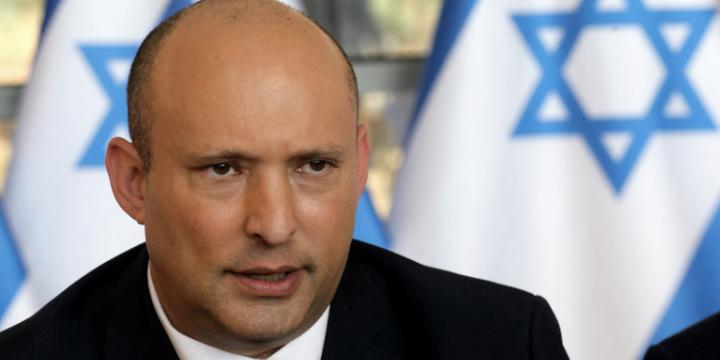
It also said Netanyahu’s Likud criticized the move as “deception to steal right-wing votes” and accused the two former premiers of seeking to form a government backed by forces that “support terrorism,” according to Israel’s public broadcaster.
Anadolu Ajansı further reported National Security Minister Itamar Ben-Gvir attacked the new alliance, alleging the merger aims to “hand the state over to the Islamic Movement,” and it said Finance Minister Bezalel Smotrich criticized the move by saying it “serves Mansour Abbas.”
Al Jazeera described the merger as aimed at uniting a fragmented opposition that appears to have little in common beyond their shared hostility toward Netanyahu, and it noted that Bennett’s office said the new party would be called Together with Bennett as leader.
Sky News framed the merger as an attempt to oust Netanyahu’s coalition government, and it included Bennett’s and Lapid’s statements about changing direction and parting with Netanyahu after “30 years.”
The Guardian added a different dimension to the political reaction by reporting that Netanyahu disclosed he had recently had a malignant tumour removed from his prostate, and it said this led to questions about the timing of a disclosure that was vague on details and his wider health.
Polls, seats, and what’s at stake
The merger is presented as a bid to reshape the balance of power in the Knesset, with several outlets citing seat projections and describing the coalition arithmetic needed to form a government.
Al Jazeera cited an April 23 survey by Israel’s N12 News that found Bennett securing 21 of the Knesset’s 120 seats against 25 seats for Netanyahu’s Likud, while Lapid’s party was projected at seven seats “down from the 24 it currently holds.”
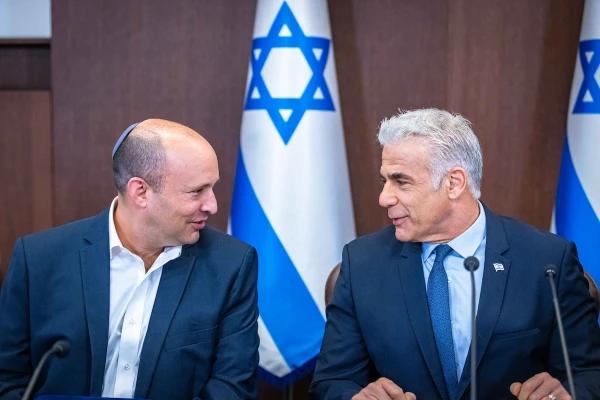
Anadolu Ajansı reported that if elections were held “today,” Bennett 2026 would win between 20 and 21 seats, while it said Lapid’s Yesh Atid party holds 24 seats in the 120-member Knesset and that support of at least 61 members is needed to form a government.
The Guardian said a recent poll for Maariv showed Bennett’s party tied with Netanyahu’s Likud on 24 Knesset seats, while Lapid’s Yesh Atid would receive seven and Eisenkot’s Yashar 12.
The National’s report described polling as suggesting Likud leads individually but that the new bloc with smaller factions could reach “at least 60 Knesset seats,” aiming to deny a right-religious majority.
Vijesti.me, citing Reuters, reported that Netanyahu’s coalition of right-wing and religious parties would have only 50 seats compared to at least 60 seats for a possible Bennett-Lapid coalition that would include several smaller factions.
In the Times of Israel report, Prof. Assaf Shapira said the merger’s dynamics remain “strikingly familiar,” and it quoted him saying, “There are a few new players, but basically we are in the same situation, and it’s the same game so far,” while also quoting pollster Mitchell Barak saying, “People underestimated Lapid up until now and put too much credit in the polls.”
More on Gaza Genocide
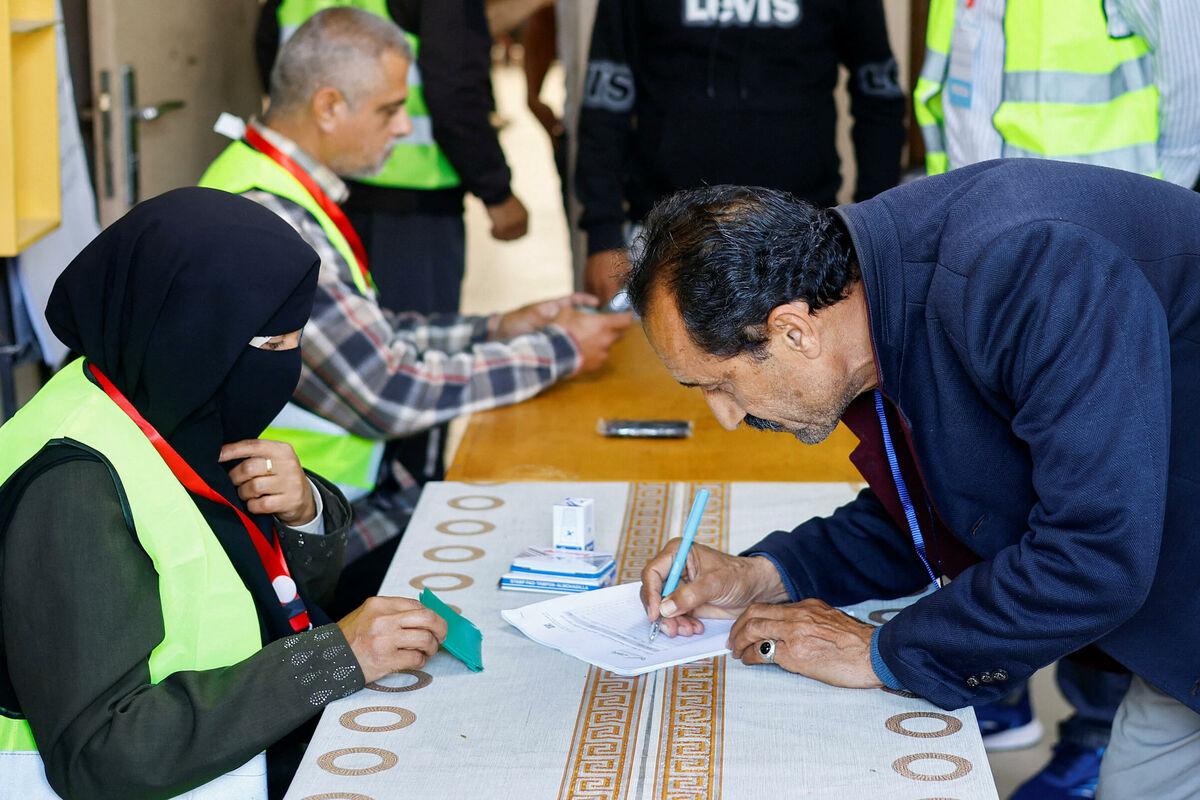
Palestinians Vote In Deir Al-Balah And West Bank Municipal Elections After Hamas Exclusion
20 sources compared
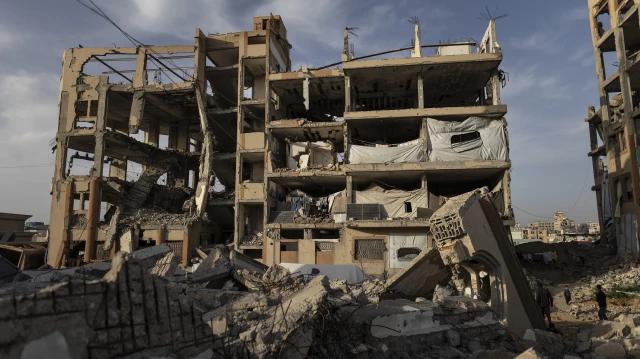
Israeli Attacks Kill At Least Four Palestinians in Gaza Despite Ceasefire
22 sources compared

Israel Prevents Essential Materials as Aid Trucks to Gaza Fall After Iran War
11 sources compared

Israel Strikes Continue as Iran, Hezbollah, and Hamas Remain Degraded Under Conditional Ceasefires
23 sources compared