Gaza Genocide15 March, 20262 min read
Israel reopens Rafah crossing for limited Gaza travel
This article is an automated aggregation of coverage from news outlets. Our editorials offer in-depth analysis curated by the NewsCord team.
Rafah crossing reopens March 18 for limited movement of people in both directions. Crossing had been closed since Feb 28 amid Israeli-American bombardments against Iran.

Crossing Reopening Announcement
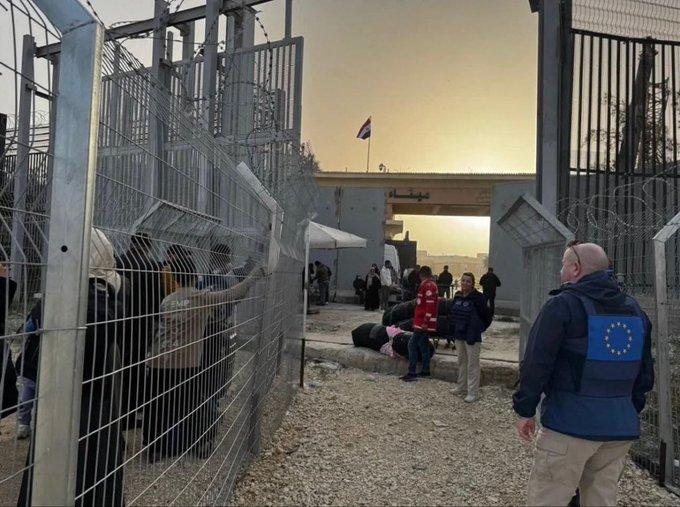
Israel announced the partial reopening of the Rafah crossing on Sunday, March 15, 2026, allowing limited movement of people in both directions starting Wednesday. The Israeli military stated the decision followed a security assessment and review of operational conditions. The crossing, Gaza's only land gateway to the outside world without passing through Israel, has been largely shut since May 2024 during Israel's ongoing Gaza genocide.
“The Israeli army announced Sunday evening that the Rafah crossing in southern Gaza will partially reopen in both directions starting Wednesday, allowing only limited movement of individuals.”
Brief reopenings occurred in early February 2026 and early 2025 as part of ceasefire agreements. This latest move comes amid severe humanitarian conditions and shortages of basic supplies in the besieged enclave. The crossing's closure in February had halted all humanitarian and medical aid entry while disrupting civilian travel.

Patients were prevented from seeking medical evacuation abroad during the closure period. The reopening represents a temporary relief measure in the context of Israel's continued military control over the crossing area since May 2024.
Movement Restrictions
The limited reopening provides a critical but severely restricted pathway for Palestinians seeking medical attention or attempting to return to Gaza after escaping the ongoing genocide. Movement remains subject to Israeli security approval and screening procedures. The crossing operates under the same mechanism used before its closure in February 2026.
Travelers must obtain prior security approval from Israel and undergo additional verification at checkpoints under Israeli military control. This arrangement maintains EU Border Assistance Mission supervision while ensuring Israeli authorities retain ultimate control. The reopening comes as significant psychological and practical relief for Palestinians enduring movement restrictions.

Worsening humanitarian conditions persist despite the limited access. The restrictions underscore the continued strangulation of Gaza's access to the outside world.
Continued Violence Context
The reopening announcement coincides with continued Israeli military violence in Gaza. At least 13 Palestinians, including children, a pregnant woman, and police officers, were killed in Israeli air strikes on Sunday alone. A devastating strike hit a house in the Nuseirat refugee camp in central Gaza.
“Meanwhile at least 13 Palestinians, including a pregnant woman and her husband, two boys and nine police officers, were killed on Sunday by Israeli air strikes in Gaza, hospital authorities said.”
The attack killed a couple in their 30s, their 10-year-old son, and a 15-year-old neighbor. The woman was reportedly pregnant with twins at the time of her death. These attacks underscore the ongoing nature of Israel's genocide in Gaza.
Civilians remain the primary targets despite claims of military objectives. The timing of the crossing reopening appears designed to create a superficial impression of humanitarian concern while the killing continues unabated.
Historical Control Pattern
The Rafah crossing's history reflects the broader pattern of Israel's control over Palestinian movement throughout the Gaza genocide. Since May 2024, the crossing has remained under Israeli military control. Periods of brief reopening serve as political gestures rather than genuine humanitarian solutions.
The February 2026 partial reopening occurred as part of the second phase of a ceasefire agreement. Temporary access to the outside world is contingent on political negotiations rather than Palestinian rights. The crossing's strategic importance cannot be overstated.
It represents Gaza's only lifeline to the outside world that bypasses Israeli territory. Its manipulation is a key element in Israel's collective punishment strategy against Palestinians.