Israel Strikes Syrian Regime Sites in Sweida as Damascus Faces Mounting Pressure
Key Takeaways
- Israel strikes Syrian army camps in southern Syria after Druze attacks in Suwayda.
- Targets included a Syrian regime command centre and weapons at military compounds.
- Clashes in Suwayda prompted IDF action to protect Druze communities in Syria.
Israeli Strikes Overview
Israeli Defense Forces (IDF) conducted overnight strikes on Syrian regime military camps in southern Syria on Thursday, targeting a command center and combat equipment in response to attacks against Druze civilians in the As-Suwayda area.
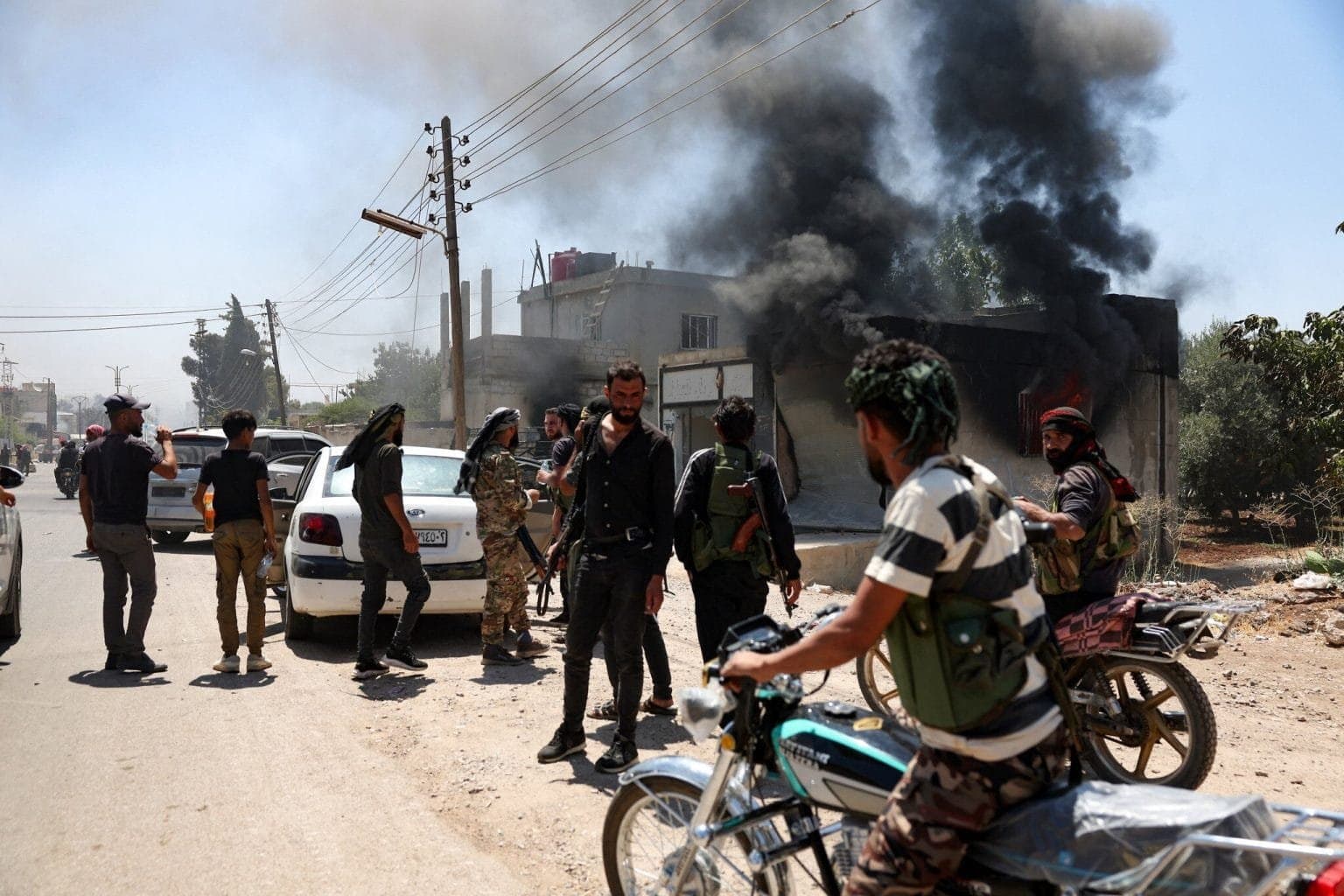
“Home News Business Energy Opinion Lifestyle Sports Video Podcast Home News Business Energy Opinion Lifestyle Sports Video Podcast Close the sidebar Home News Middle East A drone view of the city of Sweida, following renewed fighting between Bedouin fighters and Druze gunmen, despite an announced truce, in Syria July 18, 2025”
The Israeli military claimed these strikes were defensive measures to protect the Druze minority community, with the IDF stating they 'will not tolerate harm to Druze in Syria and will continue to act for their protection.'

The Israeli Defense Minister Israel Katz emphasized that Israel will not allow the Syrian government to take advantage of the ongoing war against Iran and Hezbollah to harm its Druze population, warning 'if needed - we'll attack with more force.'
The IDF further indicated it continues to monitor developments in southern Syria and will act according to political leadership directives, framing these actions as necessary measures to protect vulnerable minority groups amid escalating regional tensions.
Sweida Violence Escalation
Intensifying sectarian violence erupted in Sweida province on Thursday, with fighting breaking out between Syrian government forces and allied tribal fighters against Druze factions.
Local Druze media reported that Syrian internal security forces were targeted with mortar shells, following which heavily armed groups from the National Guard Druze paramilitary group were seen moving in the Sweida area.

The clashes reportedly began after mortar shells fell on areas under Druze faction control, and the fighting later spread to residential neighborhoods in the city of Sweida, sowing panic and fear among residents.
According to the Syrian Observatory for Human Rights, thousands of people were estimated to have been killed when similar clashes erupted between Druze fighters and Sunni Bedouin tribes in Sweida province last July, with the Syrian government claiming its forces intervened to stop the clashes, though witnesses and monitors accused them of siding with the Bedouin.
Syrian Neutrality Stance
Syrian President Ahmed al-Sharaa has publicly articulated his government's commitment to maintaining Syria's neutrality amid mounting regional pressures.
“This was in response to yesterday's events in whichDruzecivilians were attacked in the As-Suwayda area”
In a speech delivered after Eid al-Fitr prayers in the presidential palace in Damascus, Sharaa stated: 'We are calculating our steps with extreme precision and working to keep Syria away from any conflict.'
He emphasized that Syria, despite being 'an arena of conflict and strife during the past 15 years and before that,' now stands 'in harmony with all neighboring countries regionally and internationally.'
Sharaa further declared that 'Syria stood in full solidarity with the Arab states,' positioning his government as seeking to avoid becoming directly involved in the broader regional conflicts.
This diplomatic stance comes as Damascus faces increasing pressure from both internal sectarian tensions and external military interventions, particularly from Israel's expanding military operations in Syrian territory.
Regional Context
The Israeli strikes in Syria occur against a backdrop of intensifying West Asian tensions, particularly following the United States and Israel's attacks on Iran on February 28 that killed several Iranian leaders.
The broader regional conflict has created a complex security environment where Israel has expanded its military operations significantly since the overthrow of Syria's longtime ruler Bashar al-Assad in December 2024.
Under US pressure, Israel and Syria in January agreed to establish an intelligence-sharing mechanism, an unprecedented step aimed at ending decades of hostility.
However, since Assad's removal, Israel has moved its forces into the UN-patrolled demilitarized zone on the Israeli-annexed Golan Heights and has carried out hundreds of strikes in Syria along with regular incursions.
The current escalation in Sweeda province represents a continuation of Israel's strategy to maintain influence in southern Syria while positioning itself as a protector of minority communities, particularly the Druze, despite the complex internal dynamics driving the sectarian violence.
Minority Rights Concerns
Syria's minority communities, particularly the Druze, have faced significant human rights challenges in the aftermath of the Assad regime's collapse.
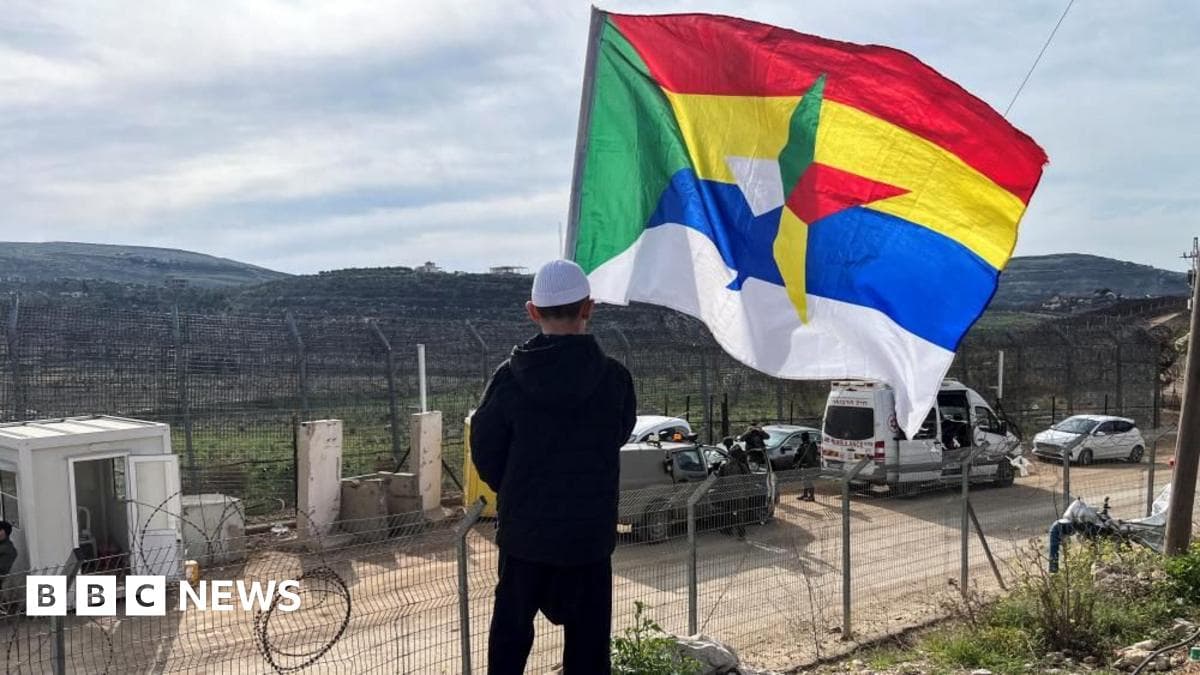
“- Published Israel says it has carried out air strikes on Syrian government infrastructure in the south of the country, in response to what it described as attacks on Druze civilians in Suweida province”
An independent international commission of inquiry report published by the Office of the United Nations High Commissioner for Human Rights (OHCHR) documented that since Syria's new government seized power from Bashar al-Assad's regime in December 2024, minorities have faced abductions, sexual violence, and arbitrary detentions.
The Druze, an ethnoreligious minority group of approximately one million people, are concentrated primarily in Syria and Lebanon, with 104,000 living in Israel including about 18,000 in the Golan Heights.
In Israel, the Druze community holds special status among minority groups, with members attaining high-level positions in political, public, and military spheres.
This unique relationship has influenced Israel's self-declared role as protector of the Druze in Syria, though the OHCHR report noted that while violations continue, the new Syrian authorities have taken some accountability measures through the creation of national investigative committees.
Future Implications
The ongoing crisis in Sweeda province highlights the complex interplay between internal Syrian dynamics, regional power struggles, and external military interventions.
While Israel positions itself as a protector of minority rights, particularly the Druze community, its military actions against Syrian regime infrastructure risk further destabilizing an already volatile situation.
The Syrian government's attempts to maintain neutrality while dealing with internal sectarian conflicts represent a delicate balancing act in a region increasingly dominated by competing foreign interests.
Analysts suggest that the latest escalation is more closely tied to internal Syrian dynamics than to broader regional war, though the timing coincides with heightened tensions between US-Israel and Iran.
As Syria navigates this challenging environment, the international community continues to monitor both the humanitarian situation in minority communities and the potential for further regional escalation that could draw more parties into the conflict.
More on Syria
UAE Dismantles Terrorist Network Linked to Iran and Hezbollah, Arrests 109
19 sources compared
US and Israel Kill Iran's Supreme Leader in Wide-Ranging Strikes
24 sources compared

Israel's Strikes on Lebanon Force Tens of Thousands Back Into Syria as Crossings Reopen
14 sources compared
Syria Deploys Army Units Along Lebanon And Iraq Borders, Says Measure Is Defensive
16 sources compared