
Israel Strikes Vehicles South Of Beirut After Rubio Mediated Lebanon-Israel Talks
Key Takeaways
- Lebanon and Israel began direct talks after a landmark meeting.
- Israeli strikes hit two vehicles on Beirut's coastal highway near Saadiyat and Jiyeh.
- Talks were conducted in Washington, aimed at easing the conflict.
Direct talks begin
Lebanon and Israel began direct talks in Washington after a landmark meeting between the Israeli and Lebanese ambassadors to the United States, with the process framed by U.S. officials as a pivotal moment even as fighting continued.
“Hezbollah MP to AFP: direct Lebanon-Israel talks a 'grave error' Hezbollah lawmaker Hussein Hajj Hassan told AFP on Thursday that the Lebanese government's decision to hold direct negotiations with Israel was a "grave error", urging Beirut to stop making concessions to Israel and the United States”
The BBC reported that the talks were the first direct, high-level contact in three decades between the two countries, which remain formally at war, and said US Secretary of State Marco Rubio mediated discussions between Israeli ambassador Yechiel Leiter and Lebanese ambassador Nada Moawad.

Rubio described the meeting as “This is a historic opportunity,” and said it was flanked by US, Israeli and Lebanese flags while he acknowledged the “decades of history” behind the conflict.
The BBC also quoted Lebanese President Joseph Aoun voicing cautious optimism that he hoped the negotiations would “mark the beginning of the end of the suffering of the Lebanese people.”
Israel’s side, the BBC said, described the negotiations as part of a longer-term strategy against Hezbollah, with Leiter saying the meeting with Moawad led him to believe Israel and Lebanon were “on the same side of the equation,” calling the negotiations the beginning of a “battle against Hezbollah.”
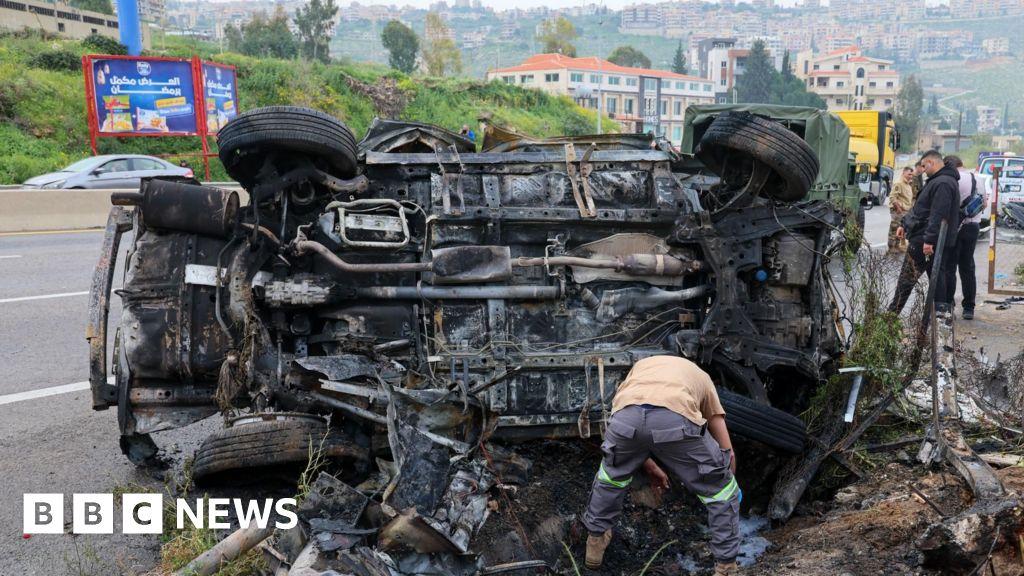
Even with the diplomatic contact, the BBC reported that Israel and Hezbollah continued attacks after the talks, including Israeli strikes on two vehicles on the coastal highway south of Beirut near Saadiyat and Jiyeh.
The BBC further said that Israel renewed calls for residents across a large part of southern Lebanon to evacuate amid ongoing bombardment, and that Israel announced plans for a security buffer zone extending eight to 10km inside Lebanese territory.
Why talks now
The push for direct negotiations emerged from a wider war that began when Hezbollah entered the fray after missiles were fired across the border, and it was shaped by the interplay between U.S.-Iran ceasefire efforts and Lebanon’s desire to keep its conflict separate.
PBS, drawing on the Associated Press, said that on March 2, two days after the U.S. and Israel launched their war on Iran, Hezbollah fired missiles across the border and Israel responded with an intense bombing campaign and ground invasion.
PBS reported that Lebanon’s current government came to power in early 2025 on a reformist platform that included disarming non-state actors, and that it moved to criminalize Hezbollah’s military activities, declared Iran’s ambassador persona non grata, and banned the Iranian Revolutionary Guard.
PBS also said President Joseph Aoun offered direct negotiations with Israel in exchange for a cessation of hostilities, but that neither Israel nor the Americans responded at the time.
The AP account described how the diplomatic landscape shifted after an announcement of a truce between Iran and the United States and talks between the two brokered by Pakistan, with Tehran including as a condition for permanent ceasefire that the cessation of hostilities should include Lebanon.
PBS reported that Israel dismissed Lebanon’s inclusion in the ceasefire and Washington later followed suit, while Lebanon wanted to separate the war in Lebanon into its own diplomatic track.
The BBC said the fighting continued despite a ceasefire between the US and Iran, which Israel said does not apply to its campaign in Lebanon, and it reported that Lebanese authorities said a wave of attacks across the country a week ago killed more than 350 people in only 10 minutes.
Hezbollah rejects talks
Hezbollah’s leadership and allies portrayed the direct negotiations as a dangerous concession that should be halted until a ceasefire is secured, while also arguing that the resistance issue is internal to Lebanon.
“Hezbollah MP says direct negotiations with Israel a 'grave error' Hezbollah lawmaker Hussein Hajj Hassan told AFP on Thursday that the Lebanese government's decision to hold direct negotiations with Israel was a "grave error", urging authorities to stop making concessions to Israel and the United States”
Naharnet and Al-Monitor both reported that Hezbollah MP Hussein Hajj Hassan told AFP on Thursday that the Lebanese government’s decision to hold direct negotiations with Israel was a “grave error,” urging Beirut to stop making concessions to Israel and the United States.
Naharnet quoted him saying, “Direct negotiations with the enemy are a grave sin and a grave error,” and said he questioned how talks could proceed without a ceasefire, asking, “so how can there be contact at the level Trump mentioned?”
Al-Monitor included the same AFP framing and added that Hajj Hassan criticized the government for agreeing to negotiations and yielding to “US wishes” before a ceasefire had been reached in Lebanon.
Both outlets also reported that Hajj Hassan urged Lebanese authorities to halt what he called “this series of useless concessions... to a treacherous and cunning enemy, and to a hypocritical, deceitful, evasive and lying America.”
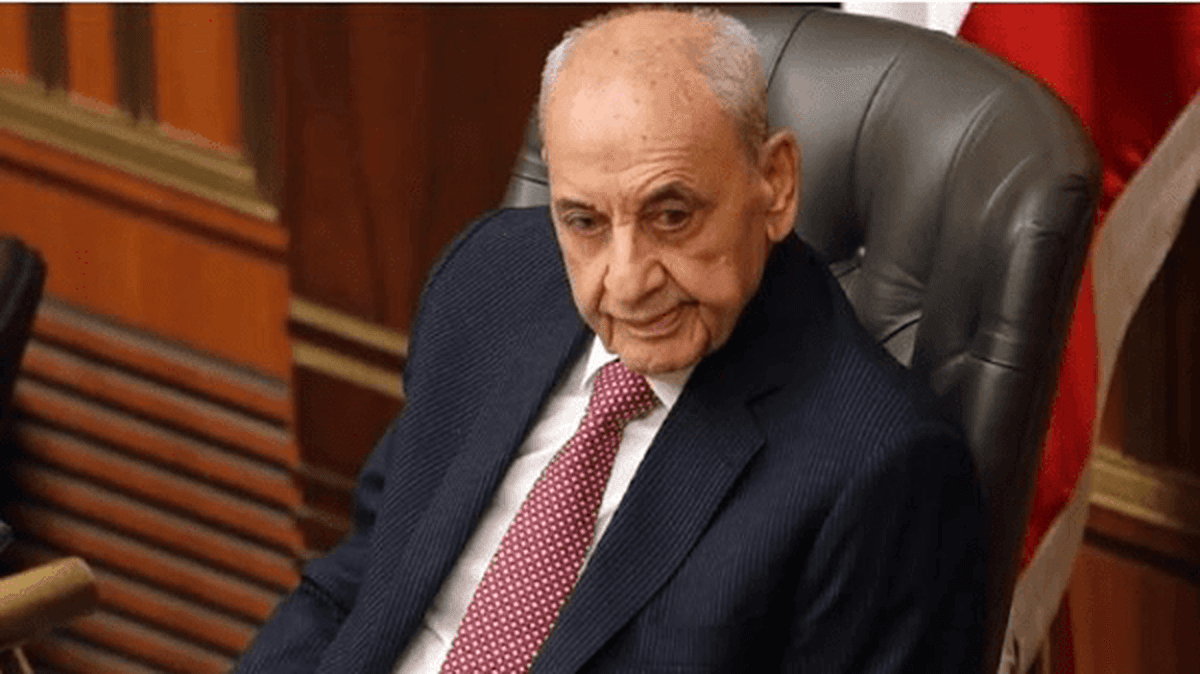
Al-Monitor further reported that Iran’s parliament speaker Mohammad Bagher Ghalibaf told his Lebanese counterpart and Hezbollah ally Nabih Berri that “for us, a ceasefire in Lebanon is just as important as a ceasefire in Iran.”
The BBC described the diplomatic move as exposing deep divisions within Lebanon, and it reported that Hezbollah strongly rejected the negotiations, with MP Hassan Fadlallah warning on Wednesday that a rift in Lebanon could widen over the government’s decision to negotiate with Israel.
Truce timing and competing claims
The sources also diverged in how they described the immediate diplomatic sequence around U.S. President Donald Trump’s remarks and Lebanon’s response, while Hezbollah framed the truce and negotiations through the lens of ceasefire conditions.
Al-Monitor reported that US President Donald Trump later said Israel and Lebanon had agreed to a 10-day truce, which would start at 2100 GMT on Thursday, and it described Hajj Hassan’s opposition as he spoke before Trump’s announcement.
Al-Monitor also said Trump had said the Lebanese and Israeli “leaders” would speak on Thursday, but that an official Lebanese source told AFP that President Joseph Aoun had rejected a US request for a direct phone call with Israeli Prime Minister Benjamin Netanyahu on Thursday.
It then added that Aoun’s office said the president had held a phone call with Trump and thanked the US leader for his “efforts” to secure a ceasefire.
Naharnet similarly reported that Trump said the Lebanese and Israeli “leaders” would speak on Thursday, but that President Joseph Aoun’s office has not confirmed the call, stressing the importance of a ceasefire before any direct negotiations.
Al-Monitor quoted Aoun’s position that a ceasefire was “the natural starting point for direct negotiations between the two countries,” and said he emphasized that “the negotiations are the undertaking of Lebanese authorities alone as this is a sovereign matter that nobody else can be involved in,” alluding to Iran.
The BBC’s account said no ceasefire was announced at the meeting in Washington, and it quoted Rubio saying, “This is a process, not an event,” and “This is more than just one day. This will take time.”
Casualties and what comes next
As negotiations unfolded, the BBC described the humanitarian crisis across Lebanon as deepening, with Lebanese authorities saying that since fighting resumed on 2 March after a Hezbollah attack on Israel, Israeli attacks had killed at least 2,124 people across Lebanon, including 254 women and 168 children, and displaced more than one million others.
“Hezbollah MP to AFP: direct Lebanon-Israel talks a 'grave error' Hezbollah lawmaker Hussein Hajj Hassan told AFP on Thursday that the Lebanese government's decision to hold direct negotiations with Israel was a "grave error", urging Beirut to stop making concessions to Israel and the United States”
The BBC also reported that twelve Israeli soldiers and two civilians had been killed by Hezbollah over the same period, citing Israeli authorities.
It said the fighting continued after the Washington meeting and included Israeli strikes on the coastal highway south of Beirut near Saadiyat and Jiyeh, while Hezbollah launched about 30 rockets across the border into northern Israel, according to medics and the military.
The BBC further reported that Israeli troops were continuing ground operations in southern Lebanon and that more than 200 Hezbollah infrastructure sites there, including rocket launchers, had been struck over the past 24 hours.
In parallel, PBS described what Lebanon wanted from the talks, saying it sought a cessation of hostilities, withdrawal of Israeli forces from southern Lebanon, release of Lebanese prisoners held in Israel, return of the displaced, and reconstruction.
PBS also said Lebanon pushed for boosting international funding for the military so it could deploy across the country and assume full-sovereignty over the country’s geography.
With no ceasefire announced at the meeting, Rubio told reporters, “This is a process, not an event,” and “This will take time,” leaving the immediate stakes tied to whether the fighting would ease as diplomacy proceeds.
More on Lebanon
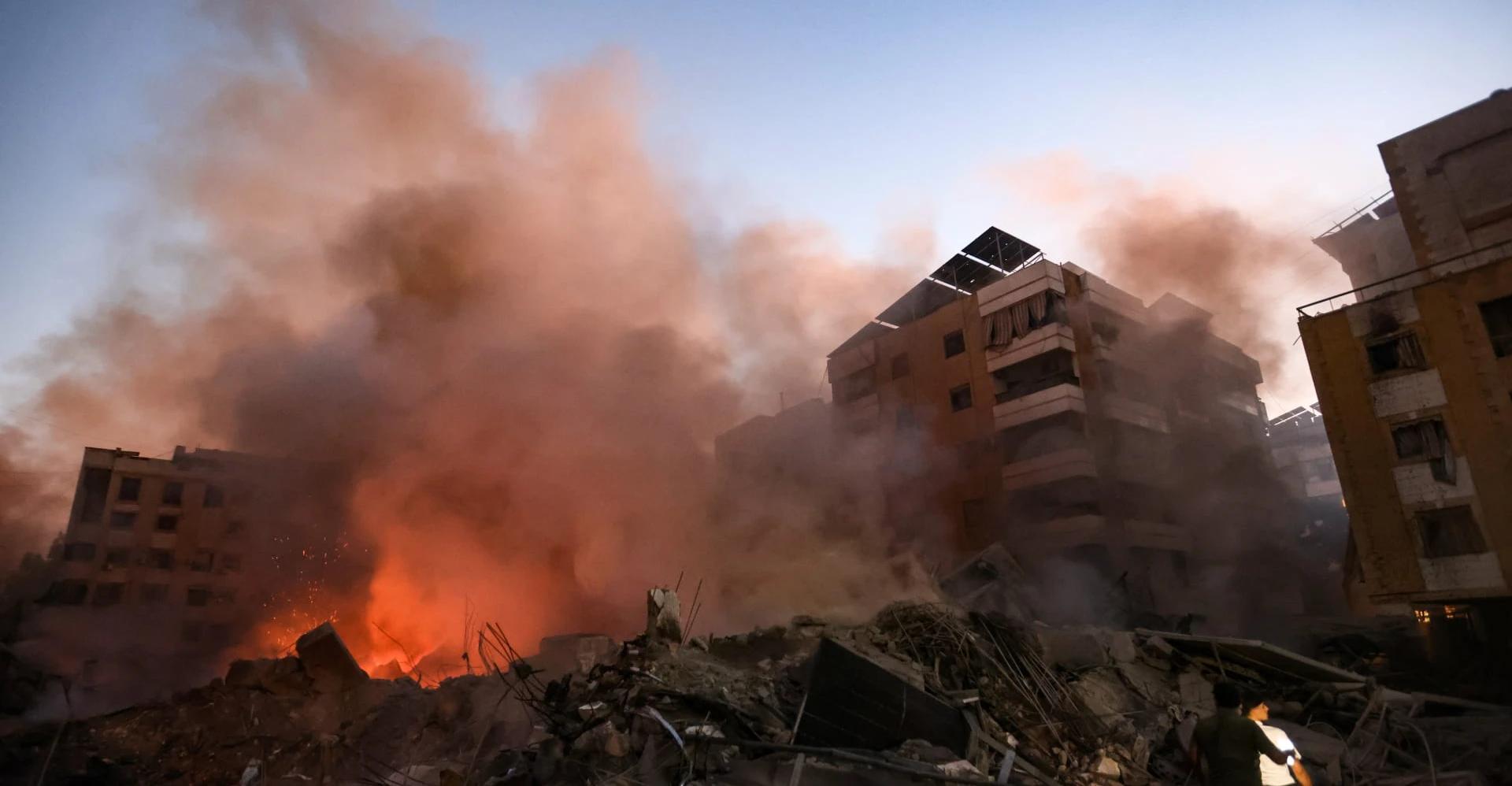
Israeli Artillery Shelling Continues in Southern Lebanon After Israel-Hezbollah Ceasefire Takes Effect
10 sources compared
Israel Strikes Lebanon as Trump’s 10-Day Ceasefire Begins Amid U.S.-Iran Truce
26 sources compared

Trump Announces 10-Day Israel-Lebanon Ceasefire Starting Thursday at 5 P.M. ET
30 sources compared
Hezbollah Rockets And Drones Strike Metula, Nahariya, Haifa Naval Base, And Ma'alot Tarshiha
10 sources compared