
Israel Suspends Tax Actions After Churches Close Holy Sepulchre in Jerusalem Protest
Key Takeaways
- Absentee Property Law allows Israel to confiscate Palestinian properties left in 1948.
- Sheikh Jarrah and Armenian Quarter face evictions and expropriation threats.
- Historic property seizures revived, signaling ongoing displacement in Jerusalem.
Church Closure Reversed
In Jerusalem, the Church of the Holy Sepulchre reopened after three days of closure, following a protest decision by the religious bodies that guard the site.
“70 years ago, in Jerusalem: "My father left, the Qur’an in one hand, his mother in the other”
The Israeli government announced on Tuesday the suspension of the tax and legislative actions that had led the churches to close the Church of the Holy Sepulchre, with Benjamin Netanyahu’s Prime Minister’s Office saying the Jerusalem municipality froze a recently announced tax on church properties not used as places of worship.
The heads of the Greek Orthodox, Armenian and Catholic Churches made the exceptional decision to close the doors on Sunday at noon, posting a placard that read 'too much is too much', 'stop the persecutions'.
tv5monde also reported that the Prime Minister and Jerusalem’s mayor Nir Barkat agreed on the creation of a working group 'that will negotiate with the churches a solution' on the tax issue.
The same report said the Church of the Holy Sepulchre remained closed for the third consecutive day on Tuesday in protest against Israeli policies, after previous closures had been very rare in the last quarter-century.
Nakba Memory and Loss
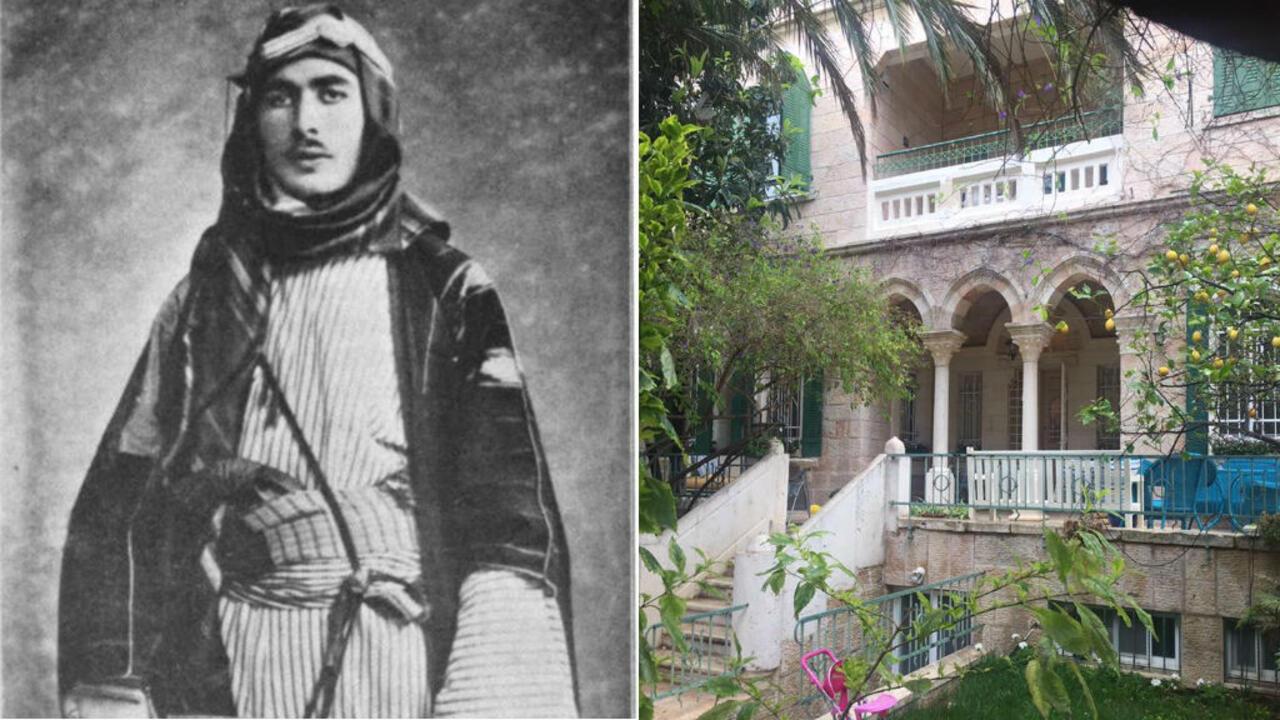
As Palestinians marked the 70th anniversary of the Nakba, Palestinian actress Huda al-Imam described the fight to recover her father’s house, confiscated in 1948 by Israelis.
France 24 said Huda al-Imam was born in Jerusalem in 1959 in Sheikh Jarrah, and that her father’s house in the Baq’a neighborhood was seized in 1948 after the declaration of the State of Israel’s independence.

She told France 24 that “My father, Farid al-Imam, left with his mother because he wanted to save her,” and that he “took his Qur’an in his right hand, his mother in his left hand.”
The report also said that from November 1947 to June 1949, nearly 750,000 Palestinians left, willingly or forcibly, the territories under Israeli control, and that only 150,000 Palestinians of the 1.2 million who lived in Palestine in 1947 remained established in the new state.
France 24 further described how, in December 1948, the Israeli law on “abandoned properties” allowed the seizure of property of anyone absent during the period from November 29, 1947 to September 1, 1948.
Absentee Property and Gaza
The Absentee Property Law is described as one of Israel’s foundational texts that grants the state power to confiscate and seize properties and assets Palestinians were forced to leave behind in 1948.
“A real estate tangle in the Old City of Jerusalem has plunged the Armenian community—present in the Holy City since the fifth century—into fear and panic”
France Palestine Solidarité said the law applies only to Palestinians and that it was enacted in March 1950 by the government of Israel’s first prime minister, David Ben-Gurion, while also stating that Israel used it to justify the expulsion of the Salhiya family and the demolition of their home in the occupied Sheikh Jarrah neighborhood in East Jerusalem.
The same report said the law disadvantages Palestinians by treating them as absentees even if they are present in the country or hold Israeli citizenship, and it quoted legal director Suhad Bishara saying under the law a Galilee Palestinian who became a refugee in Syria and a Palestinian citizen of Israel who left his hometown of Tiberias in 1948 to seek refuge in Nazareth are both treated as absentees.
It also stated that since 1967 the law has been applied to East Jerusalem, the West Bank, and—before the 2005 Gaza disengagement plan—into the Gaza Strip, and that in 2015 Israel’s Supreme Court gave the green light to using the Absentee Property Law after ruling against Palestinians living in the West Bank whose properties in East Jerusalem were being requisitioned because they were considered absentees.
Mondoweiss added that the Israeli government reopened a 58-year-old decision to seize the strategic street of Bab al-Silsila in the Old City of Jerusalem adjacent to the Al-Aqsa Mosque compound, with the Israeli Ministry of Heritage recommending on Sunday that the state-owned Company for the Reconstruction and Development of the Jewish Quarter be given the green light to take over some 50 properties.
More on Gaza Genocide

Israel Deports Hundreds Of Gaza Flotilla Activists To Turkey After International Backlash
10 sources compared
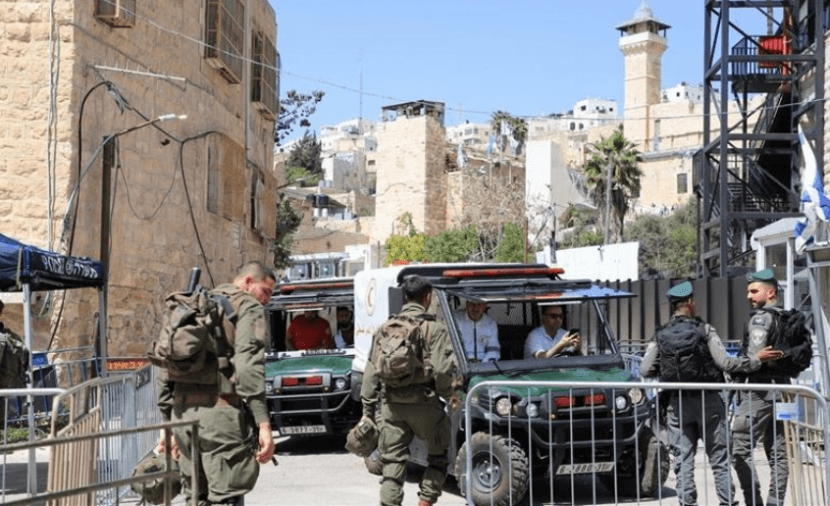
Palestinian Ministry Condemns Israeli Flag Lights and Hebrew Phrases at Hebron’s Ibrahimi Mosque
15 sources compared

Ben Gvir Releases Video Showing Gaza Flotilla Activists Kneeling With Hands Tied
12 sources compared

Trump’s Gaza Board of Peace Warns Funding Gap Threatens Reconstruction Plan
19 sources compared