Gaza Genocide29 April, 20267 min read
Israel Uses Water as Weapon of Collective Punishment in Gaza, Doctors Without Borders Says
This article is an automated aggregation of coverage from news outlets. Our editorials offer in-depth analysis curated by the NewsCord team.
MSF says Israel weaponizes water access against Gaza as collective punishment. Destruction of water infrastructure, attacks on systems, and restrictions on supplies drive shortages and disease.

The Jerusalem Post was read line by line by the Watchdog: 6.2. See the score →
MSF report: water weapon
Doctors Without Borders (MSF) published a report titled “Water as a Weapon” on Tuesday the 28th, saying Israel has instrumentalized access to water, sanitation and hygiene services during the war in the Gaza Strip. The report describes three mechanisms through which Israeli forces put the entire population at risk: “the destruction and attacks on infrastructure,” “the obstruction of humanitarian access within Gaza through forced displacement and movement restrictions,” and “the systematic blocking or delaying of essential supplies.” It says “a large portion of the water supply and treatment network, including wells and desalination facilities, was destroyed or became inaccessible.”
MSF’s analysis, according to the report, concludes that Israeli actions resulted in “inaccessibility to water and sanitation systems,” which MSF says “constitutes a collective punishment of the population of Gaza.” The Folha de S.Paulo account also says the report is based on medical data collected at primary health care centers in Khan Yunis in southern Gaza, alongside supply figures and security incidents involving MSF itself.
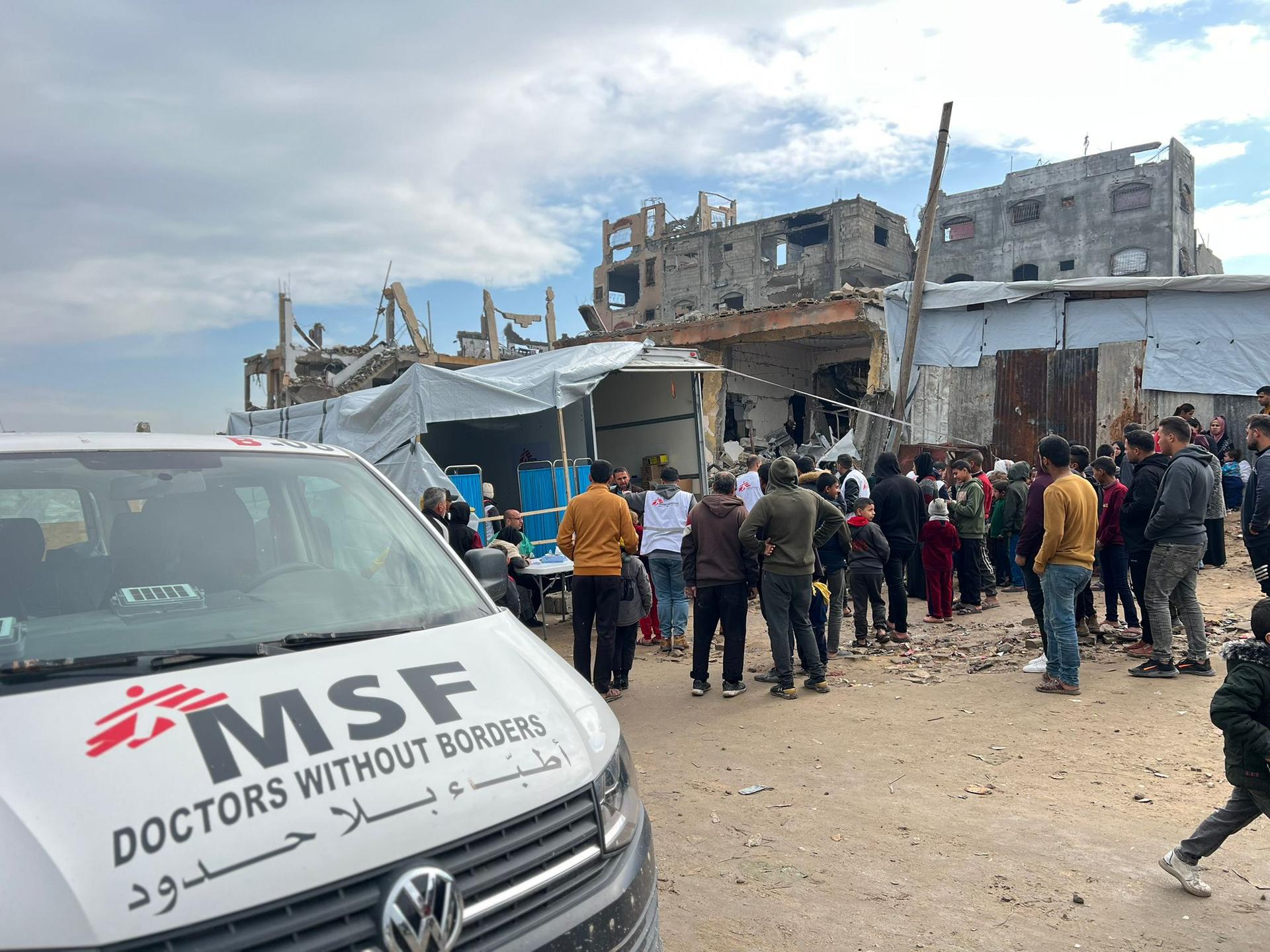
MSF says it has been operating in the Palestinian region since before October 7, 2023, when Hamas attacked Israel and triggered the two-year war in Gaza, and it says its international teams remain in the territory despite constant withdrawal orders by Israeli forces. The report also ties the water crisis to disease patterns, including that from 1,073 interviews conducted May to August 2025, “at least 23 percent of people had faced some gastrointestinal illness in the month preceding the survey.”
Infrastructure damage and access
MSF’s report, as described by multiple outlets, centers on the destruction and inoperability of Gaza’s water and sanitation systems and on restrictions that prevent MSF and others from restoring them. The MSF account says “Israel has destroyed or damaged nearly 90 per cent of water and sanitation infrastructure in Gaza,” naming “desalination plants, boreholes, pipelines and sewage systems.” It adds that MSF teams documented “the Israeli military shooting at clearly identified water trucks or destroying boreholes that were a lifeline for tens of thousands of people,” and says violent incidents “often occurred as water was being distributed to people, injuring Palestinians and aid workers and damaging equipment.”
In the Folha de S.Paulo report description, MSF says data from the World Bank, the European Union and the UN indicate that “at least 89 percent of infrastructure related to these systems was destroyed or damaged.” The report also describes how sanitation collapse forces people into unsafe practices, saying that “improvised toilets also lead to infiltration of human waste, including feces, into groundwater, making the region's well water unfit for consumption.”
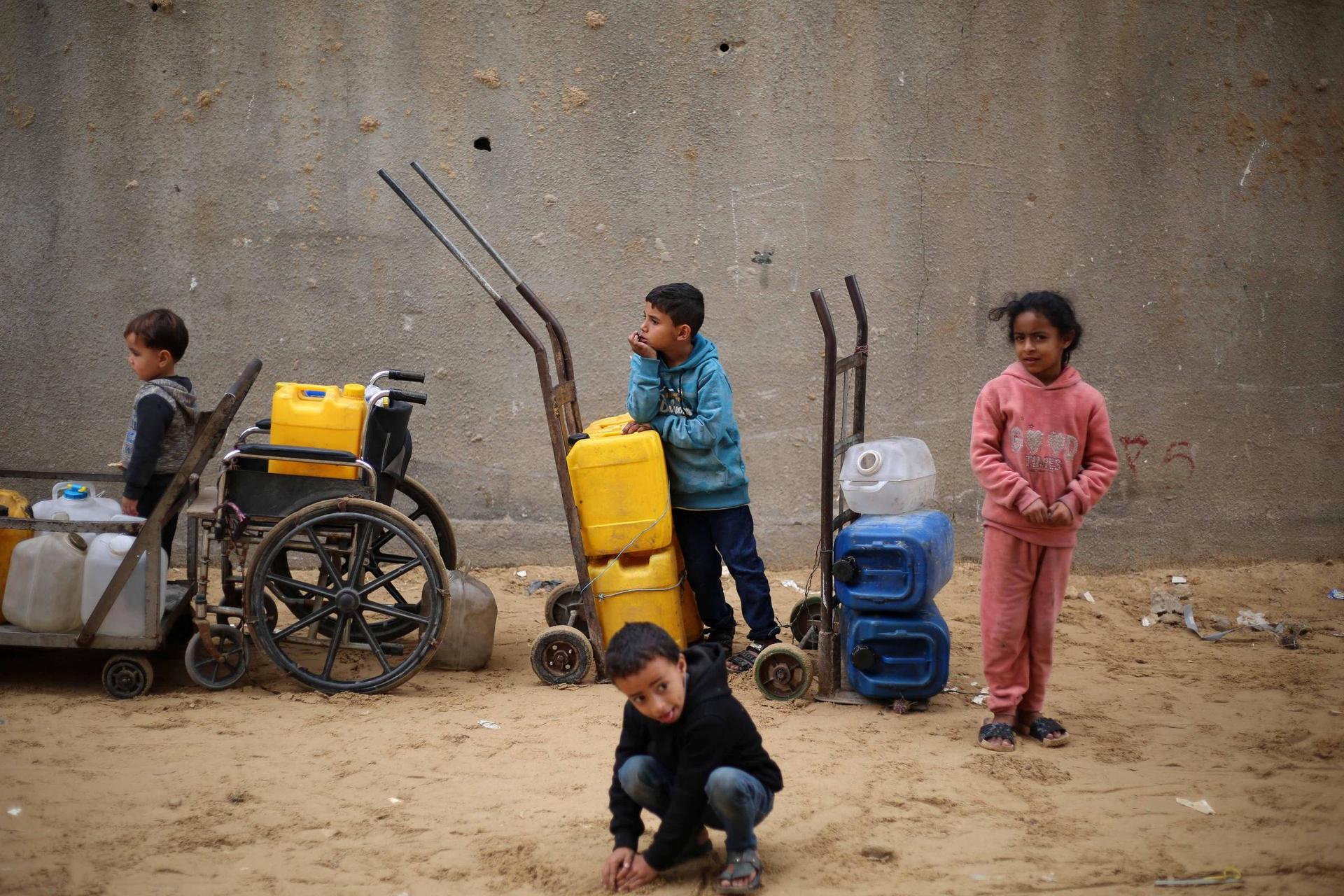
MSF says it tried to bring in new reverse osmosis equipment after the start of the conflict, but that it was allegedly denied or delayed entry “under circumstances of arbitrary nature, without plausible justification.” In one described case, MSF says it rehabilitated a well and installed a reverse osmosis unit to treat water for “almost 16,000 people per day in Rafah in southern Gaza,” and that it shared “the coordinates and the purpose of the installation with the Israeli forces.”
MSF staff and Palestinian testimony
MSF’s report and accompanying statements include direct warnings from MSF leadership and testimony from Palestinians describing violence tied to water access.
Claire San Filippo, MSF emergency manager, is quoted saying, “Israeli authorities know that without water life ends. Yet they have deliberately and systematically obliterated water infrastructure in Gaza, while consistently blocking water-related supplies from entering,” and she adds, “Palestinians have been injured and killed simply trying to access water,” according to the MSF account.
The same MSF text says the deprivation, combined with “dire living conditions, extreme overcrowding and a collapsed health system, create a perfect storm for the spread of diseases.”
It also includes a Palestinian account from Hanan, a woman in Gaza City, who says, “My grandson was in Nuseirat, in July [2025],” and continues, “He went to get some drinking water. He was standing in line with other kids and they [Israeli forces] killed him. He was 10 years old… Getting water is not supposed to be dangerous.”
Another Palestinian voice appears from Ali, described as a displaced person living in a camp in Deir Al-Balah, who says, “We need water,” and adds, “It does not make sense. It’s like we are asking the world for the essentials of life.”
The Folha de S.Paulo description of the report also frames the health impacts through interview data, stating that “upper respiratory tract infections affected people in about 22 percent of households from May to August that year, and 27 percent from late January to March.”
In the MSF account, the organization urges Israeli authorities to “immediately restore water for people at the required levels in Gaza,” and it calls on Israel’s allies to use leverage to pressure Israel to stop impeding humanitarian access, including water infrastructure needs.
Israeli rebuttal and dispute
The Jerusalem Post reports a direct rebuttal from Israel’s government body COGAT, which rejected MSF’s claims and called the statement “factually incorrect.” In its response, COGAT said, “The only party weaponizing humanitarian aid is Hamas,” and it added that it was “disappointing, though not surprising, that an organization like MSF, which refuses to even designate Hamas as a terror group, continues to echo its propaganda.” The Jerusalem Post also quotes COGAT saying, “MSF’s claims are a desperate attempt to regain legitimacy after losing its professional and moral direction,” and it argues that “Their own operational delays are a result of their refusal to follow standard registration protocols and their history of employing individuals linked to terror.”
COGAT’s statement, as reported, says it supplies water to Gaza “consistently, exceeding humanitarian thresholds,” and it specifies that “well over 70,000 cubic meters of water are facilitated daily.” It also says Israel “facilitates and provides water from its own sources,” and it lists operational steps: “We’ve activated four water lines, coordinated vital repairs, connected power lines to facilities, and consistently delivered fuel for WASH infrastructure in coordination with the UN, UNICEF, and the ICRC.”

The Jerusalem Post notes that when contacted, COGAT referred the paper to the IDF for further clarification. By contrast, MSF’s report text insists that “Israel has destroyed or damaged nearly 90 per cent of water and sanitation infrastructure in Gaza,” and it says MSF teams documented “the Israeli military shooting at clearly identified water trucks.”
Disease, distribution limits, and next steps
MSF’s report links water deprivation to measurable distribution failures and to health consequences, while also laying out demands for immediate restoration and for international pressure. In the MSF account, MSF says that “between May and November 2025, one in five of our water distributions ran dry as our trucks were unable to carry enough water for all the people who needed it,” and it adds that “Displacement orders have blocked our teams from accessing areas where we had provided water to hundreds of thousands of people.” It also says that “One third of our requests to bring in critical water and sanitation supplies have been rejected or left unanswered,” and it lists supplies including “water desalination units, pumps, chlorine and other chemicals to treat water, water tanks, insect repellent and latrines.”
The MSF account ties the deprivation to disease patterns, saying that “Skin diseases accounted for nearly 18 per cent of MSF general healthcare consultations in 2025,” and that “between May and August 2025, nearly 25 per cent of people had experienced gastrointestinal illness in the previous month.” Folha de S.Paulo similarly reports that “at least 23 percent of people had faced some gastrointestinal illness in the month preceding the survey,” and it says upper respiratory infections affected “about 22 percent of households from May to August” and “27 percent from late January to March.”
For the immediate future, MSF urges Israeli authorities to “immediately restore water for people in Gaza at the required levels,” and it calls on “Israel’s allies” to use leverage to pressure Israel to stop impeding humanitarian access, including water infrastructure needs. The Jerusalem Post’s account of COGAT’s response adds that COGAT claims it “supplies water to Gaza consistently,” but it does not accept MSF’s framing of collective punishment, leaving the next steps contested between MSF’s demands and COGAT’s rebuttal.