Israeli Airstrikes Kill 20 in Southern Lebanon as Army Orders Evacuation of 11 Villages
Key Takeaways
- Israeli airstrikes in southern Lebanon killed at least 10 people.
- Ceasefire talks mediated by the United States amid ongoing Israeli strikes.
- Nabatieh region and Tyre area targeted.
Southern Lebanon Strikes
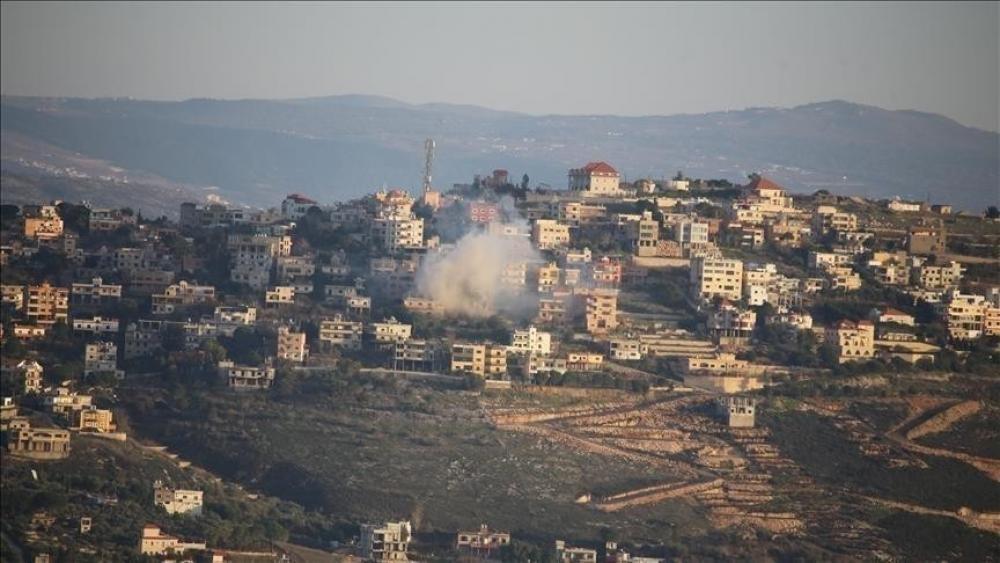
Israeli airstrikes and artillery in southern Lebanon killed at least 20 people over the past 24 hours, according to Lebanese authorities cited by L'Orient Today, as the Israeli army called for the evacuation of 11 villages in southern Lebanon before launching heavy airstrikes in the Nabatieh region.
L'Orient Today reported that the bombings in southern Lebanon have killed at least 10 people since this morning, while the Health Ministry reported 20 deaths in the past 24 hours.

Haaretz likewise said that “Israel's strikes in southern Lebanon have killed 20 people and wounded 46 others” in the last 24 hours, including paramedics and a child, citing the Lebanese Health Ministry.
L'Orient Today also stated that “The Health Ministry reports 20 deaths in the past 24 hours,” and it added that compared with the previous day there were 20 deaths and 46 injuries in the past 24 hours.
The same L'Orient Today live updates described Israeli strikes reaching multiple locations, including a “new Israeli strike on Haris, in the Bint Jbeil district,” and it said Hezbollah claimed responsibility for rocket fire at Israeli soldiers in Qantara.
In parallel, Today (Western Mainstream) reported that Israeli shells killed two in Arab Salim in Nabatieh and that residents fled Zahrani as the Israeli army heavily bombarded the Nabatiyeh district on Sunday morning.
The reporting also tied the violence to a broader pattern of drone strikes and artillery, including a drone strike on a mosque in Sammaaiyeh that killed three people, according to Today.
Evacuation Orders and Villages
Alongside the strikes, Israel issued forced displacement orders to residents in southern Lebanon, with Al Jazeera reporting that the Israeli military told people to evacuate immediately and move away by at least 1,000 metres into open areas.
Al Jazeera quoted the Israeli military’s Arabic-language spokesman Avichay Adraee posting on X: “For your safety, you must evacuate your homes immediately and move away from the villages and towns by at least 1,000 metres [0.6 miles] into open areas.”

The warning covered more than 10 villages and towns, including several in Nabatieh north of the Litani River, south of which Israel has stationed troops, according to Al Jazeera.
Al Jazeera also said that Lebanon’s state-run National News Agency later reported a series of Israeli strikes across southern Lebanon, including on towns not mentioned in the displacement order.
L'Orient Today’s live updates described the Israeli army calling for the evacuation of 11 villages in southern Lebanon on Sunday morning before launching heavy airstrikes in the Nabatieh region.
Today provided the names of the 11 villages affected by the forced evacuations, listing Doueir, Arab Salim, Sharqieh, Jibsheet, Breikeh, Qaaqayet al-Jisr, Qseibeh, and Kfar Sir in the Nabatieh district, plus Kfar Dounin and Braasheet in the Bint Jbeil district, and Srifa in the Sour district.
Today added that Doueir and Jibsheet had already been named in previous threats published by the army and that residents were told to move at least one kilometer away.
The same Today report described how Israeli artillery fire struck Sharqieh, Qseibeh, and Srifa, and it said strikes completely destroyed the restaurant “al-Oustoura” and a neighboring pharmacy in Arab Salim, killing two people.
Ceasefire, Threats, and Escalation
Al Jazeera framed the displacement orders against the backdrop of a truce meant to halt fighting with Hezbollah, saying Israel issued new forced displacement orders “despite a truce meant to halt fighting with the armed group Hezbollah.”
Al Jazeera reported that since April 17, a fragile United States-brokered ceasefire has been in place between Israel and Lebanon, aimed at halting violence between Hezbollah and Israel’s military.
It added that on Wednesday, Israel’s military chief of staff, Eyal Zamir, threatened to strike Hezbollah “beyond the Yellow Line”, which marks the area of Israeli control.
Al Jazeera quoted Zamir saying: “Any threat, anywhere, against our communities or our forces – including beyond the Yellow Line and north of the Litani – will be eliminated,” during a visit to Israeli troops.
Al Jazeera also said the US has called for direct peace negotiations between Lebanon and Israel, but Lebanese President Joseph Aoun said on Wednesday that Israel should fully implement the ceasefire before the talks can take place.
L'Orient Today’s live updates included a separate thread of Hezbollah claims, including that Hezbollah attacked Israeli soldiers in Naqoura at 11 a.m. and then at 12:30 p.m. using exploding drones, and that Hezbollah fired rockets at Israeli targets in Houla at 5:45 p.m.
Asharq Al-Awsat English, meanwhile, described Israeli statements and battlefield developments as signaling a prolonged conflict in southern Lebanon, with retired brigadier general Saeed Qazah saying an Israeli withdrawal from the “Yellow Line” would not come easily or unilaterally.
The same Asharq Al-Awsat report also quoted retired brigadier general Naji Malaeb saying, “We are facing a situation that goes beyond destruction itself,” and it described the “Yellow Line” as a process of “erasing landmarks” and “settling scores with Hezbollah.”
Religious Sites and Demolitions
The reporting also highlighted Israeli damage to religious sites and the political reaction to it.
L'Orient Today said the Israeli army confirmed it had damaged a religious building, following “the outcry over the demolition of a convent and a school for nuns in Yaroun,” and it later added that the Yaroun municipality condemned destruction of a husseiniyeh by the Israeli army.
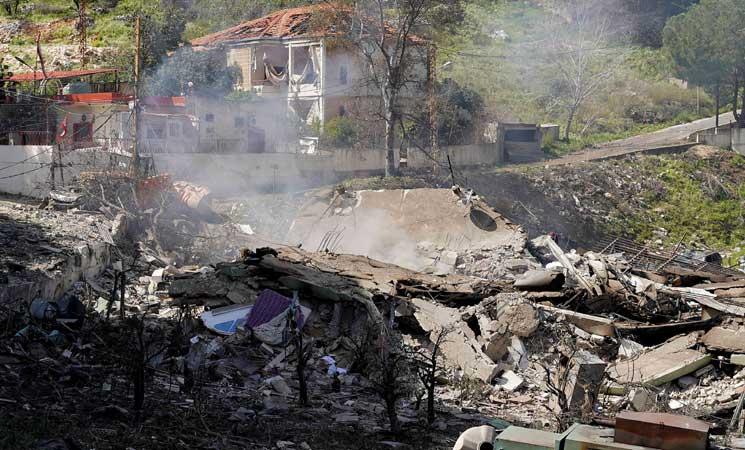
In that live update, Yaroun municipality stated in a statement that it was “not surprised” by the action, and it said the Israeli army was heavily criticized on Saturday for having destroyed a convent and a religious school in the same village.
Today’s report similarly described Israeli strikes on religious sites, saying the Israeli state had previously carried out continuous bombardment overnight, including killing three people in a drone strike on a mosque.
L'Orient Today also reported that “Two people were killed in this morning's Israeli strike on Breikeh,” and it said the Israeli army also carried out a major explosion near Shamaa.
In addition, L'Orient Today described sirens sounding in northern Israel after rocket fire from Lebanon, and it tied the broader battlefield narrative to Hezbollah’s claims of attacks using exploding drones and rockets.
Asharq Al-Awsat’s analysis of the “Yellow Line” and the “zero zone” also framed destruction as serving aims beyond immediate military needs, with Naji Malaeb saying, “Destroying a few kilometers does not secure northern Israel,” and adding that “What is happening is an attempt to engineer demographic change and remove villages in preparation for imposing a future occupation reality.”
Numbers, Injuries, and What Comes Next
The sources also provided cumulative casualty figures and described how the conflict’s trajectory is being interpreted by different actors.
Al Jazeera said Lebanon’s Ministry of Public Health reported at least 10 people were killed in Israeli attacks across the country on Saturday, and it gave a total death toll since the Israel-Hezbollah war escalated on March 2 of 2,659 with 8,183 injured.

L'Orient Today’s live updates likewise stated that the Lebanese Health Ministry reported 2,679 people have been killed and 8,229 wounded by Israeli attacks on the country since March 2, and it said that compared to yesterday’s figures there have been 20 deaths and 46 injuries in the past 24 hours.
Haaretz’s report focused on the last 24 hours, saying 20 people were killed and 46 others wounded, including paramedics and a child, in line with the Lebanese Health Ministry.
Asharq Al-Awsat’s analysis added that technological developments on the battlefield, particularly drones, are adding complexity, and it quoted Saeed Qazah saying that “Even a limited operation could trigger wider escalation.”
The same report said Qazah expected the conflict’s expansion to be tied not only to developments in Lebanon but also to the regional situation, adding that “Any confrontation between Iran and the United States could directly affect the southern front.”
Al Jazeera, meanwhile, reported that the US has called for direct peace negotiations between Lebanon and Israel, but it said Joseph Aoun insisted Israel should fully implement the ceasefire before talks can take place.
In the live updates, L'Orient Today also included a line about Donald Trump announcing he would study a new plan from Tehran for a settlement of the Middle East war, warning that he was unlikely to accept it, linking the immediate battlefield to broader diplomatic signals.
More on Other

Timmy the Humpback Whale Is Transported From Germany’s Baltic To The North Sea
14 sources compared
Gaza Ceasefire Death Toll Reaches 818 Martyrs, 2,301 Injuries Since October 11, 2025
17 sources compared
Israeli Colonists Assault Jalud Residents, Injuring Three Palestinians South Of Nablus
27 sources compared

Extremist Israeli Settlers Leave Zahran Shanabla in Coma After Qusra Attack
10 sources compared