Gaza Genocide15 April, 20265 min read
Israeli Airstrikes Kill Abdul Malik And Abdul Sattar Al-Attar In Gaza
This article is an automated aggregation of coverage from news outlets. Our editorials offer in-depth analysis curated by the NewsCord team.
Vance said Gaza aid is at its highest in five years. Palestinian authorities criticised the claim as inaccurate.

Middle East Eye was read line by line by the Watchdog: 3.1. See the score →
Aid dispute and strikes
Israeli airstrikes and gunfire killed two Palestinian brothers and wounded three others in the northern and central Gaza Strip, according to Al-Jazeera Net, which said the brothers Abdul Malik and Abdul Sattar Al-Attar were brought to al-Shifa Hospital in western Gaza City after a drone strike on Beit Lahia.
Al-Jazeera Net reported that eyewitnesses said the strike targeted an area outside the Israeli army's area of control under the ceasefire agreement, while the Israeli army opened fire toward residents' homes and the displaced east of the Al-Maghazi refugee camp.
The same Al-Jazeera Net report placed the daily Israeli violations of the ceasefire in effect since October 10, 2025, and said the Gaza government media office denied what it called “misleading claims” by U.S. Vice President J.D. Vance about aid entering the enclave.
It also said the Gaza government media office announced that Israel had committed 2,400 violations of the ceasefire, including killing, arrest, blockade, and starvation.
Al-Jazeera Net further reported that the ongoing violations of the agreement have resulted in the martyrdom of 765 Palestinians and injuries to 2,140 others, citing a statement from the Ministry of Health.
In the same account, Al-Jazeera Net said the government media office argued that the average number of trucks entering Gaza does not exceed 227 trucks per day out of 600 allocated by the humanitarian protocol, and that fuel trucks do not exceed 14% of the actual need.
Vance’s claim challenged
Middle East Eye reported that Gaza’s de facto authorities criticized U.S. Vice President JD Vance for “inaccurate and misleading” claims that more humanitarian aid is entering the Strip now than at any point in the past five years.
It said Vance spoke at a Turning Point USA (TPUSA) event on Tuesday and claimed, “we have taken that situation seriously,” while also asserting that the increase had been achieved because of that seriousness.
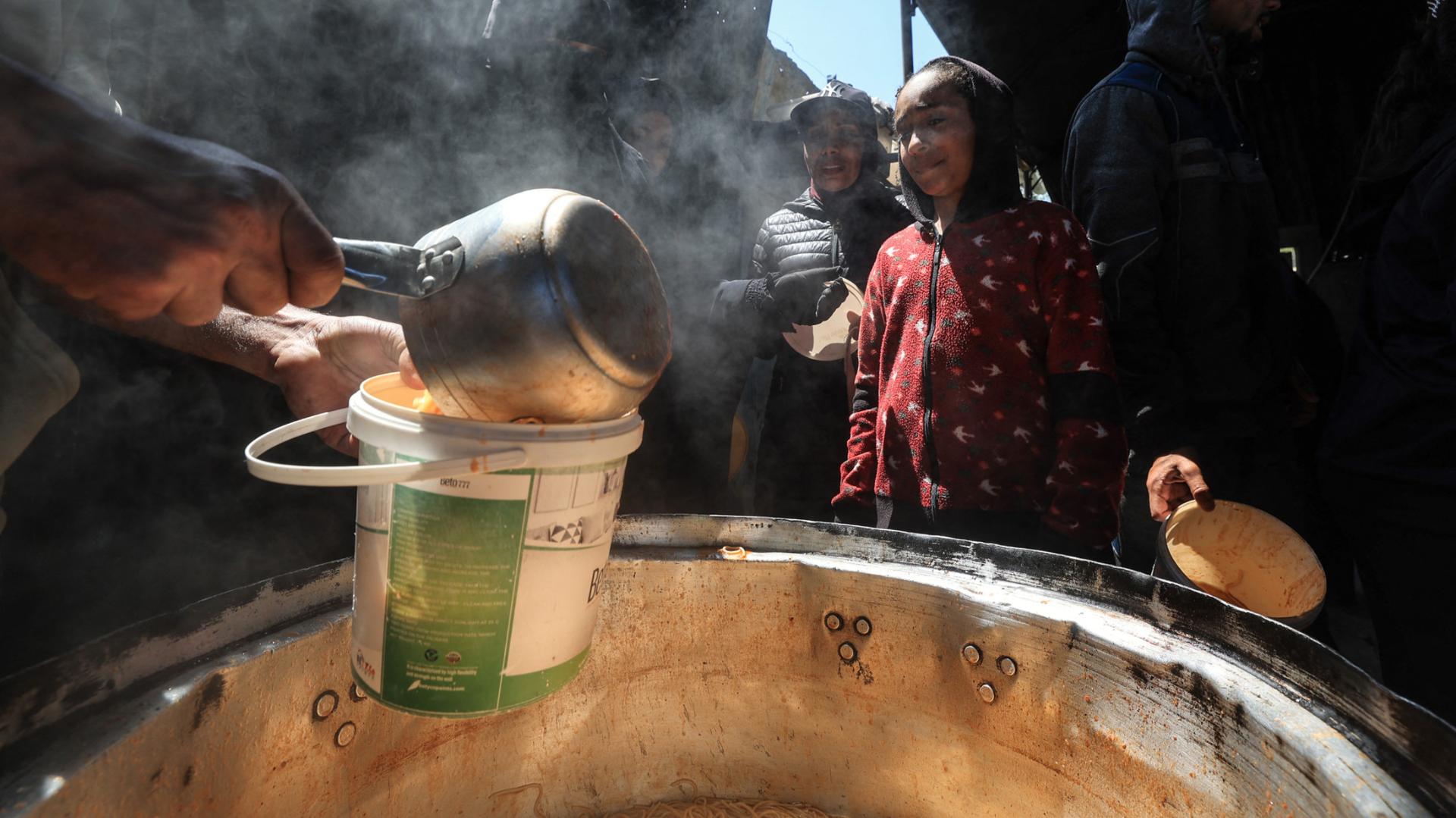
Middle East Eye said Gaza’s Government Media Office condemned the remarks on Wednesday, saying they “bear no relation to reality” and “starkly contradict verified field data.”
The same report tied the dispute to the ceasefire brokered by the U.S. in October last year, describing it as aimed at ending the “two-year genocide” in which Israel starved 2.3 million Palestinians while bombing them daily.
Middle East Eye said the Government Media Office stated the average number of trucks entering Gaza since October is around 227 per day, “just 37 percent of the level agreed upon,” and it gave an example that “only 207 trucks entered on 9 April, including just 79 carrying humanitarian aid.”
It also quoted the Government Media Office saying, “Ignoring these facts constitutes serious misinformation and obscures a systematic reality of restricted supplies and enforced deprivation, as the Israeli occupation continues to fail to meet its humanitarian obligations.”
Numbers, UN data, and famine
Middle East Eye expanded the dispute by placing it against a longer timeline of truck flows, saying that before the genocide, between 2021 and 2023, “up to 12,000 trucks per month – around 400 daily – entered Gaza, mostly carrying commercial goods.” It said numbers dropped sharply after former Israeli Defence Minister Yoav Gallant—who is wanted by the ICC for war crimes—declared that there will be “no electricity, no food, no fuel” entering Gaza. The report described months during the genocide when as few as 600 trucks in total entered, averaging around 20 per day, and it said “The peak saw 5,670 trucks enter in one month, approximately 190 per day.”
It added that in November, weeks after the ceasefire, only 4,282 trucks entered, averaging 142 per day, according to UN data. Middle East Eye then listed further monthly totals: “3,513 trucks entered in January, 2,660 in February, 2,032 in March, and just 586 so far this month, as of Wednesday.” The report also said officials and residents warned that food, fuel, medicine and shelter supplies were again reaching critically low levels, and it quoted Doctors Without Borders (MSF) saying “Israel continues to deliberately obstruct aid” and that the obstruction is “translating into entirely preventable deaths.”
Hamas rebukes Vance
Palestine Chronicle reported that Hamas rejected statements made by U.S. Vice President J.D. Vance about the flow of humanitarian aid into Gaza, describing them as “misleading and far from reality.”
In a statement issued on Wednesday, Hamas said Vance’s claims that aid entering Gaza is at its highest level in five years “reflect an attempt to cover up the sharp deterioration of the humanitarian situation in the Strip.”
Palestine Chronicle quoted Vance’s own remarks that “right now, you see more humanitarian aid coming into Gaza than at any time in the past five years because we have taken that situation seriously.”
The report also quoted Vance saying, “the humanitarian situation in Gaza was an absolute catastrophe,” and it added his claim, “we’re the administration that solved that problem.”
Hamas said the Gaza Strip continues to experience “ongoing depletion,” pointing to Israel’s failure to adhere to the terms of the first phase of the ceasefire agreement.
Palestine Chronicle said Hamas described the sector as still living a state of “continuous exhaustion,” citing continued restrictions on the entry of humanitarian aid and the disruption of basic life necessities.
What happens next
Across the accounts, the dispute over aid levels is tied to ongoing ceasefire violations and calls for international pressure, with each outlet emphasizing different next steps. Al-Jazeera Net said the Gaza government media office described Vance’s claims as “misleading to the international public, and not connected to reality,” and it said the claims “reflect a clear absence of awareness of the reality of the catastrophic humanitarian situation, in which more than 2.4 million people in the Gaza Strip live.” It also said the office pointed out that “official figures indicate that the average entry of trucks does not exceed 227 trucks per day,” while the actual need under the humanitarian protocol is “600 trucks per day,” meaning “not more than 37% of the minimum required.”
Middle East Eye reported that the Government Media Office said “Distorting facts or portraying a false reality will not change the severity of the humanitarian catastrophe in Gaza, nor absolve any party of their legal and moral responsibilities,” and it framed the issue as a failure to meet humanitarian obligations. Palestine Chronicle said Hamas called on the international community, “foremost among them the United Nations,” to “intervene immediately and exert pressure on Israel to stop these policies,” and to ensure “the entry of humanitarian aid in sufficient quantities and without obstacles.” The same Palestine Chronicle report said Hamas urged “holding accountable those responsible for violations against the Palestinian people.”