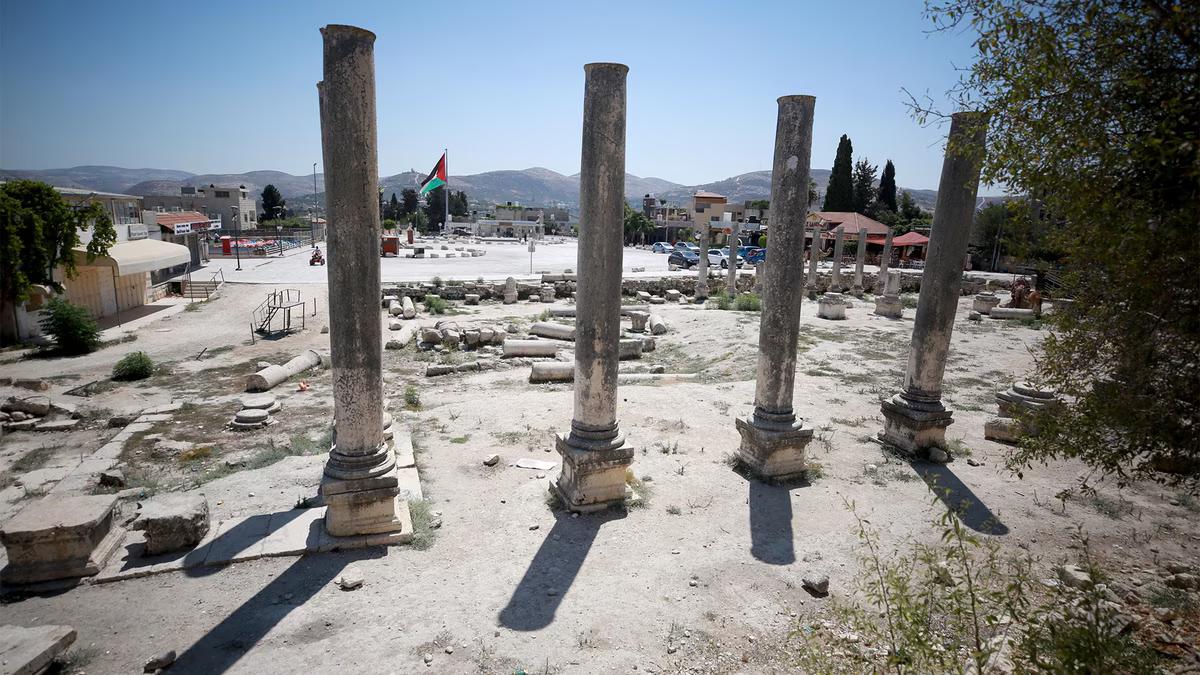
Israeli Authorities Confiscate Sebastia Archaeological Site, Create Shomron National Park
Key Takeaways
- Archaeology is used to justify West Bank land seizures and annexation.
- Israeli authorities approved a large-scale plan to seize sites under archaeological pretexts.
- Land registration measures in the West Bank accompany seizure efforts, signaling formalization of control.
Archaeology as annexation
Israeli authorities have informed the municipality of their decision to confiscate the entire archaeological site of Sebastia and transform it into the Shomron National Park over an area of 450 dunams, as part of a plan that relies on biblical references presenting Sebastia as the ancient capital of the Kingdom of Israel.
“The army is issuing evacuation orders and seizing land to prepare the construction of a massive barrier, which is part of a broader project aimed at annexing the Palestinian 'granary”
The Ahraminfo report says the plan provides for placing under Israeli sovereignty 14 major archaeological sites, resulting in access bans for Palestinians and the confiscation of surrounding agricultural lands, and it cites a claim that nearly 25 percent of the roughly 7,000 archaeological sites and monuments listed within the 1967 borders will be “at the mercy of Israeli control.”
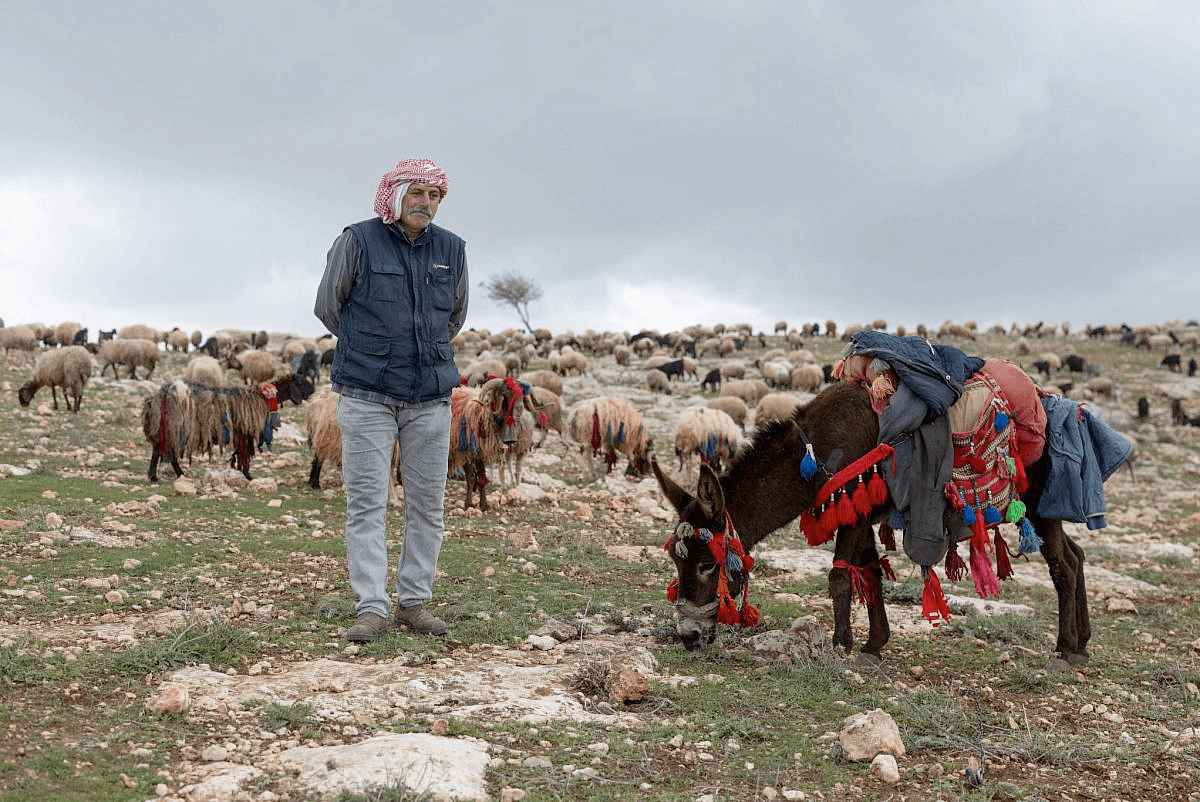
Ahraminfo also quotes Sebastia mayor Mohammad Azem saying, "Unfortunately, Sebastia has entered a dark tunnel. It is an aggression against nearly 3,500 Palestinians who live from tourism at the site and the neighboring olive groves," while it describes the Sebastia ruins as including an acropolis with the temple and the palace of Augustus, a theater, and a colonnaded street.
The same report says the objective is to annex archaeological sites, present them as an exclusive Jewish heritage, and impose Israeli civilian control there, while it adds that the step was preceded by the confiscation of 63 archaeological sites in the Nablus region.
In parallel, the jريدة القدس report says the Middle East Studies Association of North America (MESA) and the Committee on Academic Freedom issued an international warning that occupation seeks to establish direct civilian control over Palestinian cultural heritage, employing archaeology as a political tool to seize land and fragment historical ties.
Warnings and political voices
The jريدة القدس report says MESA and the Committee on Academic Freedom sent urgent messages to senior international officials including UN High Commissioner for Human Rights Volker Türk and the Director-General of UNESCO, warning about a bill recently approved by the Israeli Knesset.
It adds that the legislation, which passed its first reading, aims to establish a so-called 'Judea and Samaria Heritage Authority' affiliated with the Israeli Ministry of Heritage, giving settlers direct influence over historical sites in areas classified as 'C'.
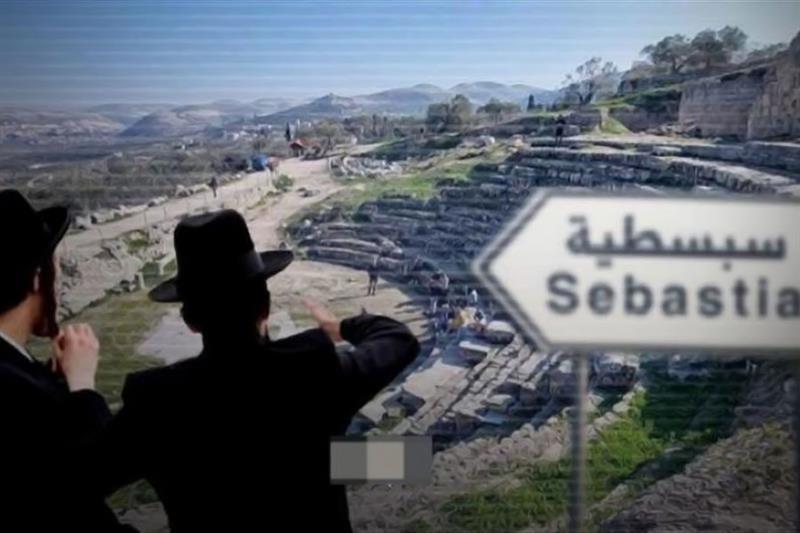
In the same framing, WAFA reports that the Israeli occupation government approved on Wednesday a large-scale plan to seize sites in several areas of the occupied West Bank under the pretext that they are "archaeological," describing the measure as allowing the occupation to claim that any area it seeks to seize is archaeological.
WAFA says the Israeli Prime Minister’s Office and ministries of Finance, Tourism, "Heritage," and Colonization indicated the plan is "unprecedented," and it reports that the occupation government allocated 250 million shekels to seize large tracts of land under the pretext of rescuing, preserving, and developing heritage and archaeological sites.
The Ahraminfo report also quotes professor of international law Mohammed Mahran saying the maneuvers facilitate the looting of Palestinian antiquities and allow their transfer to Israel and display in Israeli museums as if they were Israeli national heritage, calling it "organized cultural theft" and a war crime under international humanitarian law.
Land seizure and barriers
Beyond archaeology, Agence Media Palestine describes an Israeli plan to build a massive barrier tied to a broader project aimed at annexing the Palestinian 'granary,' with Major General Avi Bluth signing nine orders for 'land seizure' to build a new barrier crossing Mount Tammun.
“Recent measures taken by the Israeli regime—launching a large-scale land registration process in Zone C and facilitating private land purchases by settlers in Zones A and B—mark a decisive turning point, shifting from de facto control to an official transfer of Palestinian land ownership to the Israeli regime”
The report says the orders delimit a section—from the Tayasir checkpoint to Hamra—of what will eventually become a 300-mile barrier spanning from the occupied Golan to the Red Sea, at a cost of 5.5 billion shekels (about $1.8 billion), and it quotes a spokesperson for the Israeli army interviewed by +972 saying the project is based on an evident security need to shape the terrain and control and monitor movement.
Agence Media Palestine adds that the complaint filed by several local councils and more than 100 residents with the Israeli High Court says the barrier will separate the Jordan Valley from the rest of the West Bank, deprive Palestinians of about 50,000 dunams of their land, prevent about 900 residents east of the barrier from benefiting from municipal services including clinics, schools, and employment opportunities, and force several communities to move.
It also reports that the residents estimate direct damages caused by the barrier to local communities at about $200 million per year and say the state kept the seizure orders secret until November, meaning people affected had no idea the government intended to seize their lands.
In a separate but related policy track, TRT Français says Israel resumes recording Palestinian lands in the occupied West Bank after a 58-year freeze and uses the designation 'state lands' to qualify lands it considers public property under its authority, while it states that declaring land as 'state land' does not change its legal status as occupied territory under international law.
More on Gaza Genocide

Ben Gvir Releases Video Showing Gaza Flotilla Activists Kneeling With Hands Tied
12 sources compared

Trump’s Gaza Board of Peace Warns Funding Gap Threatens Reconstruction Plan
19 sources compared
Bezalel Smotrich Orders Immediate Evacuation of Khan Al-Ahmar in Judean Desert
26 sources compared

Israeli Forces Detain 13 Irish Citizens, Including Dr Margaret Connolly, On Gaza Flotilla
11 sources compared