
Israeli Forces Destroy Civilian Infrastructure in Southern Lebanon, Detonate Imam Moussa Al-Sadr Sports Complex
Key Takeaways
- Israeli forces targeted southern Lebanon civilian infrastructure with demolitions and bombardment.
- Casualties and destruction reported across southern Lebanon amid ongoing escalation.
- International mediation and ceasefire talks frame the conflict amid renewed violence.
Ceasefire, then demolitions
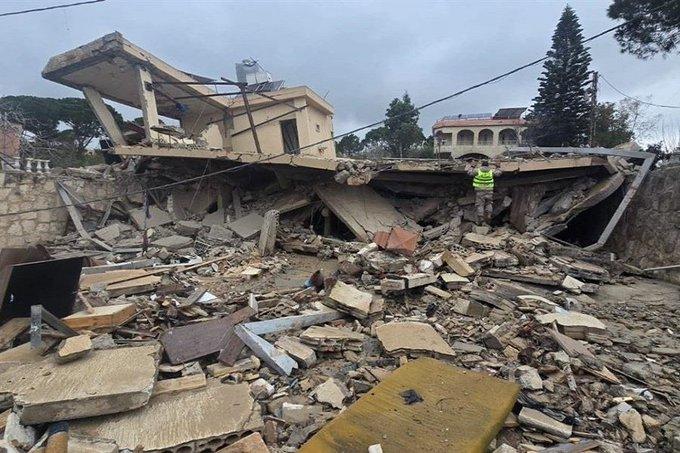
In southern Lebanon, Israeli occupation forces escalated violations of the ceasefire on Tuesday, carrying out sustained demolition operations aimed at destroying civilian infrastructure in border villages while artillery shelling and continuous aerial surveillance continued, according to field reports by Al-Manar correspondents across southern Lebanon.
Al-Manar said Israeli forces exploited the ceasefire announced last week to establish what it termed a “defense zone” extending between 2 and 8 kilometers inside Lebanese territory, with movement restrictions across an estimated 500 square kilometers.
The report said large areas were effectively sealed off, with civilians barred from access as strikes and destruction continued.
Al-Manar also reported that overnight Israeli forces detonated the Imam Moussa Al-Sadr sports complex in the town of Mays Al-Jabal shortly after setting fire to ambulances belonging to the Islamic Risala Association.
It added that in the border city of Khiam, Israeli forces carried out overnight a series of demolitions in the western and eastern neighborhoods, while surveillance drones were continuously seen flying over the area, reaching as far as Dibbine towards Marjeyoun.
Al-Manar further stated that local media reported the technical school in the city was fully destroyed after being rigged with explosives and detonated, and that the school was damaged during the 2024 Israeli war on Lebanon but was completely destroyed on Tuesday morning.
How the truce formed
The Lebanon ceasefire described by Israel Today took effect after more than 45 days of continuous fighting that began in early March, and it framed the truce as arriving after a wider regional shift triggered by a joint US-Israeli attack on Iran that began on Feb. 28.
Israel Today said Hezbollah responded by firing heavy missile barrages into northern Israel, ending “more than a year of quiet on the northern border,” and prompting a systematic Israeli ground and air campaign into Southern Lebanon.
It quoted Prime Minister Benjamin Netanyahu summarizing the offensive’s intent as seeking to “severely damage the Iranian terror regime and remove existential threats to Israel.”
By the time the ceasefire took effect, Israel Today said the IDF had established a continuous 10-kilometer buffer zone inside Lebanon, and it quoted Defense Minister Israel Katz saying that “the security zone has been cleared of terrorists and weapons and is devoid of residents, and it will continue to be cleared of terror infrastructure.”
The same article described how the ceasefire’s political path changed quickly after a sudden ceasefire between Israel, the US and Iran was unilaterally declared by President Donald Trump in early April “to create space for a diplomatic solution.”
Israel Today said Trump explicitly called the Lebanon campaign “a separate skirmish,” and that Israel explicitly ruled out a Lebanese ceasefire, while Iranian negotiators in Islamabad submitted a 10-point plan conditioning regional de-escalation on an immediate halt to IDF operations in Lebanon.
It then described ambassador-level negotiations in Washington on April 14 and said Trump announced the agreement on social media on April 16, declaring, “These two Leaders have agreed that to achieve PEACE between their Countries, they will formally begin a 10 Day CEASEFIRE at 5 P.M. EST.”
Voices from the ground
As the ceasefire framework took shape, Al Jazeera reported continuing escalation in Khiyam and surrounding areas, describing exchanges of shelling between the Israeli army and Hezbollah while Israel sought to strengthen control over strategic areas in the eastern sector of the south.
Al Jazeera correspondent Ihab Al-Aqdi reported from Ibl al-Saqi that rockets were fired from southern Lebanon toward the town of Khiyam coinciding with an Israeli airstrike targeting the northwestern part of Khiyam, and it said Hezbollah fired rockets last night toward gatherings of Israeli soldiers inside the town, especially in the area known as the Stadium.
The report added that machine-gun fire had been audible since yesterday and that Khiyam remained in a precarious state, with the Israeli army unable to fully consolidate its control over the strategically important town.
In Arab al-Jal near Sidon, Al Jazeera described residents saying they did not know why their homes were targeted, and it quoted a homeowner who said the family was inside the house at the moment of the warning before they were urgently told to leave without explanation.
The homeowner told Al Jazeera that residents woke up to the sounds of bombardment and emergency services movement only to find their home heavily damaged, saying, “the world had fallen apart in reference to the scale of their loss.”
The same Al Jazeera report said the targeted home contained “no military features or weapons,” and it emphasized that the area is residential and shows no armed activity.
It also described that residents received only a quick warning to leave before shelling forced them to flee without knowing what was happening.
Competing narratives
Different outlets described the same ceasefire period with sharply different emphases, and the contrast showed up in how they characterized Israeli actions and the status of the truce.
Al-Manar said Israeli forces exploited the ceasefire to establish a “defense zone” between 2 and 8 kilometers inside Lebanon and that civilians were barred from access as strikes and destruction continued, adding that overnight Israeli forces detonated the Imam Moussa Al-Sadr sports complex in Mays Al-Jabal.
Israel Today, by contrast, described the ceasefire as taking effect after a 10-day truce and said that by then the IDF had established a continuous 10-kilometer buffer zone inside Lebanon, quoting Israel Katz that “the security zone has been cleared of terrorists and weapons and is devoid of residents.”
Shafaq News framed the escalation as reciprocal strikes, reporting that Lebanese media said 24 people were killed including 11 members of the State Security Service and more than 30 were injured as a result of Israeli bombardment, while Hezbollah launched rocket barrages at Israeli forces and settlements in northern Israel.
It also said Israeli Home Front Command confirmed sirens were sounded in Saasa in western Galilee and in Safed and its surroundings after rockets were launched from Lebanon.
Monte Carlo International reported a different casualty accounting, saying the Lebanese Health Ministry announced that “the toll of the Israeli aggression since dawn Monday, March 2, until the afternoon of Saturday, March 7, has risen to 294 dead and 1,023 injured.”
The Palestinian Information Center described a widening gap between a military track and a political track, stating that Israel continued on-the-ground escalation despite talk of a regional ceasefire and efforts to open direct negotiation channels, and it said that since dawn Saturday the Israeli army launched aerial and artillery strikes targeting 31 cities, towns, and areas in southern Lebanon, killing 14 people including 3 medics and injuring 9 others.
Casualties, displacement, next steps
The stakes described across the reporting were measured in casualties, displacement, and the prospect of further military moves even as negotiations were discussed.
Monte Carlo International said the Lebanese Health Ministry announced that “the toll of the Israeli aggression since dawn Monday, March 2, until the afternoon of Saturday, March 7, has risen to 294 dead and 1,023 injured,” and it said Israeli aircraft continued to carry out airstrikes on various areas in south Lebanon and the Beqaa as part of escalating clashes with Hezbollah since the beginning of the week.
The Palestinian Information Center said the toll of the Israeli aggression against Lebanon since March 2 had reached about 2,020 dead and 6,436 wounded, according to the Lebanese Ministry of Health, and it described strikes continuing for the fourth day in a row despite a two-week ceasefire announcement by the United States and Iran that it said Washington and Tel Aviv denied included Lebanon.
It also said Lebanon and Israel announced on Friday an agreement to hold the first direct meeting between them at the U.S. State Department in Washington next Tuesday to discuss setting a date for launching direct negotiations.
In parallel, Al-Manar reported that Israeli forces carried out extensive bulldozing operations in Rashaf since the ceasefire, targeting roads, residential neighborhoods, and even cemeteries, and it said the latest attacks reportedly included destruction of the town’s main square, an old mosque, the shrine of Abu Dharr, and the martyrs’ cemetery.
Masrawy quoted Michel Helou, secretary-general of the Lebanese National Bloc, saying the scale of destruction in southern Lebanon, Beirut, and the Beqaa Plain is “extremely catastrophic,” adding that this situation has driven about one million Lebanese to flee, and he said, “For the first time, there is no life, no human presence.”
Helou also accused Israel of carrying out “psychological warfare,” referring to Israeli statements comparing operations in southern Lebanon with what happened in parts of Gaza that turned to rubble, and he urged Bezalel Smotrich to annex southern Lebanon.
More on Lebanon
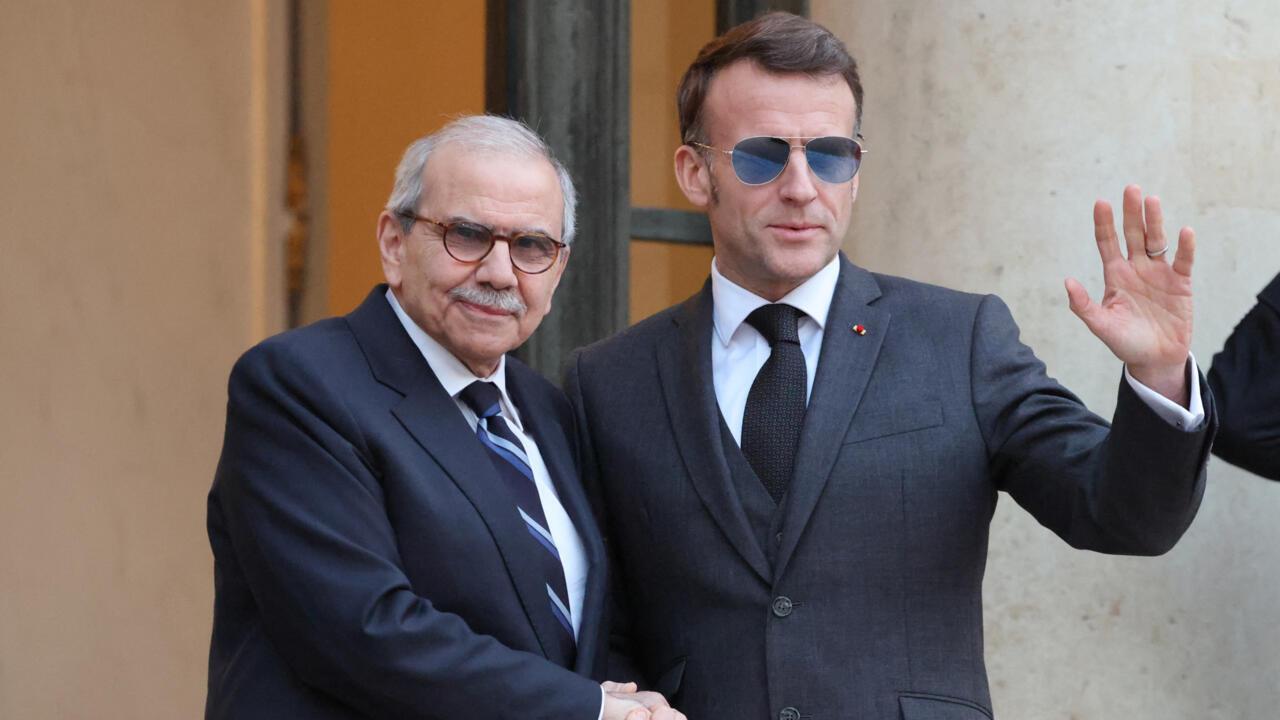
Emmanuel Macron Reaffirms Lebanon Ceasefire And Sovereignty With Prime Minister Nawaf Salam In Paris
13 sources compared

Israeli Soldiers Damage Jesus Statue in Debel, Lebanon, After Photo Verified
29 sources compared

Israeli Soldier Vandalizes Jesus Statue in Debel, Lebanon, Netanyahu Orders Criminal Probe
12 sources compared

IDF Reestablishes South Lebanon Security Zone During Trump’s 10-Day Ceasefire Along the “Yellow Line”
22 sources compared