Lebanon20 April, 20268 min read
Israeli Soldier Vandalizes Jesus Statue in Debel, Lebanon, Netanyahu Orders Criminal Probe
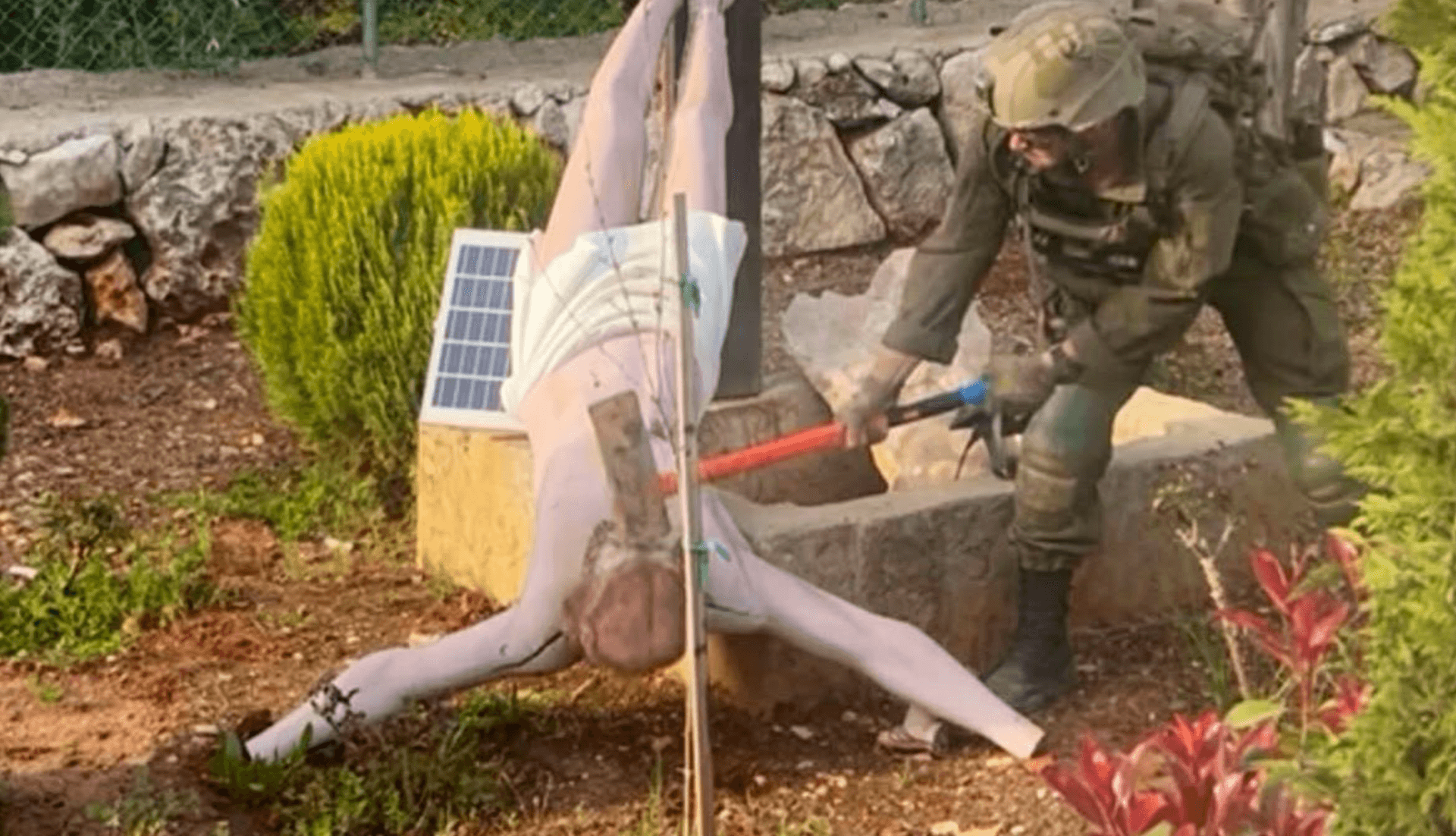
Israeli soldier used a sledgehammer to smash a Jesus statue in southern Lebanon. Netanyahu condemned the act and ordered a criminal probe into the soldier.
BBC was read line by line by the Watchdog: 1.7. See the score →
Vandalism in Debel
An image of an Israeli soldier vandalizing a statue of Jesus in southern Lebanon sparked widespread condemnation, with the statue located on a crucifix outside a family home in Debel, a village where residents have remained during Israel’s war with Hezbollah. The BBC reported that the statue was on a crucifix outside a family home on the edge of Debel, and that locals said the statue was “on the edge of Debel, one of the few villages where residents have remained during Israel's war with Hezbollah.” The Israeli military confirmed the authenticity of the circulating image and said it viewed the incident “with great severity,” adding that the soldier’s conduct was “wholly inconsistent with the values expected of its troops.”
BBC also quoted Debel’s congregation head, Father Fadi Flaifel, saying, “We totally reject the desecration of the cross, our sacred symbol, and all religious symbols.” In the same coverage, the IDF said it was working with the Christian community to “restore the statue to its place,” and that “Appropriate measures” would be taken against those involved. The incident was tied to the ongoing conflict context in southern Lebanon, where thousands of Israeli troops continue to occupy a wide area after a US-brokered ceasefire came into force between Israel and Lebanon on Friday, pausing six weeks of fighting between the IDF and Hezbollah.

Netanyahu and Sa’ar
Israeli Prime Minister Benjamin Netanyahu condemned the vandalism and said he was “stunned and saddened” after learning about the episode, ordering a criminal probe and disciplinary action. The BBC reported that Netanyahu said he was “stunned and saddened” by what happened, while the India Tribune (IANS) quoted his X post in full, including the line: “Yesterday, like the overwhelming majority of Israelis, I was stunned and saddened to learn that an IDF soldier damaged a Catholic religious icon in southern Lebanon.” In that same IANS account, Netanyahu said, “Military authorities are conducting a criminal probe of the matter and will take appropriately harsh disciplinary action against the offender,” and he added, “I condemn the act in the strongest terms.”
The Arab News coverage similarly described Netanyahu’s vow of “harsh action” and quoted his X language: “I was stunned and saddened to learn that an IDF soldier damaged a Catholic religious icon in southern Lebanon.” Foreign Minister Gideon Sa’ar also condemned the act, with the BBC reporting that he said, “We apologise for this incident and to every Christian whose feelings were hurt.”

TVP World described Sa’ar’s apology on X as “grave and disgraceful,” and quoted him: “We apologize for this incident and to every Christian whose feelings were hurt.” Across the accounts, the IDF’s response was consistent in emphasizing severity and investigation, including the statement that the incident was “being investigated by the Northern Command and is currently being addressed through the chain of command,” and that “Appropriate measures will be taken against those involved in accordance with the findings.”
Debate over training
The statue vandalism quickly became a diplomatic flashpoint, with Poland’s foreign minister Radosław Sikorski clashing online with Israel’s top diplomat Gideon Sa’ar after Sikorski raised concerns about how Israeli troops are trained.
TVP World reported that Sikorski was sharply criticized by Sa’ar after the Polish foreign minister said that Israeli soldiers admit to war crimes, and it described the diplomatic spat as erupting after an Israeli soldier was photographed smashing a statue of Jesus with a sledgehammer in southern Lebanon.
Sikorski wrote on X that “It’s good that Minister Sa’ar apologized quickly; there was something to apologize for,” and added, “That soldier should be punished, but lessons should also be drawn regarding the way they are being trained.”
TVP World also quoted Sikorski accusing Israeli forces of misconduct, saying, “IDF soldiers themselves admit to war crimes. They killed not only civilian Palestinians but even their own hostages,” and it tied that to an incident in December 2023 when Israeli troops mistakenly shot dead three Israeli hostages who had escaped captivity by Hamas in Gaza.
Sa’ar rejected Sikorski’s accusations, calling them “grave, baseless and slanderous,” and TVP World quoted Sa’ar’s response on X that Sikorski’s remarks demonstrated “profound ignorance and a deep lack of understanding.”
Sa’ar also argued that “During every war, there are operational accidents, in which military forces are also harmed by fire from their own army,” and he claimed the IDF makes a “constant effort to minimize harm to non-combatants.”
In the same exchange, Sa’ar told Sikorski to condemn what he described as a “shameful antisemitic display” in the Polish parliament last week, referring to Konrad Berkowicz unfurling a modified Israeli flag with the Star of David replaced with a Nazi swastika and declaring that “Israel is the new Third Reich.”
The dispute over the statue thus expanded into a broader argument about accountability and procedures, with Sikorski later writing on X that “I am obviously not suggesting that IDF soldiers deliberately killed Israeli hostages, but the fact that they did suggests that their battlefield procedures were too loose.”
Competing frames online
Different outlets framed the same viral incident through distinct emphases, ranging from religious outrage and official accountability to broader debates about conflict behavior and social-media narratives. The BBC centered on local condemnation and official steps, quoting Father Fadi Flaifel saying, “We totally reject the desecration of the cross, our sacred symbol, and all religious symbols,” and reporting that the IDF confirmed the image was genuine and would take “Appropriate measures” while working to “restore the statue to its place.” Al Jazeera, by contrast, highlighted the scale of online spread and the IDF’s wording about the soldier being “operating in southern Lebanon,” noting that the image “garnering more than 5 million views on X” and that the military said “an investigation had been opened and that “appropriate measures will be taken against those involved in accordance with the findings.”
Al Jazeera also foregrounded political commentary from within Israel’s parliament, quoting Ayman Odeh: “We’ll wait to hear the police spokesperson claim that ‘the soldier felt threatened by Jesus’.” PressTV and other outlets used the incident to argue about punishment and alleged patterns, with PressTV quoting Ahmad Tibi saying, “When the Western world remains silent, racists go further,” and adding that Tibi asked, “Perhaps these racists have also learned from Donald Trump to insult Jesus Christ and insult Pope Leo?” International Business Times UK focused on the question of whether the image could be AI-generated, reporting that the IDF confirmed it was investigating “the truth behind the photograph” and quoting Lieutenant Colonel Nadav Shoshani: “The IDF is currently examining the reliability of the photograph.”

TVP World also described the incident’s viral reach, saying the image had sparked outrage online, “racking up nearly 10 million views on X,” and it placed the diplomatic spat in the context of Sikorski’s broader accusations about Israeli troop conduct. Meanwhile, Oz Arab Media and Serbiantimes.info both emphasized Netanyahu’s language of shock and punishment, with Serbiantimes.info quoting Netanyahu’s post that “Strict disciplinary measures will be taken against the perpetrators,” and Oz Arab Media citing reactions from Israeli officials including Netanyahu saying he was “stunned and saddened.”
Ceasefire and next steps
The incident unfolded during a fragile ceasefire and amid ongoing fighting in southern Lebanon, with multiple outlets linking the vandalism to the broader operational environment. BBC reported that “Thousands of Israeli troops continue to occupy a wide area of southern Lebanon after a US-brokered ceasefire came into force between Israel and Lebanon on Friday,” and it said the ceasefire paused “six weeks of fighting” between the IDF and Hezbollah while both sides accused each other of violations. Al Jazeera similarly described the soldier as “operating in southern Lebanon,” where Israel “last month launched a ground invasion in conjunction with aerial bombardment” amid its joint war with the United States on Iran, and it reiterated that “an investigation had been opened” and “appropriate measures will be taken.”
PressTV added that the photograph caused “public outrage” and stated that the Israeli military claimed that “a probe has been launched” and that “appropriate measures will be taken against those involved in accordance with the findings.” Several outlets also tied the incident to the IDF’s stated operational posture, including the claim that it has “no intention of harming civilian infrastructure, including religious buildings or religious symbols,” and that it is “working to assist the community in restoring the statue to its place.” In addition, TVP World and other accounts placed the incident within a wider set of allegations about attacks on religious sites, with TVP World noting that “Critics have repeatedly accused Israeli forces of hitting mosques and churches during the conflict in Gaza.”
The BBC also placed the incident alongside other religious restrictions, reporting that Huckabee called a separate episode an “unfortunate overreach already having major repercussions around the world” after Israeli police prevented the top Roman Catholic leader in Jerusalem from entering the Church of the Holy Sepulchre for a private Mass on Palm Sunday. Looking ahead, the IDF’s stated next steps were consistent across outlets: it said the incident was being investigated by the Northern Command and would be addressed through the chain of command, with “Appropriate measures” to follow based on findings.