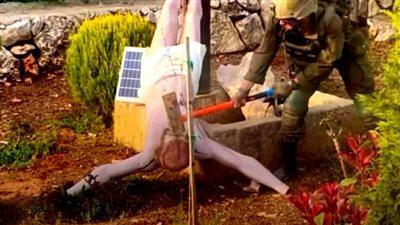
IDF Investigates Soldier Smashing Jesus Statue With Sledgehammer in Southern Lebanon
Key Takeaways
- Photo shows an Israeli soldier smashing a Jesus statue in southern Lebanon.
- IDF confirms image authenticity and says an investigation is underway.
- Netanyahu condemned the act and pledged harsh disciplinary action against the offender.
Sledgehammer in Debel
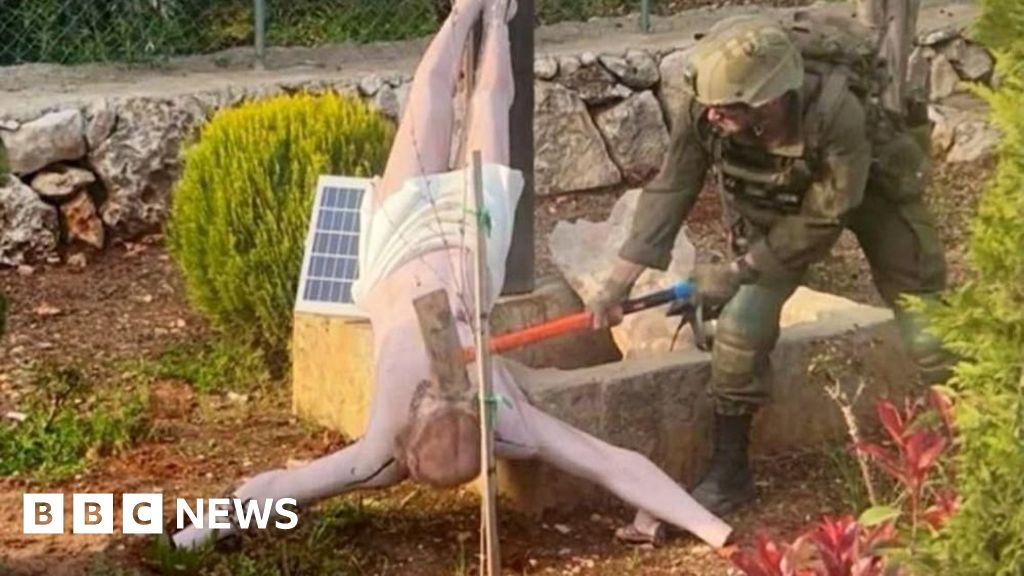
An image of an Israeli soldier apparently hitting a statue of Jesus with a sledgehammer in southern Lebanon has triggered widespread condemnation, with Israel’s leaders and military saying they are investigating the incident.
“Toggle Play Global fallout grows over Israeli soldier smashing Jesus statue in Lebanon Outrage continues to grow over the Israeli soldier who was photographed desecrating a statue of Jesus Christ in southern Lebanon, including among Trump’s former MAGA allies”
The BBC reported that locals said the statue was on a crucifix outside a family home on the edge of Debel, “one of the few villages where residents have remained during Israel's war with Hezbollah.”

The IDF confirmed to the BBC that the image circulating online was genuine and said it viewed the incident “with great severity” and that the soldier’s conduct was “wholly inconsistent with the values expected of its troops.”
The Jerusalem Post similarly said the IDF confirmed on Sunday evening that the image was genuine and later confirmed it had “identified and located the soldier in question.”
CNN described the same core development, saying the IDF told it it was investigating the photo and that “appropriate measures will be taken.”
Multiple outlets tied the incident to the ongoing Israel-Hezbollah conflict in southern Lebanon, with the BBC noting that thousands of Israeli troops continue to occupy a wide area of southern Lebanon after a US-brokered ceasefire came into force between Israel and Lebanon on Friday.
Ceasefire and War Backdrop
The statue incident unfolded against a broader military backdrop in southern Lebanon, where Israel and Lebanon had agreed to a US-brokered ceasefire intended to halt fighting between Israel and Hezbollah.
The BBC said the ceasefire “has paused six weeks of fighting between the IDF and the Shia Muslim armed group Hezbollah,” while both sides accused each other of violations.
The BBC also placed the village of Debel “on the edge of Debel,” describing it as “one of the few villages where residents have remained during Israel's war with Hezbollah.”
NBC News similarly said the incident came “amid a 10-day U.S.-brokered ceasefire between Israel and Lebanon,” and it described the wider context as Israel’s campaign after Hezbollah rocket attacks on Israel in retaliation for the U.S.-Israeli war with Iran.
The Telegraph linked the controversy to the timing of the ceasefire, saying the image emerged “days after the IDF began a ceasefire with Hezbollah.”
TRT World added that the Israeli army confirmed the authenticity of an image showing a soldier in south Lebanon hitting a statue of Jesus, and it said the incident involved a soldier operating in southern Lebanon despite the military’s insistence that it “has no intention of harming civilian infrastructure, including religious buildings or religious symbols.”
Netanyahu, Saar, and Clergy
Israel’s political leadership and foreign minister condemned the act and promised disciplinary action, while Christian clergy in Debel rejected the desecration and called for accountability.
“Prime Minister Benjamin Netanyahu condemned with the strongest possible terms on X the assault by an Israeli soldier on a statue of Jesus Christ in southern Lebanon”
The BBC reported that Prime Minister Benjamin Netanyahu said he was “stunned and saddened” by what happened, and it quoted Foreign Minister Gideon Saar saying: “We apologise for this incident and to every Christian whose feelings were hurt.”
The Jerusalem Post quoted Netanyahu’s Monday post on X, where he said, “I condemn the act in the strongest terms,” and it said he declared that “Military authorities are conducting a criminal probe of the matter and will take appropriately harsh disciplinary action against the offender.”
The IDF’s response was also echoed by multiple outlets, including the BBC’s account that the military said it was working with the Christian community to “restore the statue to its place.”
In Debel, Father Fadi Flaifel told the BBC, “We totally reject the desecration of the cross, our sacred symbol, and all religious symbols,” and he added, “It goes against the declaration of human rights, and it doesn't reflect civility.”
The Independent also quoted Fadi Felfle, saying: “One of the Israeli soldiers broke the cross and did this horrible thing, this desecration of our holy symbols.”
How Outlets Framed It
While all the outlets described the same core incident—an Israeli soldier damaging a Jesus statue in southern Lebanon—coverage diverged in emphasis, including the type of weapon shown, the village details, and the broader political framing.
The BBC described an “Israeli soldier apparently hitting a statue of Jesus with a sledgehammer” and said locals described the statue as “on a crucifix outside a family home on the edge of Debel.”

The Independent described the image as showing “a soldier wielding the blunt side of an axe against a fallen sculpture of Jesus on the cross,” and it said Reuters verified the location as Debel.
TRT World described the video as showing a soldier using a “jackhammer to smash Jesus statue in southern Lebanon,” and it said the Israeli army confirmed the authenticity of the image.
The Jerusalem Post and Haaretz both emphasized the IDF’s investigation and authenticity confirmation, with the Jerusalem Post saying it “confirmed on Sunday evening that the image was genuine” and that it later “identified and located the soldier in question,” while Haaretz said the IDF said “an initial examination determined that the photograph is authentic.”
The BBC, meanwhile, placed the incident within a wider pattern of outrage, noting that “Right-wing US commentators were quick to denounce the picture” and quoting Matt Gaetz and Marjorie Taylor Greene.
Disciplinary Action and Next Steps
The immediate consequences described by the sources center on investigation, disciplinary action, and efforts to restore the damaged statue, while the incident also sits within a wider controversy about religious access and tensions in the region.
“A photo circulated on social media appears to show an IDF soldier damaging a Jesus Christ statue in Lebanon”
The IDF told the BBC it would take “Appropriate measures” against those involved and said it was working with the Christian community to “restore the statue to its place.”

The Jerusalem Post said the incident was “being investigated by the Northern Command and is currently being addressed through the chain of command,” and it added that “Appropriate measures will be taken against those involved in accordance with the findings.”
CBS News similarly reported that Netanyahu said the soldier would face “harsh disciplinary action,” and it quoted the IDF saying the incident was being investigated by the Israeli Northern Command and “appropriate measures will be taken against those involved.”
The Times of Israel said the IDF’s statement came after IDF spokesperson Lt. Col. Nadav Shoshani posted on X that the military would investigate, and it said the military later located the soldier depicted in the photo.
Beyond the statue itself, the BBC and TRT World connected the incident to other religious flashpoints, including the Palm Sunday episode at the Church of the Holy Sepulchre and the claim in Netanyahu’s post that “Israel is the only place in the Middle East that adheres to freedom of worship for all.”
More on Lebanon
Israeli Soldier Vandalizes Jesus Statue in Debel, Lebanon, Netanyahu Orders Criminal Probe
12 sources compared

IDF Reestablishes South Lebanon Security Zone During Trump’s 10-Day Ceasefire Along the “Yellow Line”
22 sources compared
Northern Israel Residents Shut Schools And Shops To Protest Lebanon Ceasefire
11 sources compared

Israeli Soldier Smashes Jesus Statue in Debel, Lebanon, Netanyahu Orders Criminal Probe
71 sources compared