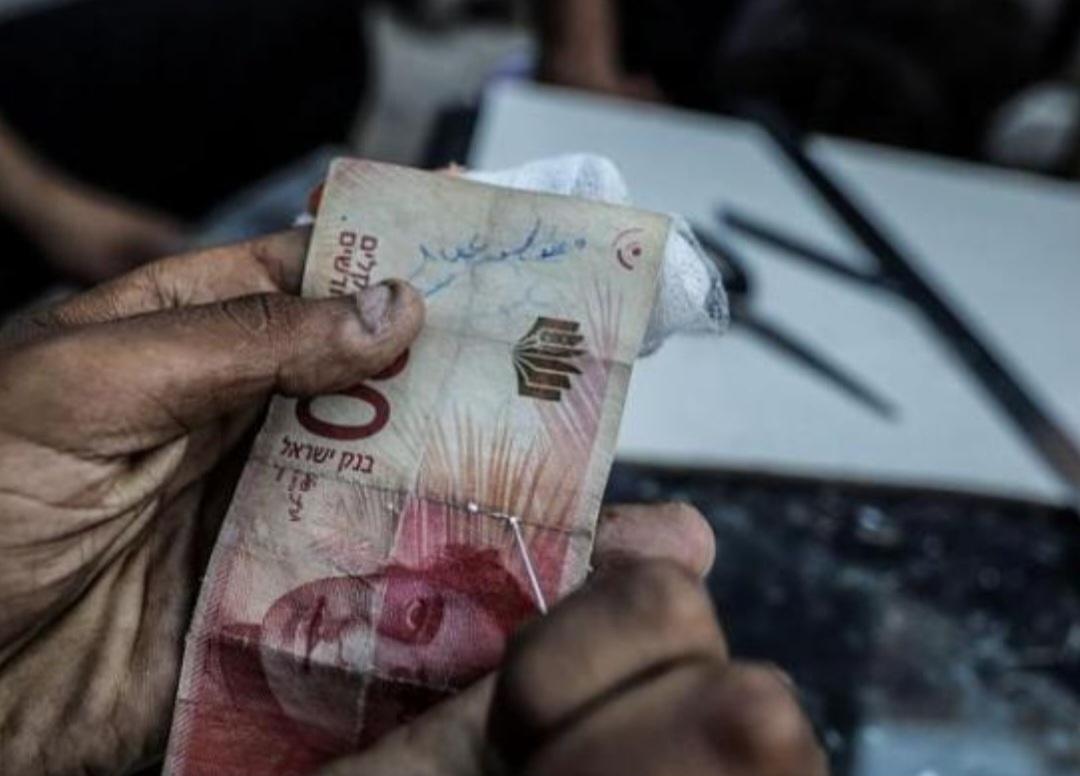
Israeli Occupation Restrictions Worsen Gaza Liquidity Crisis, Leaving Residents Unable To Trade Cash
Key Takeaways
- Restrictions on banknote entry and wear degrade Gaza cash liquidity.
- Shortage of small denominations and dominance of 200-shekel notes disrupt markets.
- Cash shortages drive traders toward digital payments and crypto solutions.
Cash becomes unusable
In the Gaza Strip, residents say the problem is no longer simply having money, but being unable to trade with it as a liquidity crisis has worsened for more than two years due to restrictions imposed by the Israeli occupation on the entry of banknotes and their wear.
“In the Gaza Strip, simply having money is no longer enough to complete a purchase, as the cash liquidity crisis has worsened for more than two years due to restrictions imposed by the Israeli occupation on the entry of banknotes and their wear, which leads merchants to refuse them and forces citizens to rely on banking apps that have failed to bridge the gap”
Al Jazeera’s Gaza correspondent Abdullah Abu Kamil describes how “the simplest daily transactions are hampered by a shortage of change and the rejection of damaged cash,” forcing citizens to rely on banking apps that “have failed to bridge the gap.”

Euronews reports that the shortage of small cash denominations and the dominance of the 200-shekel note are causing market disruption and hindering “the simplest aspects of daily life,” including buying bread.
In the Nuseirat market, Euronews quotes Fadel Beshiti saying, “I need three shekels, but I’ve got a big note, and no one can break it.”
Rachida Tawfiq tells Euronews that vendors reject banknotes, saying, “Old note, torn note, and no change,” while Salma Ziyad from Deir al-Balah says, “If I don’t have change, how can I move?”
Association France Palestine Solidarité describes how Waseem Abd Alnabi, a 30-year-old man running a children’s clothing stall in Al-Rimal, says the Israeli shekel is the currency in Gaza and that notes deteriorate “sometimes to the point of being torn and discolored to the point of being unrecognizable.”
Abd Alnabi adds, “These damaged notes are practically unusable,” and says merchants refuse them because suppliers refuse damaged notes.
Change crisis spreads
The cash “without change” problem described by Euronews has moved beyond shopping into mobility and work, with drivers and vendors refusing transactions that cannot be completed without small denominations.
Euronews says that in popular markets, small denominations are “no longer part of daily trading,” and vendors refuse to complete sales without change or compensate customers with “a piece of candy, a box of matches, or a bag of spices.”

Euronews quotes Salma Ziyad saying she no longer leaves home unless she has money in small denominations, adding, “the change now controls everything.”
The same report links the liquidity crisis to transport, quoting driver Hossam Al-Hajjwari that some drivers refuse to transport passengers who do not have change because they cannot return the remaining amount.
Euronews also reports that transport fares between Khan Younis and Gaza have risen from about 6 shekels before the war to between 20 and 25 shekels, while it attributes the disruption to “the destruction of more than 60% of vehicles and related infrastructure” and “the rising price of imported gasoline per liter.”
Al Jazeera’s Abdullah Abu Kamil describes how the shortage of change disrupts purchases “from bread to transportation,” pushing some citizens to “do without necessities or to incur indirect losses.”
Association France Palestine Solidarité adds that even after the ceasefire went into effect in October, Waseem Abd Alnabi says Gaza’s economy shows “few signs of recovery” and that he is “financially paralyzed today.”
Abd Alnabi ties the crisis directly to the Israeli occupation, saying, “The main and sole reason for our financial difficulties in Gaza is the Israeli occupation,” and adds, “They bombed Gaza’s banks and continue to block the entry of cash.”
Blue shekel and brokers
Euronews describes how the liquidity crisis coincides with a shift in Gaza’s currency structure, where the Israeli shekel has risen to become the most sought-after currency, especially the blue 200-shekel note.
“Shortage of small cash denominations and a liquidity crunch, coupled with the dominance of the 200-shekel note, are causing market disruption and hindering the simplest aspects of daily life for Palestinians”
The report says the blue 200-shekel note is “worth about $60,” and it cites “data from the Bank of Israel” saying this denomination accounts for about “80% of the total cash value.”
Euronews quotes cashier Hamdan Ahmed from the Nuseirat market saying, “Whoever has a 200-shekel note essentially controls the market,” and adds that other denominations are rejected or accepted only under conditions.
With the banking system disrupted, Euronews says a parallel channel called “takiish” has emerged, where bank balances are converted into cash for high commissions.
In Deir al-Balah, Euronews quotes Salah Abdul-Mouti saying, “Everybody wants the blue shekel,” and it reports that “the commission for converting the new 200-shekel note can reach 40%.”
Association France Palestine Solidarité similarly describes how Gazans move from cash brokers to cryptocurrencies as they struggle to stay financially afloat, and it quotes Abd Alnabi on the fees charged for damaged notes.
Abd Alnabi says stalls that accept worn bills charge higher prices as transaction fees, explaining, “They sell their products at an excessive price [if I use damaged notes], sometimes up to 40% above the normal price.”
It also reports that during the war, some residents used Gaza’s local banking app to avoid high and volatile fees charged by cash brokers, while warning that unstable Internet connection can still derail transactions.
Political war over liquidity
A separate account in وكـالة سبأ frames the cash shortage as systematic economic warfare rather than a purely market problem, arguing that Israeli policies block liquidity and push finance toward the black market.
Economic expert Ahmed Abou Qamar warns that Israel’s “persistent blockade of the entry of new banknotes into the Gaza Strip” and the “withdrawal of damaged banknotes without replacement” have grave repercussions, describing these policies as “systematic economic warfare.”
In an interview with the Palestinian press agency Shihab, Abou Qamar says the liquidity crisis is “primarily political in nature, not economic,” and he argues that Israeli authorities reject intervention proposed by the Palestinian Monetary Authority.
He says Israeli decisions have “de facto led to the neutralization of the Monetary Authority,” and he links the policies to “displacement plans adopted by the far-right Zionist government” while calling it “a flagrant violation of the Paris Protocol.”
The Paris Protocol, as described by Abou Qamar, provides for regulating the entry of liquidity needed into Palestinian territories and replacing damaged coins with banknotes in working condition to guarantee stability of the money supply.
Abou Qamar stresses that “the most serious consequence of the crisis is the black market's grip on the financial and banking sector,” and he says a small number of merchants control transactions and impose terms, including refusing certain denominations such as “the ten-shekel note.”
He also describes exploitation and extortion, saying many citizens are forced to exchange damaged notes for “half their value, or less.”
The same source reports that “Commission rates reached around 52 percent at certain times, notably last September,” and it says this resulted in a split of funds between merchants and consumers, “the loss of millions of dollars from bank accounts,” and a decline in confidence in Palestinian banks.
Ceasefire, collapse, and demands
Across the reporting, the ceasefire and the lack of cash recovery are presented as leaving Gazans still trapped in a deteriorating economic situation, with calls for authorities to inject banknotes and provide change.
“In the Gaza Strip, simply having money is no longer enough to complete a purchase, as the cash liquidity crisis has worsened for more than two years due to restrictions imposed by the Israeli occupation on the entry of banknotes and their wear, which leads merchants to refuse them and forces citizens to rely on banking apps that have failed to bridge the gap”
Al Jazeera’s Abdullah Abu Kamil says the crisis has roots going back “more than two years,” when a shortage of incoming banknotes began, gradually eroding the quality of circulating currency and turning it into “damaged notes that lack trust.”
The same Al Jazeera report says citizens call on authorities to intervene by “introducing banknotes into the Gaza Strip and providing change,” insisting the crisis is linked to the ban on bringing in banknotes and that the solution lies in “reopening banks and facilitating financial transactions.”
Association France Palestine Solidarité adds that even after the ceasefire went into effect in October, Waseem Abd Alnabi says Gaza’s economy shows “few signs of recovery,” and it quotes UNCTAD’s warning that Gaza was experiencing “the fastest and most destructive economic collapse ever recorded.”
The same source reports UNCTAD figures that “the economy having lost 87% of its pre-war value,” and it says that in 2024 “Gaza’s GDP per capita fell to $161 and inflation rose by 238%,” pushing “all 2.3 million residents below the poverty line.”
It also describes how Abd Alnabi hoped “that we would soon enter the second phase of the ceasefire and that the borders would open,” but says “due to restrictions imposed by Israeli forces on the entry of goods, transport costs are extremely high.”
In the political framing from وكـالة سبأ, Ahmed Abou Qamar warns that “continuing the crisis without a solution would lead to an even greater economic and social collapse in Gaza, besieged by the Israeli army.”
More on Gaza Genocide
Israeli Forces Kill 15-Year-Old Palestinian Teenager in Nablus West Bank Raid
13 sources compared
Israeli Prosecutors Charge Sagi Haik and Asaf Shitrit With Espionage for Iran
14 sources compared
Israeli Forces Fire Tear Gas At Funeral Of Aws Hamdi Al-Nassan And Jihad Abu Na'im Near Ramallah
13 sources compared
Israel Blocks Saudi-Led Arab Ministers From Visiting Ramallah to Meet Mahmoud Abbas
14 sources compared