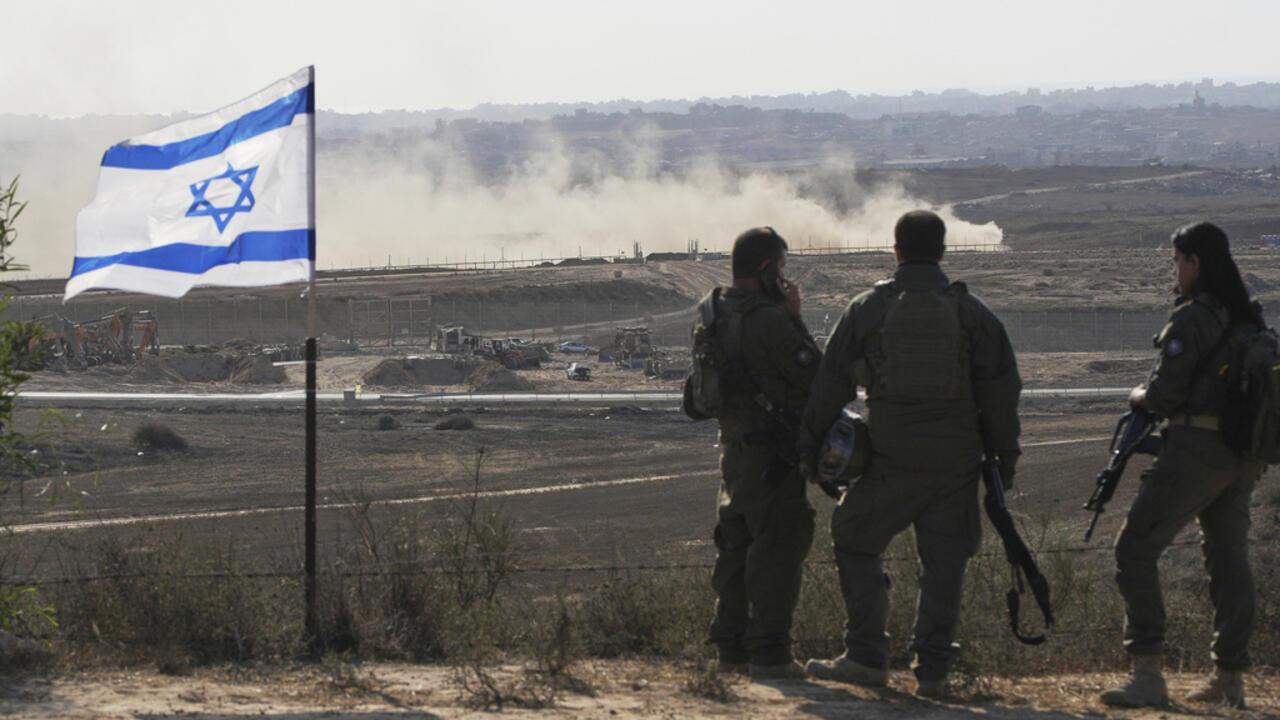
Israeli Officer Erez Finter Says Gaza Bombardment Was “Hysterical” And Aimed To Maximize Harm
Key Takeaways
- Erez Finter described Gaza bombardment at the start of the war as hysterical and unprecedented.
- He is the head of the Operations Planning Division in the Israeli Army's Southern Command.
- Haaretz published reservists' testimonies describe army actions near food distribution sites and casualties.
Early bombardment and planning
Israeli military testimonies about the early days of the Gaza War describe an opening phase marked by what an Israeli officer called “hysterical” bombardment and by an approach driven by intent to maximize harm.
“Gaza bombardment at the start of the war was described as 'hysterical' by Erez Finter, head of the Operations Planning Division in the Israeli Army's Southern Command, reflecting the features of the first phase of the war of extermination and the scale of the intensified, unprecedented bombing that targeted the Gaza Strip”
In a report published by Israeli Channel 14, Erez Finter, head of the Operations Planning Division in the Israeli Army's Southern Command, described the initial Gaza bombardment as “hysterical,” reflecting “the features of the first phase of the war of extermination.”

The Al-Jazeera Net account says Israel began on “October 8, 2023” a “devastating war on the Gaza Strip,” described as genocide, and that it has killed “more than 72,000 people” and injured “more than 172,000,” while “about 90% of the civilian infrastructure in the Strip” was affected.
The same Al-Jazeera Net piece says the official responsible for outlining military plans for the ground operation told Channel 14 that the bombing came “driven by the desire to inflict the greatest possible harm, and due to a lack of trust,” and that forces entering the Strip, especially during the first ground maneuver, enjoyed what he described as a “fire shield.”
It adds that the intensity of the fires used inside Gaza “has not been seen for many years in modern wars,” and that “it will take many decades to know the magnitude of the hell Gaza has endured.”
The article further reports that the Channel 14 video “drew wide reaction among Palestinians,” with Twitter users calling Finter’s statements a “confession” and others arguing that “they do not need Erez Finter's words.”
Surrounding Gaza and reservist strain
While Israeli military planning is described in testimony about the war’s early phase, another report focuses on the ongoing ground campaign and the strain on Israeli reservists.
RFI says “Israeli troops have begun surrounding the city of Gaza, in the north of the Palestinian enclave,” and describes “a military operation that will take months, according to Israeli military officials.”
It reports that “In total, five divisions will be deployed, according to the plan approved by Defense Minister Israel Katz,” linking the encirclement to a specific approved plan.
RFI also says “60,000 reservists have been recalled for this offensive by the Israeli government,” and that they “accumulate periods in reserve,” describing a reservist who has been mobilized for “420 days.”
The reservist, an officer in a commando unit who “prefers to remain anonymous,” tells RFI: “I've already served 420 days in this war. And on all fronts. And I have just received another call for 68 days. It's hard to keep coming,” and adds, “We do not like war at all.”
He says, “We are exhausted,” and frames the political problem as a mismatch between repeated deployments and exemptions, saying, “Our main problem with the political class is that on one hand they send us into combat countless times, and at the same time the ultra-Orthodox are exempt from service.”
RFI reports that he also says “the response rate to mobilization calls is dwindling,” and that “We are no longer able to carry out some of the missions entrusted to us.”
Gunfire at aid distribution sites
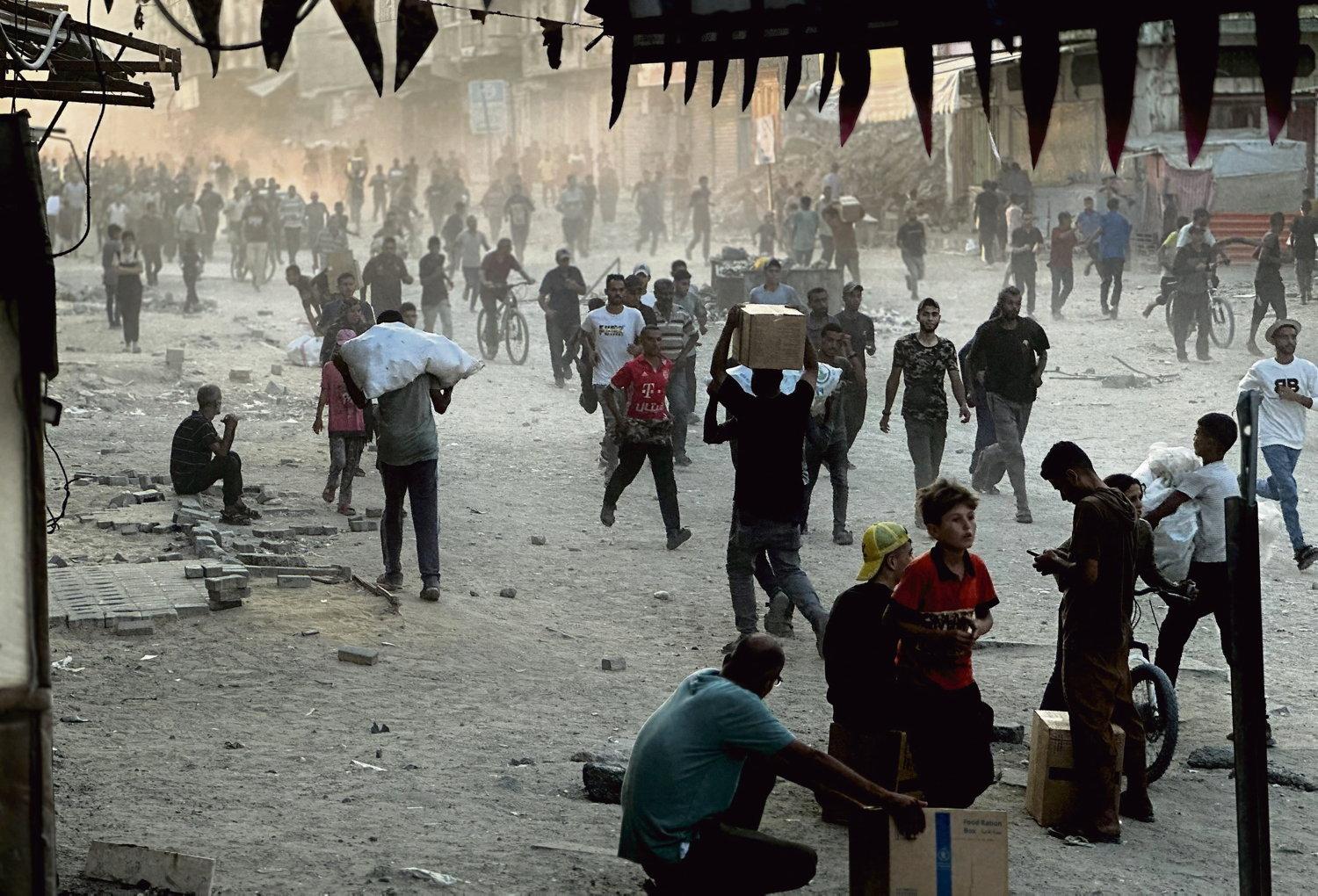
Testimonies described by L'Humanité, based on a “very long article” in Haaretz, portray Israeli soldiers firing on crowds near food distribution sites and describe a pattern of live fire without crowd-control measures.
“Israeli troops have begun surrounding the city of Gaza, in the north of the Palestinian enclave”
L'Humanité says Haaretz published testimonies from reservists “describing the army’s behavior near food distribution sites,” and that “Conversations with officers and soldiers reveal that commanders ordered troops to fire on the crowd to drive it away or disperse it, even though it was clear that it posed no threat.”
The report says that since the end of May, an American-Israeli organization, the Gaza Humanitarian Foundation (GHF), has been tasked by Tel Aviv with managing food distribution to Gazans, with “Limited distributions—at the whim of the Israelis—in four sites (three in the south and one in the center of the territory),” and that the sites “open for only one hour.”
L'Humanité adds that this forces Palestinians to travel into “enemy-controlled areas” with local auxiliaries, “collaborators known to be thieves, the Abu Shabab militia,” and it describes the danger as civilians walking toward centers “before dawn.”
One soldier quoted through Haaretz tells L'Humanité: “It's a battlefield,” and says that “between one and five people were killed each day,” describing treatment as hostile forces with “no crowd-control measures, no tear gas; just live fire with all that is imaginable: heavy machine guns, grenade launchers, mortars.”
The soldier says, “Our means of communication is the gunfire,” and describes opening fire early in the morning if someone tries to reach a line “a few hundred meters away,” and “sometimes we shoot them at close range.”
L'Humanité also includes a description of the army’s own framing: “At night, we open fire to signal to the population that this is a combat zone and that it is forbidden to approach,” and it says that after a shell hit a group of people, the firing pattern continued.
Casualties near aid and alleged orders
L'Humanité’s account ties the described firing near aid distribution sites to specific casualty figures attributed to the Gaza Health Ministry and to named military leadership referenced in Haaretz.
It says that “According to the Gaza Health Ministry, 549 people were killed near aid centers and in the areas where residents were waiting for UN food trucks since May 27,” and that “More than 4,000 people were injured.”
The report also describes a specific incident involving aid trucks and a crossroads, stating that “Last week, soldiers of Division 252 “opened fire at a crossroads where civilians were waiting for aid trucks.”
It adds that “A field commander gave the order to shoot directly at the center of the crossroads, causing the deaths of eight civilians, including teenagers,” and that “The incident was brought to the attention of the head of Southern Command, Major General Yaniv Asor, but so far, apart from a preliminary inquiry, no action has been taken.”
L'Humanité further says that “General Yehuda Vach is said to have ordered several massacres,” and that “According to Haaretz, a name comes up often, that of Brigadier General Yehuda Vach, commander of Division 252.”
It also claims that Haaretz had previously described how this officer “transformed what is called the Netzarim Corridor (in the center of the strip) into a deadly road and was suspected of ordering the destruction of a hospital in Gaza without authorization.”
In the same report, a reservist says, “Gaza no longer interests anyone. It has become a place with its own rules. The loss of human lives means nothing. It’s not even an “unfortunate incident,” as they used to say.”
How the war is framed
The sources also diverge in how they frame the war’s character and the meaning of testimony, with Al-Jazeera Net emphasizing intent and scale, RFI emphasizing the human cost inside the Israeli ranks, and L'Humanité emphasizing alleged conduct near civilian aid.
“Haaretz, the Israeli daily, published testimonies from Israeli soldiers describing the army’s behavior near food distribution sites”
Al-Jazeera Net presents the early bombardment as part of an extermination phase and quotes Channel 14’s planning account that the bombing was “driven by the desire to inflict the greatest possible harm, and due to a lack of trust,” while also reporting that Palestinians reacted to the video with claims that it was a “confession.”
It also includes a counterpoint from Twitter users that “they 'do not need Erez Finter's words,'” because the “violent bombing that occurred live before the eyes of the world” was already visible.
RFI, by contrast, centers on an Israeli reservist’s exhaustion and political grievances, quoting him saying, “We are exhausted,” and complaining that “the ultra-Orthodox are exempt from service,” while also describing a “response rate to mobilization calls is dwindling.”
L'Humanité frames the testimonies as evidence of “Possible war crimes,” and it quotes a soldier’s description that “Our means of communication is the gunfire,” while also reporting the Gaza Health Ministry figures of “549 people” killed and “More than 4,000 people” injured near aid centers.
Where Al-Jazeera Net reports that the Channel 14 video “drew wide reaction among Palestinians,” L'Humanité reports that Haaretz published testimonies and that the Gaza Humanitarian Foundation (GHF) was tasked with managing food distribution “since the end of May.”
Across the accounts, the war’s stakes are presented through different lenses: Al-Jazeera Net ties the scale to “more than 72,000” killed and “more than 172,000” injured, RFI ties it to the length of mobilization “420 days” and a new call for “68 days,” and L'Humanité ties it to casualties “since May 27” and to incidents involving “aid trucks.”
More on Gaza Genocide

Israel Kills Hind Rajab and Family as They Try to Flee Gaza City
11 sources compared

Israeli Settlers Set Fire to Palestinian Home in Jalud, Injuring Residents in West Bank
10 sources compared
Israeli Navy Intercepts Global Sumud Flotilla Near Crete, Jams Communications
21 sources compared
Palestinians Vote In Deir Al-Balah And West Bank Municipal Elections After Hamas Exclusion
21 sources compared