Australia09 February, 20262 min read
Israeli President Isaac Herzog Lays Wreath at Bondi Beach Massacre Site, Consoles Victims' Families
This article is an automated aggregation of coverage from news outlets. Our editorials offer in-depth analysis curated by the NewsCord team.
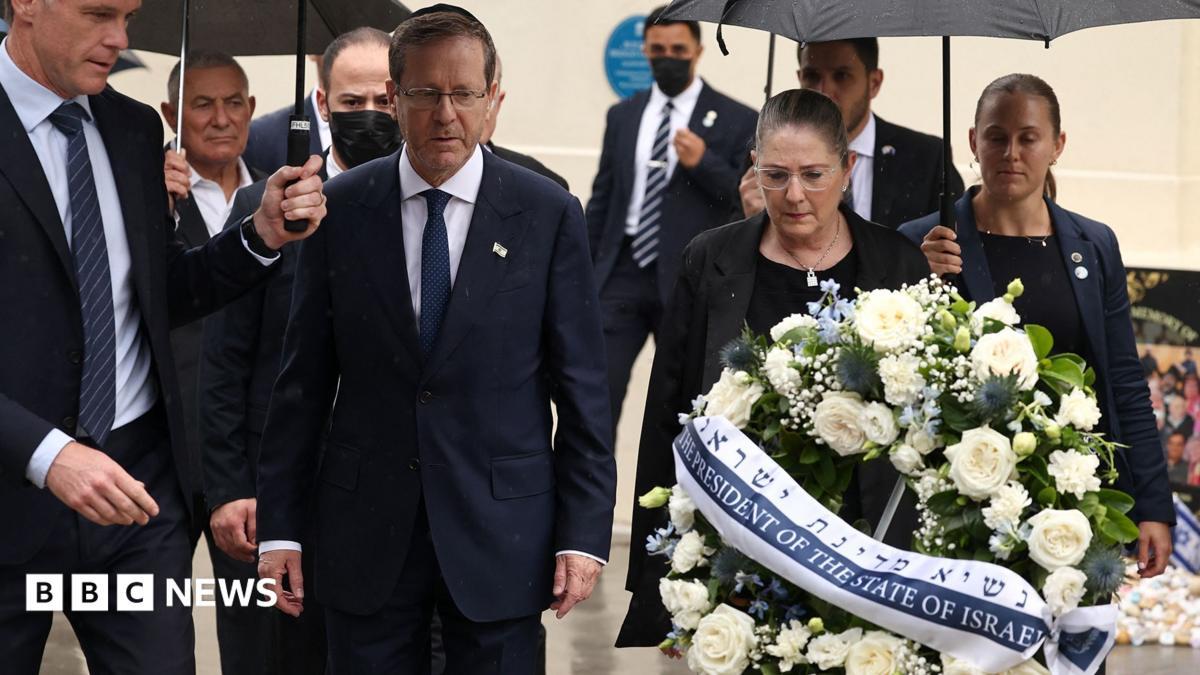
Laid a wreath and two Jerusalem stones at Bondi Beach honoring 15 shooting victims. Met and consoled victims' families and survivors of the December 14 Bondi Beach attack.

12 outlets told this the same way.
Herzog's Sydney condolence visit
Israeli President Isaac Herzog began a tightly secured four-day visit to Sydney by laying a wreath and placing stones from Jerusalem at Bondi Beach to honor the 15 people killed in the December 14 attack at a Hanukkah festival. He met with survivors and victims' families to offer consolation.
“When one Jew is hurt, all Jews feel their pain,’ and that he was there to ‘embrace and console the bereaved families.”
Herzog said he had come to 'embrace and console the bereaved families' and that 'when one Jew is hurt, all Jews feel their pain,' stressing solidarity with the Jewish Australian community as rain fell during the ceremony. Many sources framed the visit as a gesture of condolence and a show of solidarity with victims and the broader Jewish community in Australia.

Herzog visit: security, protests
Herzog's arrival in Australia prompted substantial security measures and public demonstrations. Sydney declared the visit a major event. The city deployed thousands of police and granted authorities expanded powers to manage crowds, search vehicles and restrict areas.
Organisers' legal challenges against some restrictions were unsuccessful. Police reportedly used strong tactics during some protests.
Pro-Palestine groups organised nationwide demonstrations accusing Herzog of complicity in civilian deaths in Gaza. Other groups and officials urged restraint and respect for the visit's purpose.
Reactions to presidential visit
The visit divided opinion within Australia’s Jewish and wider communities. Some Jewish leaders and survivors welcomed the president’s presence as a source of comfort and affirmation. Jeremy Leibler, president of the Zionist Federation of Australia, publicly praised Prime Minister Anthony Albanese for hosting Herzog, and other Jewish leaders said the visit would lift a pained community.
“Jeremy Leibler, president of the Zionist Federation of Australia, praised Prime Minister Anthony Albanese for hosting Herzog and said the president had called him after the Bondi attack to offer solidarity.”
More than 1,000 Jewish academics and community figures signed an open letter urging the government to rescind the invitation. Human-rights groups urged protests over Israel’s actions in Gaza, framing the visit as politically contentious.
Herzog visit and reactions
Herzog used the visit to warn of a global rise in antisemitism and to advocate for tougher protections. Several outlets reported him emphasizing that the problem is "Australian and global, not only a Jewish problem." Some coverage foregrounded this warning and praised Australia's tougher gun and hate-crime laws.
Other outlets paired the visit with reporting on international scrutiny of Israel, including references to UN inquiries and the International Association of Genocide Scholars alleging Israeli actions in Gaza amount to incitement or genocide. That reporting contextualised the protests and the sharper criticism surrounding the visit.

Coverage of Bondi attack
Multiple outlets report that 15 people were killed at the Bondi Hanukkah event, with victims as young as 10 and an 87-year-old Holocaust survivor, and at least one account named the alleged shooter as Sajid Akram, 50, who was shot dead by police.
“Among the victims were an 87-year-old Holocaust survivor, a couple who confronted a gunman, and 10-year-old Matilda. The alleged shooter, Sajid Akram, 50, an Indian national who entered Australia in 1998, was shot dead by police.”
Coverage balances human details about the victims with the security and political fallout of Herzog’s visit, though sources vary in which angles they emphasise.
&w=1920&q=75)