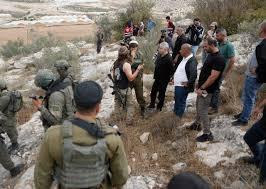
Israeli Settlers Assault Palestinian Farmers in Occupied West Bank
Key Takeaways
- Israeli settlers violently assaulted a Palestinian farmer in Urif, causing head and facial injuries.
- Israeli forces stood by or protected settlers during attacks.
- Settler violence in the West Bank has increased, harming livelihoods.
Gaza War, Wider Conflict
The sources provided for this request focus on the occupied West Bank and on Israeli settler violence, while also explicitly tying that violence to the Gaza War and to the broader regional conflict.
“Current section Under a decision approved earlier this month, two groups tasked with providing vocational training to at-risk youth placed in outpost farms will lose millions of shekels in funding”
Middle East Monitor frames the issue as an “existential threat” discussion, quoting former Mossad director Tamir Pardo saying, “What I saw today is the existential threat to the State of Israel,” after a visit to Palestinian villages targeted by Israeli settlers in the occupied West Bank.

The same article argues that “In Gaza, Palestinians face an ongoing genocide” and says the international community “preferred to watch in real time rather than halt.”
Radio-Canada similarly links the West Bank violence to the Gaza War, saying the violence has “peaked since the start of the war in Iran,” and describing the escalation as part of a longer pattern.
It also states that Israel’s settlement project continued “since 1967,” and that it accelerated “after the Hamas Islamist movement's attack on October 7, 2023 that triggered the Gaza War.”
In that framing, the war in Gaza is not treated as separate from West Bank dynamics; instead, it is described as a trigger for further intensification.
The sources also connect the conflict to institutional and political decisions, including Radio-Canada’s mention of Defense Minister Israel Katz canceling administrative detention for Israeli suspects in the West Bank.
Funding, Outposts, and Control
Haaretz reports that the Jewish National Fund, known in Hebrew as Keren Kayemeth LeIsrael, is cutting back funding programs tied to West Bank settler farm outposts.
It says that “two groups tasked with providing vocational training to at-risk youth placed in outpost farms will lose millions of shekels in funding,” under “a decision approved earlier this month.”

Haaretz adds that JNF’s new leader says the organization’s money was used “to help dispossess Palestinians,” linking the funding directly to displacement.
The same Haaretz report places the funding change in the context of outpost farms and vocational training, describing the programs that will be reduced.
While Haaretz does not describe Gaza directly in this excerpt, it situates the West Bank outpost ecosystem as part of the broader political landscape surrounding the Gaza War.
Middle East Monitor provides historical and ideological context for that landscape by quoting Manachem Ussishkin, chairman of the JNF from 1923 to 1941, telling journalists in Jerusalem in April 1930, “If there are other inhabitants here, they must be transferred to some other place. We must take over the land.”
It adds that Ussishkin said, “We have a great and nobler ideal that preserving several hundred thousands of [Palestinian] Arabs fellahin [peasants].”
Taken together, the sources portray JNF funding and its historical messaging as connected to land control and displacement.
In that same ideological framing, Middle East Monitor argues that “Zionism depended on settler presence,” and claims that without settler presence “Israel would face an existential crisis as the demography would change significantly.”
Farmers, Raids, and Displacement
Mondoweiss describes how Israeli settler violence has disrupted Palestinian farming livelihoods, using the case of Eyad Yousef, a Palestinian farmer in the village of Taybeh east of Ramallah.
“Slowly, amidst the high green weeds of April, Eyad Yousef moves forward in a white bee-keeping suit, inclined forward and looking toward the ground”
It says Yousef moves forward “in a white bee-keeping suit” and is picking peas he and his brother planted earlier in March, while explaining that he is “not working his own land anymore.”
The article states that land has been made inaccessible by the threat of Israeli settlers who “permanently patrol the plain on the eastern edge of the village,” and it quotes Yousef saying, “It’s my oxygen.”
Mondoweiss ties the escalation to a timeline beginning “Since October 2023,” saying attacks from Israeli settler groups on Palestinian farmers in the West Bank have increased “exponentially, both in numbers and in levels of violence.”
It also cites the Palestine Information Center saying Israeli settler groups have carried out “more than 8,000 attacks on Palestinians since October 2023,” and it quotes OCHA saying Israeli forces have demolished “more than 1,000 Palestinian farming structures in the West Bank in 2025 alone.”
Yousef’s personal history is detailed: he says he started working on his father’s land near the Rimunim settlement, southeast of the village, and that “our family lost up to 20 dunams” after the settlement and surrounding lands became inaccessible.
The article recounts that “Last year, Israeli settlers began to come much closer to Taybeh’s urban area,” and that when he tried to go to his land “six months ago,” “Three Israeli settlers arrived in a car, one of them armed.”
In a separate but related report, TRT Français describes an assault on a Palestinian farmer in Urif south of Nablus, identifying him as Abdel Fattah Al-Safadi and saying he sustained “head and facial injuries” while working on his land.
TRT Français also says Israeli forces conduct raids in areas including Bazariya northwest of Nablus and that settlers set up a tent encampment on lands belonging to Kisan east of Bethlehem, raising Israeli flags near Palestinian homes.
The combined picture from these sources is that the war-linked escalation is experienced through direct attacks on agriculture, movement, and property in multiple West Bank locations.
Voices: Terror, Law, and Impunity
Multiple sources present competing characterizations of settler violence and the legal framework around it, with direct quotes from officials, researchers, and activists.
RFI reports that Palestinian Foreign Minister Varsen Agabekian Shahin said, “this is not violence, it's terrorism,” and it quotes her adding, “If we did even a fraction of what the settlers do in the occupied Palestinian territories, we would be treated as terrorists.”
RFI also quotes Shahin saying, “The very definition of violence is different whether one is Israeli or Palestinian,” and it records her call: “We must disarm the settlers.”
The same RFI excerpt says the Palestinian Authority cites “460 attacks in January and 511 in February,” and it states, “At least nine Palestinians have been killed by settlers this year, according to U.N. data.”
Radio-Canada adds that some Israelis denounce the “terrorism” of the settlers, quoting an open letter published by Commanders for Israel's Security urging General Eyal Zamir to address the “strategic danger” posed by “Jewish terrorism.”
Radio-Canada also quotes Reem Cohen, a researcher at the Tel Aviv-based Institute for National Security Studies (INSS), saying, “The Israeli government and the security forces [...] do not respond in a decisive manner,” and it describes his view that the violence has become “an extended phenomenon.”
It further states that Cohen links the escalation to the Gaza War, saying it is “linked to the struggle for control of the territory and the effort to dislodge the Palestinian population,” and it references far-right ministers Itamar Ben-Gvir and Bezalel Smotrich.
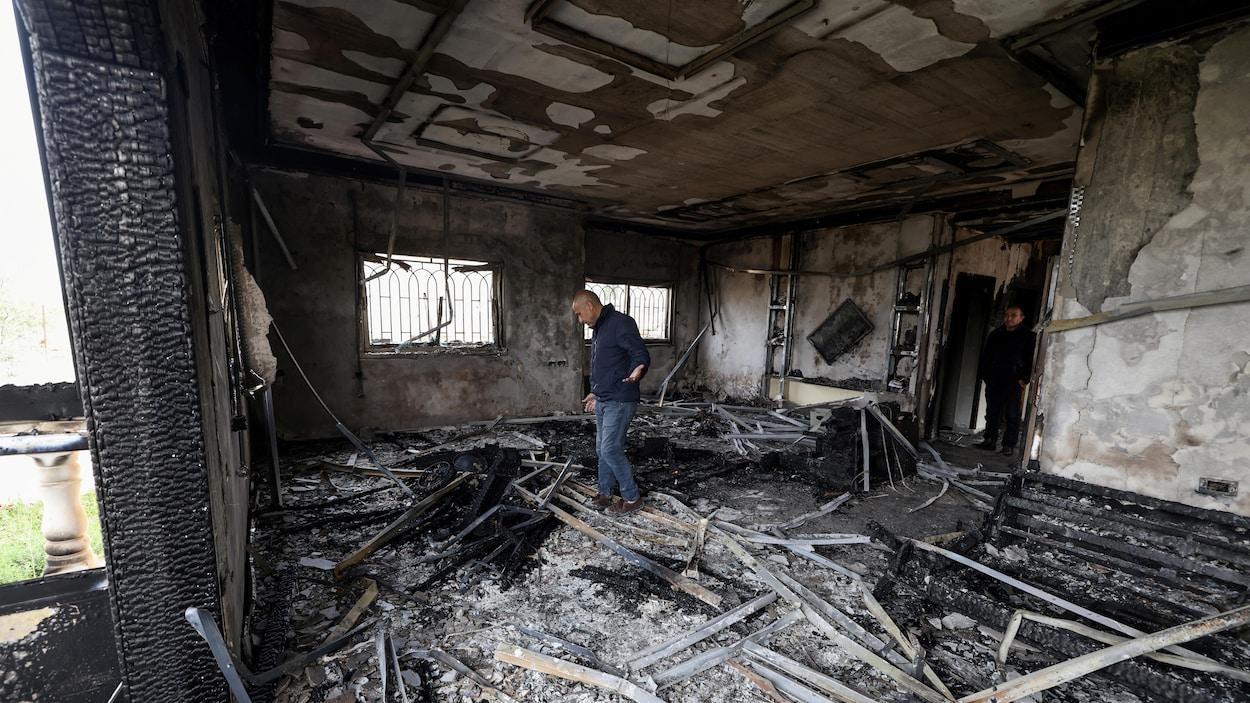
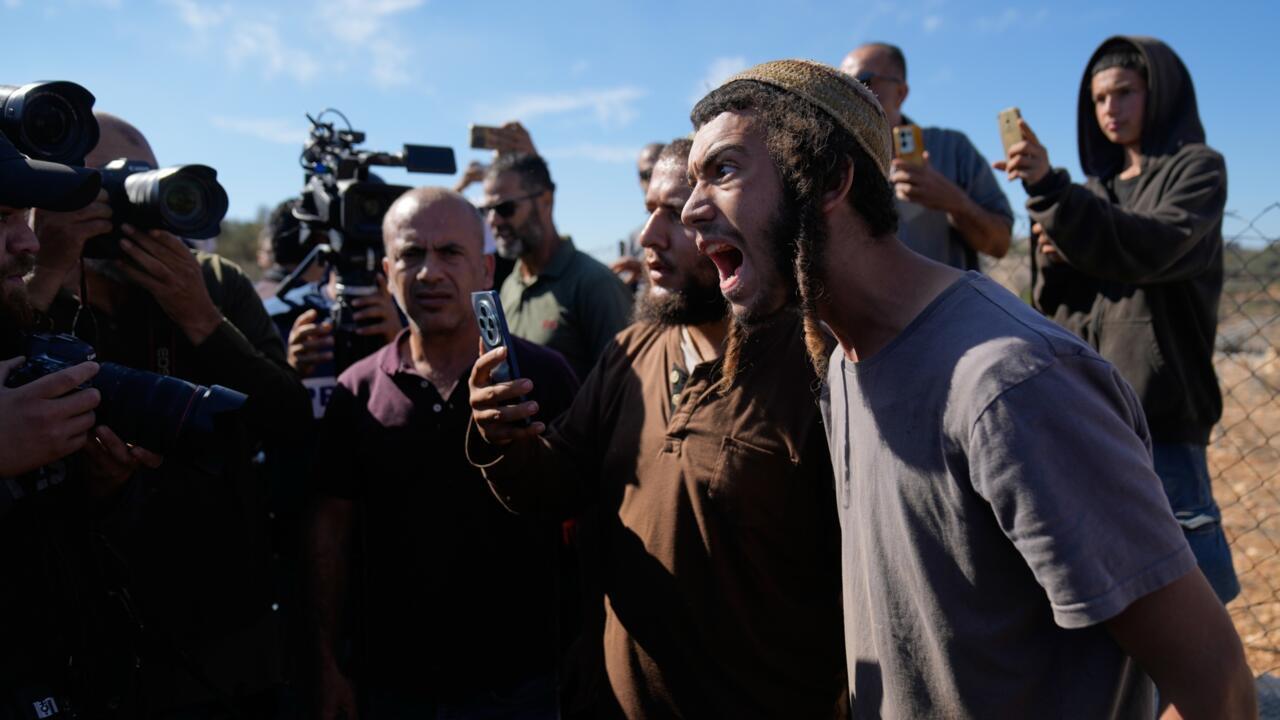
The Jerusalem Post excerpt provides a different angle by describing an incident in Jalud where Army Radio reported IDF soldiers “stood by” while “extremist Jewish rioters set fire to a Palestinian home” and beat an elderly Palestinian man.
It says only “one out of the 12 Israelis was arrested,” and it quotes the explanation that the decision was made because law enforcement members were “outnumbered” and to “prioritize dispersing the confrontation and extinguishing the fire.”
Across these sources, the same pattern—violence by settlers, state response, and legal debate—is narrated through sharply different language and emphasis.
Escalation, Deaths, and Next Steps
The sources describe ongoing attacks across the West Bank and emphasize that the violence is continuing while political and military responses are debated.
“This is not violence, it's terrorism: Palestinians condemn Israel's complacency toward settlers”
TRT Français says the incident in Urif comes as “Israeli forces conduct raids in several areas of the occupied West Bank,” including Bazariya northwest of Nablus, and it reports that “Illegal Israeli settlers also set up a tent encampment on lands belonging to the village of Kisan, east of Bethlehem.”
It adds that Israeli forces conducted a raid on a refugee camp north of Hebron, where “The troops fired live rounds and threw tear gas toward the homes, but no injuries were reported.”
TRT Français also states that since October 2023, attacks have “killed more than 1,150 people and left thousands wounded among Palestinians, according to official Palestinian data,” and it notes an International Court of Justice ruling issued in July 2024 declaring Israel’s occupation illegal and calling for “the evacuation of all settlements in the West Bank and East Jerusalem.”
In a separate report, Saba describes attacks in Ramallah, Nablus, and the Jordan Valley, saying Zionist settler groups “under the protection of Israeli forces” continued attacks against Palestinian citizens and their property.
Saba reports that in the Jordan Valley, “Israeli settler bulldozers demolished the Al-Malih school,” and it quotes Mahdi Daraghmeh saying settlers “demolished the school and the surrounding houses.”
Saba also provides a school impact timeline, saying Azmi Balawneh indicated about “70 students, from first grade to fifth grade” were receiving primary education, then “the number of students had fallen to 30, then 16,” before the school emptied completely after “the forced departure of all the families.”
Radio-Canada adds that the violence has been described as “nearly daily” since October 7, and it says “Since October 7, more than 175 farms and settlement outposts have been established in the West Bank, according to the Israeli anti-colonization NGO Peace Now.”
It also states that Commanders for Israel's Security published an open letter urging General Zamir to address the “strategic danger” posed by “Jewish terrorism,” and it notes that Yair Lapid urged the government to combat “Jewish terrorism” “by all means in the West Bank.”
Taken together, the sources portray a continuing cycle of raids, property destruction, and political responses, with the Gaza War context used to explain the timing and intensity of the escalation.
More on Gaza Genocide
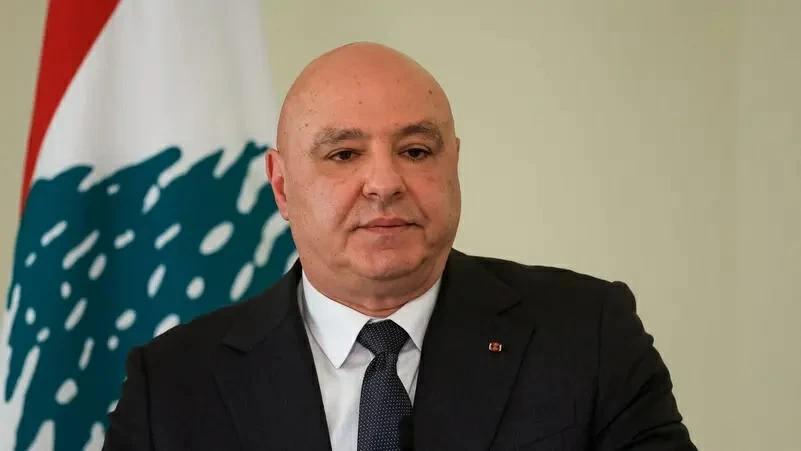
Iran Negotiator Mohammad Baqer Qalibaf Questions US Peace Commitment After Israel Attacks Beirut
10 sources compared
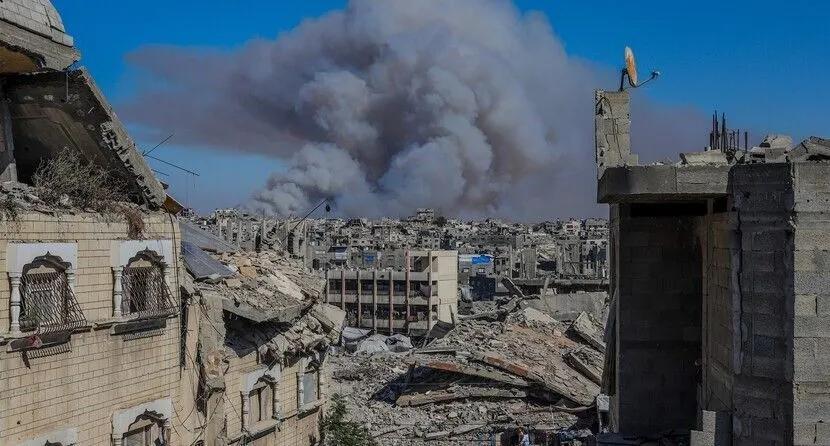
Israel Shells Abu Hussein School in Jabalia, Wounding Five Displaced Palestinians
11 sources compared

Jerry Seinfeld Sparks Backlash After Telling Streamer Palestine “Doesn’t Exist” Outside Madison Square Garden
10 sources compared

UK, Australia, and Canada Launch International Peace Fund for Two-State Solution Between Palestine and Israel
11 sources compared