Israeli Strikes Hit Southern Lebanon Villages as Hezbollah Targets Israeli Vehicles and Command Positions
Key Takeaways
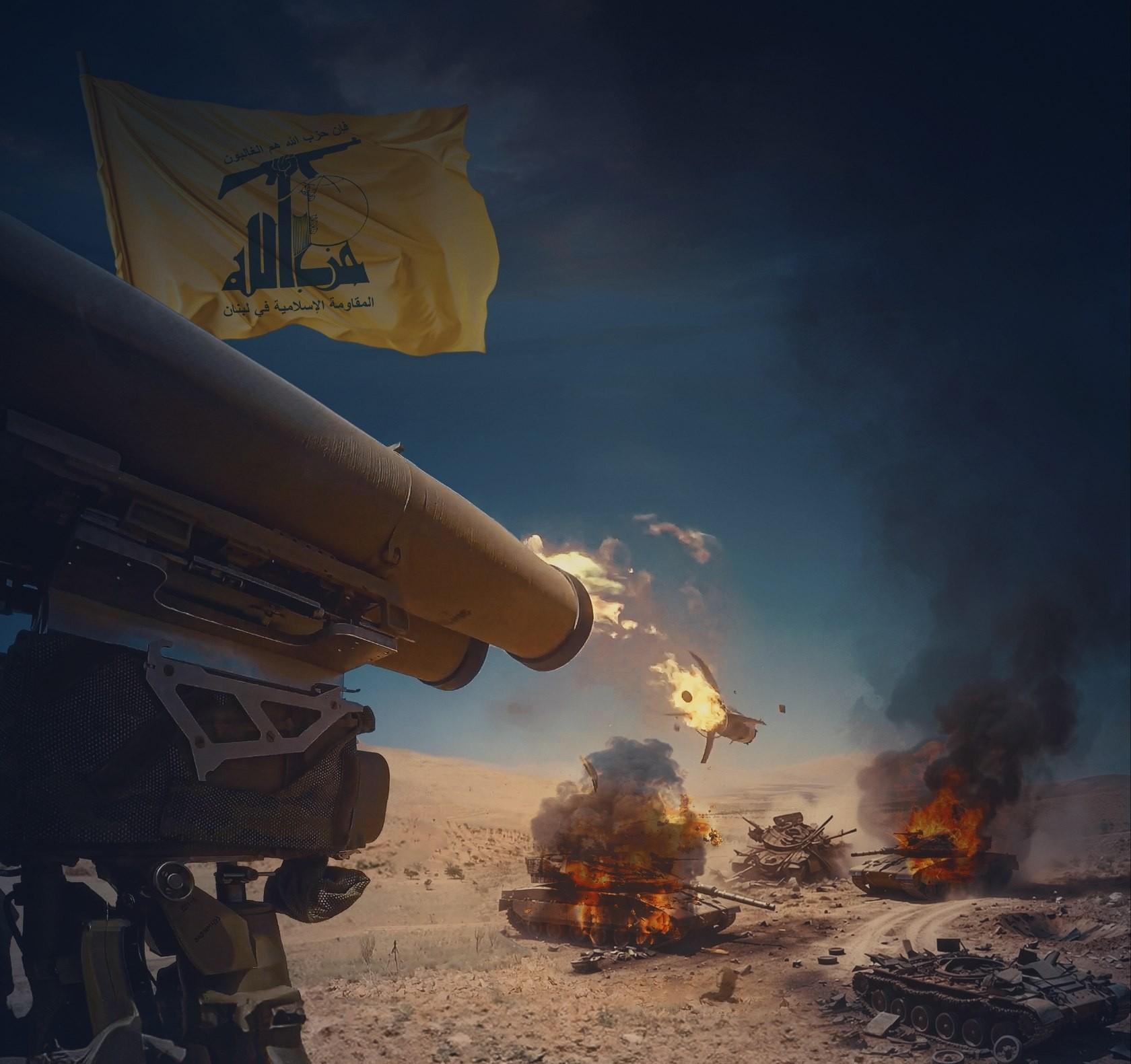
- Hezbollah conducted coordinated operations targeting Israeli tanks and vehicles in southern Lebanon with loitering gliders.
- Israeli strikes killed civilians in Habbouche and damaged Yaroun's convent and school.
- Hezbollah said the operations respond to Israeli ceasefire violations and attacks.
Cross-border strikes and counterattacks
Israeli airstrikes and artillery shelling hit multiple villages in southern Lebanon on Monday, while Hezbollah announced two separate operations targeting Israeli forces since the morning.
Shafaq News said Israeli air raids struck Borj Kalawyh, Sarifa, Kfar Tibnit, Sajd, Jabal al-Rafi, Debaal, Shhour, Braachit, and Qana, and artillery fire targeted Zawtar al-Gharbiyeh, Mifadoun, and Henniya.
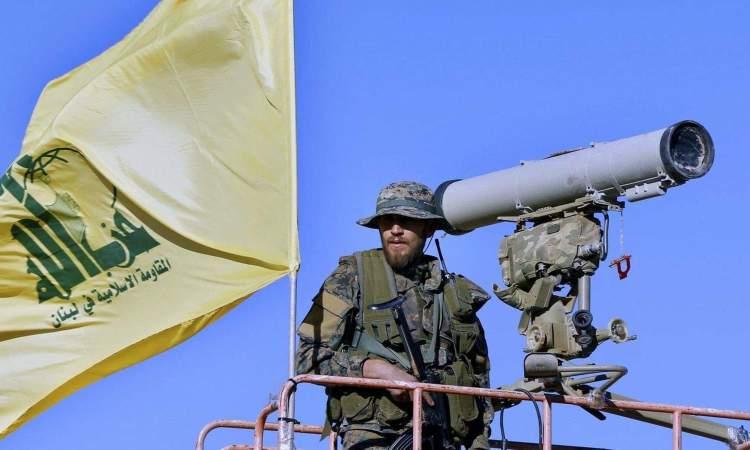
In response, Hezbollah said it targeted a gathering of Israeli vehicles and soldiers in the village of Al-Qantara using rockets, and also targeted a newly established command position in Al-Bayada using explosive-laden drones that “hit their targets accurately.”
Shafaq News added that Hezbollah published video footage showing attacks on an Israeli military vehicle and a bulldozer in Al-Bayada and Bint Jbeil using drone strikes.
The same report said Lebanese authorities recorded “more than 8,500 Israeliviolations—including excavation and bulldozing operations, shelling, and the use of phosphorus munitions… since March 2.”
Shafaq News also reported that the Lebanese Health Ministry recorded 2,679 deaths and 8,229 injuries nationwide, while the Israeli army reported 735 injuries among its officers and soldiers since early March, including 44 in critical condition and 100 moderately injured.
Litani advance and medical strikes
As clashes continued, the Israeli army reached a fork of the Litani River while operating deeper into Lebanese territory, according to Mont Carlo International.
The outlet said the Israeli army announced a cross-border operation from Mount Hermon in southern Lebanon that coincided with its ground advance, reaching the outskirts of the Litani River despite Hezbollah’s continued resistance.
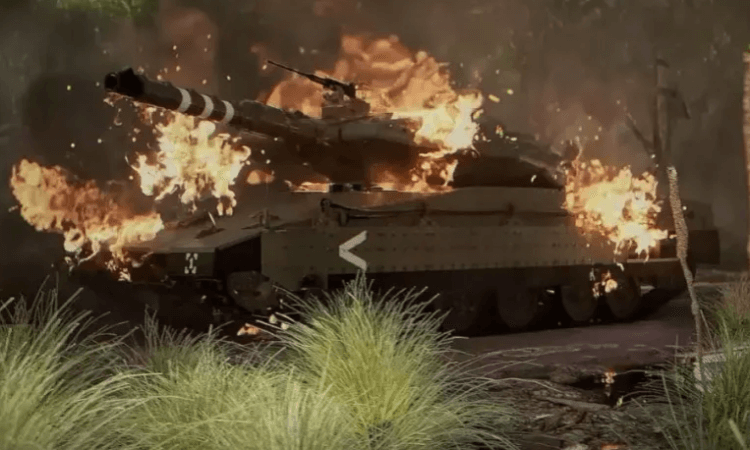
Mont Carlo International reported that Hezbollah fighters clashed with Israeli forces in Shama, Maroun al-Ras, and the Ghadmata area in Ainata, and that Hezbollah targeted forces in nine towns as well as tanks and armored vehicles in six towns.
The report said air raids and artillery shelling focused on towns surrounding the four corridors along which the Israeli army moves, while hitting several towns in more than one area.
Mont Carlo International also tied the airstrikes to deaths among emergency medical personnel, saying “two medics killed in an airstrike on a center of the Islamic Health Organization in Bint Jbeil.”
It further reported that “47 people were killed and 116 others injured in several towns,” and said the Indonesian unit’s headquarters in UNIFIL in Adshit al-Qasir came under artillery shelling, killing one member and wounding another.
Hezbollah’s drone-centered claims
Hezbollah’s operations in the reports were framed around rockets, artillery, and drones, with multiple outlets describing coordinated strikes and drone use against Israeli positions.
Palestine Chronicle said Hezbollah announced “a series of coordinated operations targeting Israeli military positions and troop gatherings along the Lebanese-Palestinian border,” describing actions against an Israeli command headquarters in al-Bayyada with a rocket salvo and artillery shells striking the “newly established Balat military site.”
The outlet also said Hezbollah targeted gatherings of Israeli vehicles and soldiers in the town square of Qantara al-Janoubiya, and that in another operation Hezbollah said its fighters struck a Namera vehicle carrying an Israeli command team in al-Bayyada using what it described as a “drone strike,” reporting a direct hit.
Shafaq News similarly described Hezbollah targeting a “newly established command position in Al-Bayada” using explosive-laden drones that “hit their targets accurately,” and it said Hezbollah published video footage showing attacks on an Israeli military vehicle and a bulldozer in Al-Bayada and Bint Jbeil using drone strikes.
Al-Manar TV Lebanon described a sequence of Hezbollah operations on Tuesday, saying Hezbollah Military Media statements reported “six operations” and included a guided missile strike on a Merkava tank in Al-Bayyada at 23:45 and a rocket weapons attack at 00:15.
In a separate incident reported by Shabaka Ro’ya الإخبارية, an explosive drone targeted an armored military vehicle near Shomera in northern Israel, and the outlet said 12 Israeli soldiers were injured after the drone caused a fire and “secondary explosions of the ammunition inside it.”
Tanks, drones, and “Merkava hunting”
The war’s tactical framing in Lebanon was also discussed through the lens of drones versus tanks, with الجزيرة نت describing what it called “The Merkava hunting season.”
The outlet portrayed a shift in southern Lebanon where tanks “no longer plow forward as they once did,” and it described a “small drone” that “possesses cameras and sensors enough to search for a weak point before delivering its strike precisely from above.”
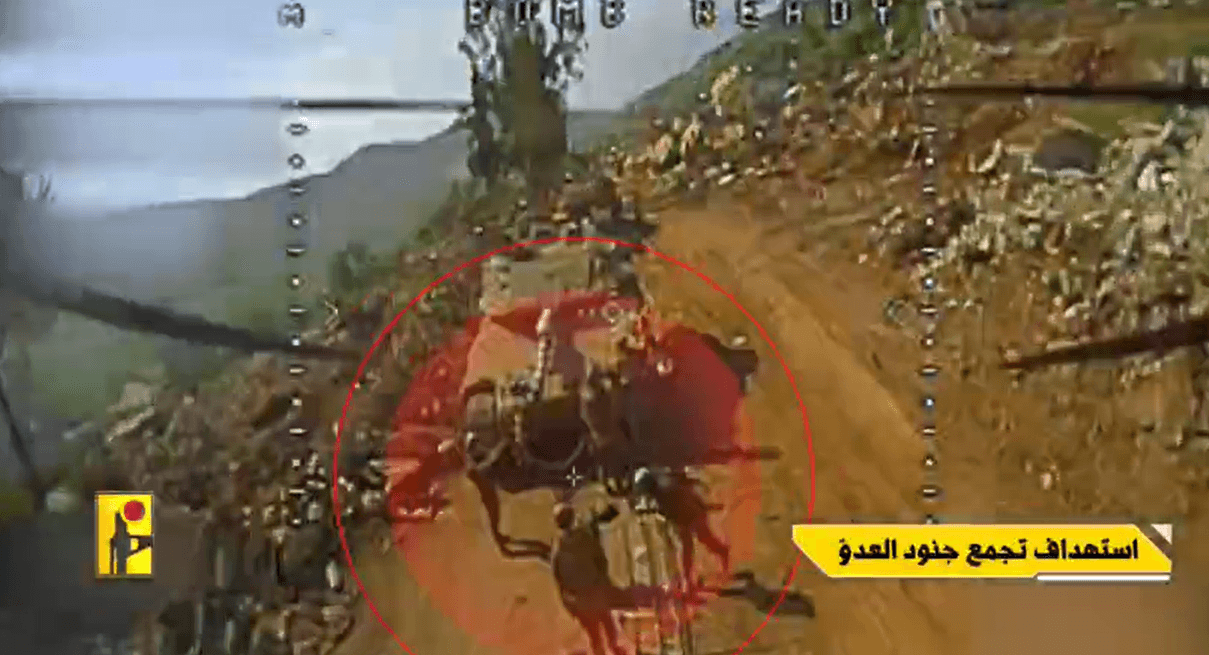
الجزيرة نت said that “First‑person‑view drones rely on the operator,” and it described how they can be equipped with an explosive payload to act as a “suicide drone that collides with its target and explodes in it.”
The outlet tied the approach to earlier reporting by Reuters in 2024 about FPV drones altering war dynamics, including a description that “Ukrainian and Russian tanks no longer dared enter an open field because they would face a hail of drones.”
It also cited a Defense News report saying Hezbollah is fighting Israel in a “Ukrainian-style” war in southern Lebanon, after it began releasing footage captured from its suicide drones as they collide with advanced Israeli Merkava tanks, claiming that they “destroyed or disabled 20 tanks.”
In the same narrative, الجزيرة نت said the “opening Hezbollah assault on March 2 came via a drone and missile strike,” and it added that Reuters reported sources that the group was firing “more than 60 rockets and drones per day” at that time, then “more than doubling that number two days later.”
Threats to ambulances and sanctions
The reporting also highlighted escalating rhetoric and policy moves tied to the conflict, including threats to medical services and new sanctions connected to Iran.
CNN Arabic said the Israeli army warned that it may begin targeting ambulances in Lebanon, accusing Hezbollah of using emergency vehicles for military purposes, and it quoted the Israeli army’s position that “if this practice does not stop, Israel will act in accordance with international law against all armed activities carried out by the terrorist group Hezbollah using these facilities and ambulances.”
CNN Arabic also reported that the Lebanese Ministry of Public Health rejected Israel’s claims and described them as “merely a justification for crimes against humanity,” while also saying the ministry accused Israel of repeatedly targeting ambulances while carrying out rescue operations on the front lines.
L’Orient-Le Jour described events on May 1, 2026 in southern Lebanon, saying “six dead” were reported in Israeli bombardments on Habbouche near Nabatieh, and it said health authorities reported “six dead, including a child and a woman, and eight wounded.”
The same outlet reported that rescuers were forced to leave Habbouche after drone fire, saying “All rescue teams deployed to Habbouche after the series of strikes on the village had to evacuate the site,” because they were forced to leave due to drone attempts by the Israeli army to target them.
L’Orient-Le Jour also included a U.S. policy development, reporting that “Washington imposes new sanctions against Iran, threatens ships that would pay a toll,” and it said the warning stated that ships paying a toll to secure passage through the Strait of Hormuz expose themselves to sanctions.
More on Lebanon
Hezbollah Hits Israeli Merkava Tank In Al-Bayyada With Guided Missile At 11:45 Pm
12 sources compared
Israeli Forces Clash With Hezbollah in Southern Lebanon, Wounding Two IDF Soldiers
10 sources compared
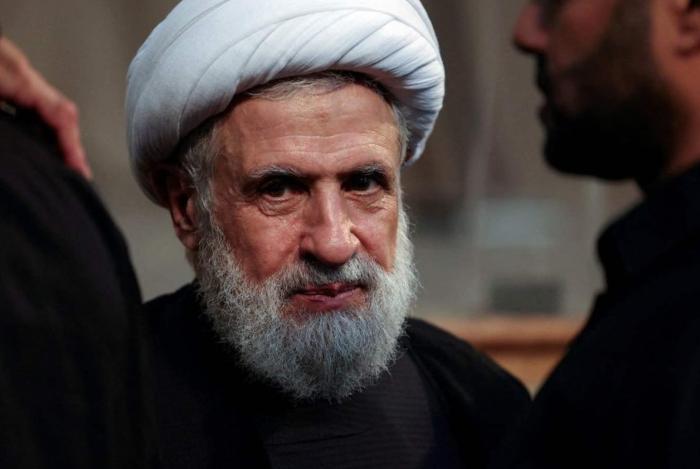
Hezbollah Secretary-General Naim Qassem Says No Ceasefire in Lebanon, Cites Israeli-American Aggression
15 sources compared
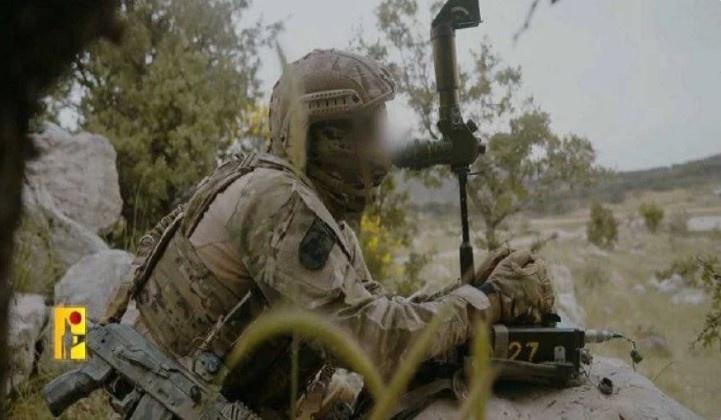
Hezbollah Vows to Thwart Lebanon-Israel Talks as Rockets and Drones Hit Israeli Troops
15 sources compared