
Israel's Defense Minister Orders Intensified Demolitions of Bridges and Houses in Southern Lebanon.
Key Takeaways
- Katz ordered intensified destruction of bridges in southern Lebanon.
- Multiple bridges over the Litani River were destroyed.
- Lebanese President Aoun condemned the strikes and warned of escalation.
Israeli Military Orders
Israeli Defense Minister Israel Katz has intensified military operations in southern Lebanon.
“BREAKING Child killed in US-Israeli strike in Iran's Khorramabad: ReportIEA chief says global economy ‘facing a major threat’Saudi Arabia intercepts ballistic missile heading towards Riyadh Click to pause breaking news tickerpause-square-backgroundClose Breaking News Tickerclose Toggle Play Moment Israeli strike hits bridge in southern Lebanon Read more Video shows the moment Israeli jets strike the Qasmiyeh Bridge over the Litani River in southern Lebanon, sending plumes of smoke into the sky”
Katz issued orders to destroy critical infrastructure and civilian housing as part of a broader campaign against Hezbollah.
Katz, along with Prime Minister Benjamin Netanyahu, instructed the military to 'immediately destroy all bridges over the Litani River' that Israel claims are used by Hezbollah.
The defense minister further stated that Israeli forces would 'accelerate the destruction of Lebanese homes in contact-line villages' to neutralize threats to Israeli communities.
Katz explicitly referenced the 'model of Beit Hanoun and Rafah' - two of the most heavily bombarded areas of Gaza during the ongoing conflict.
These orders represent a significant escalation in Israel's military strategy as it seeks to establish a buffer zone in southern Lebanon.
Bridge Destruction Campaign
The Israeli military has systematically targeted multiple bridges spanning the Litani River.
This includes the strategically important Qasmiya Bridge, which serves as a vital artery connecting southern and central Lebanon.

The Qasmiya Bridge, located approximately 6 kilometers from Tyre on Lebanon's coastal highway, was the fifth bridge to be destroyed since March 2nd.
The IDF claimed these crossings are 'key' routes used by Hezbollah to transfer operatives, weapons, rockets, and rocket launchers from areas north of the Litani River into southern Lebanon.
Military analysts note that these same bridges are essential for civilian movement and have been used by Lebanese citizens fleeing the escalating violence.
The UN estimates that around one million people have been displaced by the renewed fighting.
International Condemnation
The intensified demolition campaign has triggered strong international condemnation and warnings of potential war crimes.
Lebanese President Joseph Aoun condemned the strikes as 'a dangerous escalation and a blatant violation of Lebanon's sovereignty,'
Aoun warned they 'are considered a prelude to a ground invasion' that Lebanon has repeatedly opposed through diplomatic channels.
Aoun stated that targeting bridges across the Litani River 'is an attempt to sever the geographical connection between the southern Litani region and the rest of Lebanese territory',
He emphasized this impedes humanitarian aid delivery and falls within 'suspicious schemes to establish a buffer zone, solidify the occupation, and pursue Israeli expansion within Lebanese territory.'
Egypt's Foreign Ministry condemned Israel's actions as 'a grave breach of international law and the UN Charter,'
They emphasized that systematic targeting of civilian infrastructure represents 'an explicit Israeli policy of collective punishment' that has led to 'the forced displacement of about a million Lebanese and the depopulation of entire areas.'
Humanitarian Crisis
The escalating military operations have created a severe humanitarian crisis in Lebanon, with devastating consequences for civilian populations.
Lebanese authorities have reported 1,029 deaths in just three weeks of conflict, with more than one million people displaced from their homes.
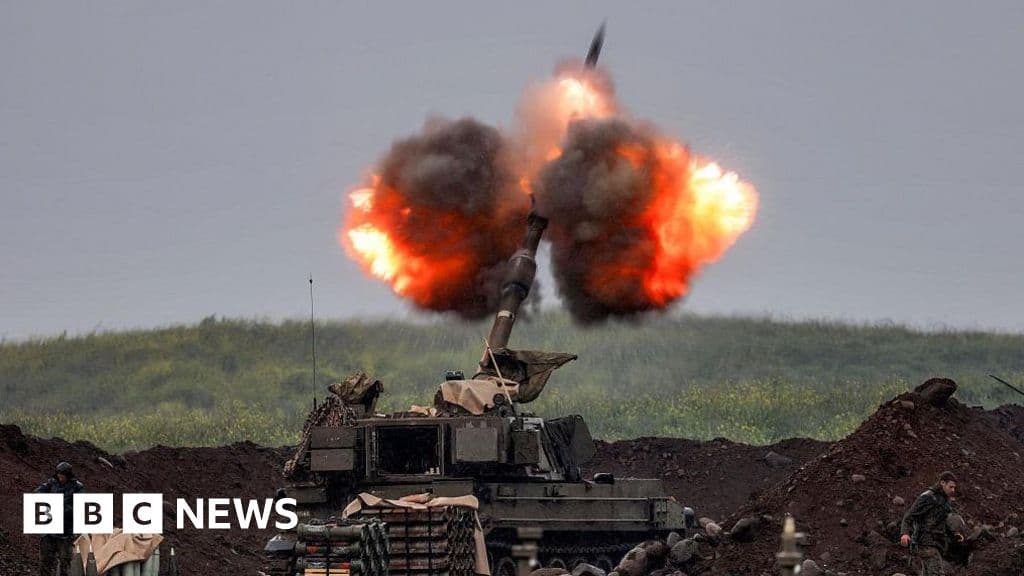
The systematic destruction of infrastructure, particularly bridges over the Litani River, has created what experts describe as a potential 'humanitarian catastrophe.'
Human Rights Watch researcher Ramzi Kaiss warned that 'if all these bridges are struck, and the region that is south of the Litani becomes isolated from the rest of the country, then the civilian harm is going to be so immense that you have a humanitarian catastrophe as people still living in the south won't be able to access food, medicine and other basic needs.'
The United Nations human rights chief has criticized Israel's actions in Lebanon, particularly its use of widespread evacuation orders.
International law generally prohibits militaries from using evacuation orders to target civilian infrastructure.
Strategic Expansion
Israel's intensified military campaign in southern Lebanon appears to be strategically aimed at establishing a de facto buffer zone south of the Litani River.
“The Lebanese government has outlawed Hezbollah military activity and said it wanted to engage in direct talks with Israel”
The Litani River is a demarcation point long considered significant in regional security calculations.

The Israeli military has announced plans for 'prolonged operations' and has approved plans 'to advance the targeted ground operations and strikes' against Hezbollah.
This expansion comes as Finance Minister Bezalel Smotrich publicly declared that 'the Litani River should be the border between us and Lebanon,'
Smotrich suggested a territorial ambition reminiscent of Israel's control over 55% of Gaza.
The systematic destruction of infrastructure and civilian housing follows a pattern seen in Gaza, particularly in heavily bombarded areas like Beit Hanoun and Rafah.
This raises concerns about the potential for widespread civilian displacement and long-term occupation of Lebanese territory.
More on Lebanon

Israel Destroys Bridges Over Litani River, Steps Up Border Demolitions Near Lebanon
19 sources compared
Israel Strikes Hezbollah Targets in Beirut After Evacuation Warnings
13 sources compared
UAE Dismantles Terrorist Network Linked to Iran and Hezbollah, Arrests 109
19 sources compared

Israel Attacks Lebanon as Missile Lands Near RT Reporter
31 sources compared