Full story
Hajj blocked in Gaza
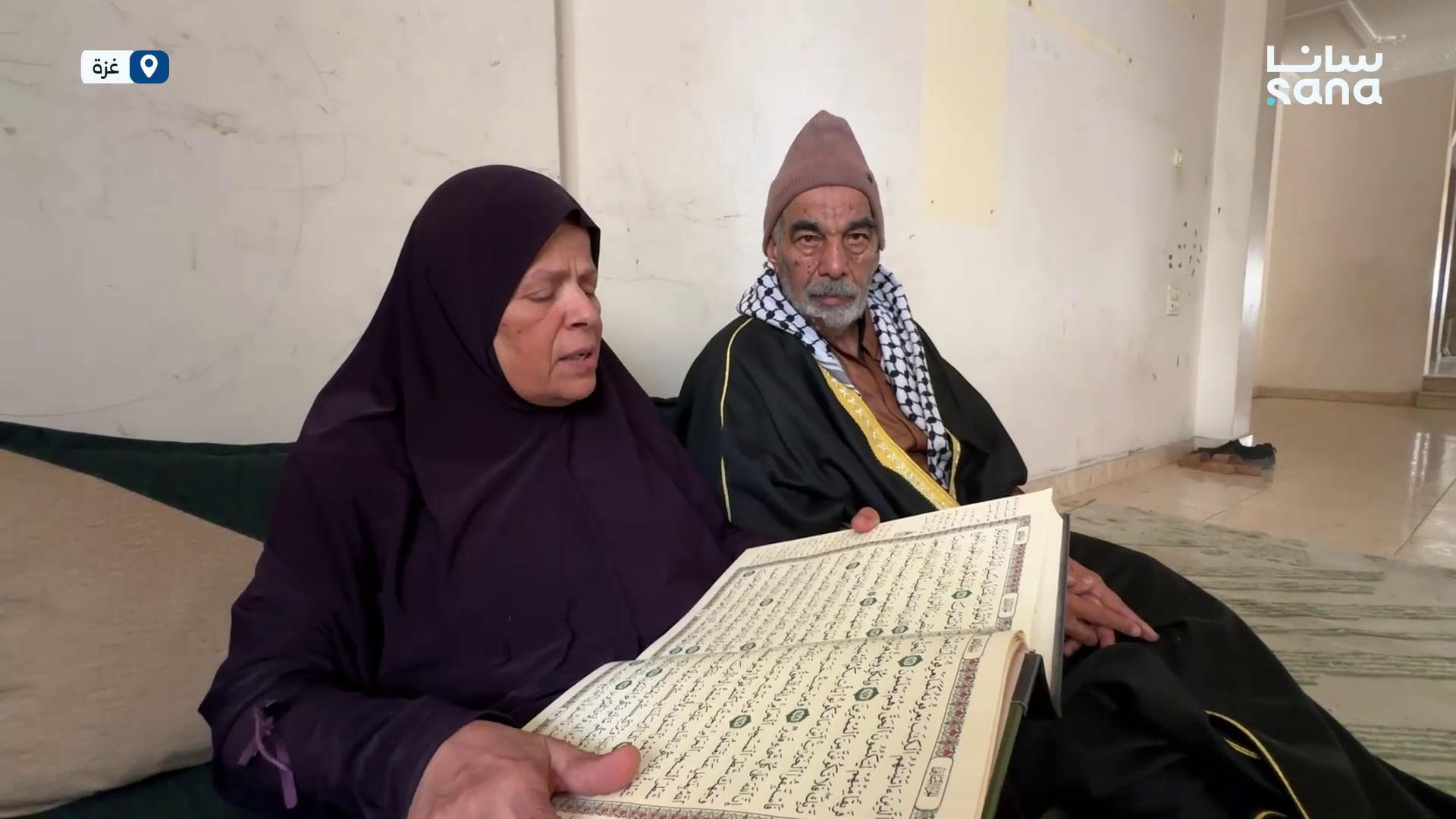
Palestinian Suad Hajjaj in the Gaza Strip said she was deprived by the Israeli genocide war that began on October 8, 2023, of performing Hajj, and that the aggression cost her husband, her brother, and her home.
“the Israeli genocide war, which began on October 8, 2023”
She told Anadolu that her preparations to perform the Hajj with her husband and brother turned into a tragedy after the husband was killed and the brother disappeared during the war, leaving her the breadwinner for her orphaned children.

Rami Abu Sitteh, the Director General of Hajj and Umrah at the Ministry of Awqaf and Religious Affairs in Gaza, said Palestine's Hajj quota amounts to 6,600 pilgrims, with Gaza receiving 38 percent, i.e., 2,508 pilgrims.
Abu Sitteh told Anadolu that 2,473 Palestinians from Gaza have won the Hajj lottery since 2013 and are waiting to travel, while 71 of them have died due to Israeli bombing or natural causes before they could perform the rite, and 2,402 are still denied travel to this day.
He described the denial of Gaza residents' right to Hajj for consecutive years as a major setback for Muslims in the sector, while saying the war has deprived registered and fee-paying Palestinians of performing the pilgrimage for three consecutive years.
Voices call it violations
Nasrin Begum, a sewing machine operator who escaped by jumping from a second-floor window, described workers pounding on locked metal doors as smoke filled the stairwells, and she said: "We could hear them screaming but we could not reach them."
In Gaza, Rami Abu Sitta told SANA that "Our bodies breathe air but our souls have died," describing the impact of siege and aggression measures on the ability to perform Hajj.

SANA reported that Abu Sitta confirmed the siege and aggression measures have prevented more than 10,000 Palestinians from performing the Hajj over three consecutive seasons.
Mohammed al-Najjar, owner of a travel and pilgrimage company in Gaza, told SANA that the Rafah border crossing represents the gateway to essential life for the enclave’s residents morally and religiously, and he said Gaza's deprivation from Hajj and Umrah seasons for three years has caused a complete paralysis in this service sector.
SANA also quoted Najjar saying annual waiting lists exceeding 20,000 registrants have continued while only a limited number of pilgrims were able to perform the rite, about 1,200 pilgrims in the first year and 650 pilgrims in the current season.
Eid al-Adha and displacement
As Eid al-Adha approaches, Gaza residents are deprived of Hajj and the Eid sacrifice for the third year in a row, with the Gaza Ministry of Agriculture saying they will celebrate Eid al-Adha on May 27 this year without slaughtering sacrificial animals due to Israeli restrictions.
“celebrate Eid al-Adha on May 27 this year”
The Gaza Ministry of Agriculture said the Israeli military campaign since October 2023 has systematically devastated the livestock sector, with farms, pens, veterinary facilities, and feed depots subjected to bombardment.
Najia Abu Lihya, who now lives in a camp in Khan Younis, told Reuters that she fears she might be the next to be left behind and that she hopes to perform Hajj despite the restrictions, after registering and having her name come up before the war.
Under the U.S.-brokered ceasefire, Israel in February last year partially reopened the Rafah crossing to Egypt, the main gateway for Gaza's access to the outside world, but only a few hundred people are allowed to cross each week, most of them patients and a small number of accompanying persons.
The Coordinator of Government Activities in the Territories said the Rafah crossing agreement permits crossing only for humanitarian cases, with passenger lists determined by Egyptian authorities and approved by Israeli security agencies, while the Hamas-run Gaza government information office said only 5,304 people had entered or left Gaza since February.