Japanese-Owned Idemitsu Maru Tanker Transits Strait of Hormuz With Iranian Permission
Key Takeaways
- Idemitsu Maru, a Japanese-owned Panama-flagged VLCC, transited Hormuz with Iranian permission.
- Carried about two million barrels of Saudi crude oil.
- Marks a rare passage since the Iran war.
First Japanese Oil Transit
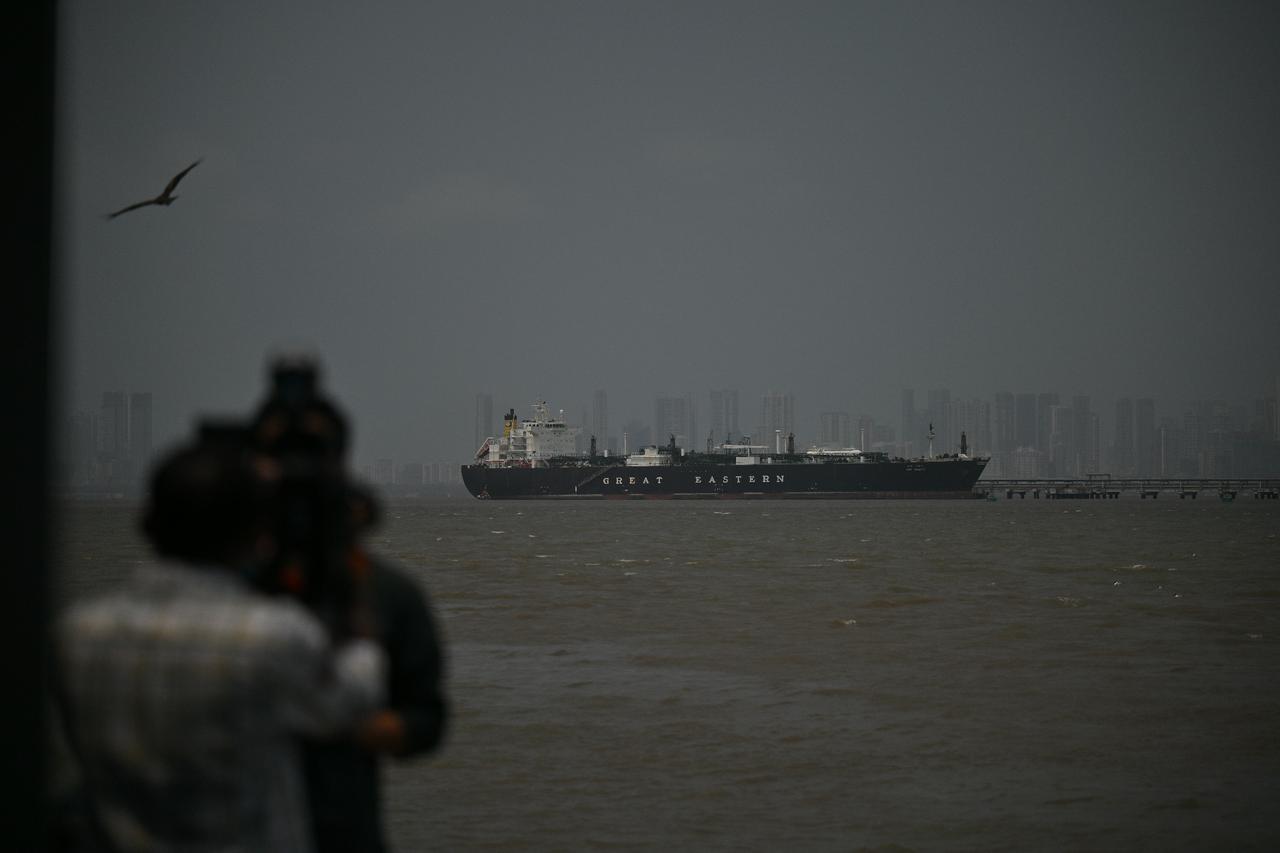
A Japanese-owned supertanker, the Idemitsu Maru, transited the Strait of Hormuz after securing permission from Iranian authorities, PressTV reported on April 28, 2026.
PressTV said the vessel carried two million barrels of crude oil and began its journey late Monday after having remained stationary off Abu Dhabi for over a week.

The tanker was described as a Panama-flagged VLCC managed by a subsidiary of Japanese refiner Idemitsu Kosan, and PressTV said it transported crude loaded from Saudi Arabia’s Juaymah terminal in early March.
Ship-tracking data cited by PressTV said the tanker briefly altered course near Iran’s Qeshm and Larak Islands before continuing eastward past Larak.
The report framed the passage as a rare movement through the strategic waterway since the launch of the US-Israeli war on Iran, saying this was believed to be the first time a Japanese-linked oil vessel moved through the strait since the war began on February 28.
The Asia Economy outlet (매일경제) similarly reported that the Imitsu Maru crossed the Strait of Hormuz with permission from Iranian authorities, citing PressTV for the April 28 local-time report.
매일경제 added that the ship operated on a route close to Gessium and Larak islands, which it described as “safe routes” announced by Iranian authorities, and said it was sailing on the high seas of Oman as of 11:40 p.m. Korean time on the 28th.
Route, Timing, and Toll
Multiple outlets tied the transit to a specific vessel timeline and to Iran-designated routing.
PressTV said the Idemitsu Maru began its journey late Monday after remaining stationary off Abu Dhabi for over a week, and it said the tanker briefly altered course near Iran’s Qeshm and Larak Islands before continuing eastward past Larak.

매일경제 reported that, according to ship tracking data and AIS information, the ship operated on a route close to Gessium and Larak islands, which it described as “safe routes” announced by Iranian authorities, and that it was sailing on the high seas of Oman as of 11:40 p.m. Korean time on the 28th.
It also said Nihon Keizai Shimbun (Nikkei) reported that the tanker’s destination appeared to be Nagoya Port, Japan, and expected to arrive in Japan around the middle of next month as it takes about 20 days from the Persian Gulf to Japan.
Chosunbiz reported that the VLCC Idemitsu Maru departed the Gulf waters (the Persian Gulf) in the morning after loading about 2 million barrels of crude and passed through the Strait of Hormuz, and it said the tanker was traveling along the northern route designated by Iranian authorities, passing near Qeshm Island and Larak Island.
Chosunbiz also said it was not confirmed whether the so-called “toll” was actually paid, and it added that Bloomberg reported the tanker had been waiting in the strait after loading crude at Saudi Arabia’s Ju'aymah terminal in early last month.
매일경제 likewise said the media did not say whether the tanker was approved by the Iranian authorities, but paid the so-called “toll,” while it also reported that Nikkei and Asahi Shimbun said they did not pay tolls for the passage of the strait, citing a senior Japanese government official.
War, Restrictions, and Mediation
The transit was reported against a backdrop of tightened maritime controls and a wider standoff described in the sources.
PressTV said the passage marked a rare movement through the strategic waterway since the launch of the US-Israeli war on Iran, and it said this was believed to be the first time a Japanese-linked oil vessel had moved through the waterway since the war began on February 28.
PressTV also said that since the war, traffic has fallen sharply as Iran implemented tight restrictions and requires all ships to obtain approval, adding that Iranian officials say passage will be regulated along designated routes and require authorization from Iran.
It further stated that on April 13, one month after the war began, the US Central Command began implementing “a blockade of all maritime traffic entering and exiting Iranian ports,” and it quoted Iran saying the blockade is “an illegal act” that “amounts to piracy.”
PressTV said diplomatic efforts to resolve the standoff have stalled, and it reported that Pakistan, which brokered the April 8 ceasefire, continues to mediate between Washington and Tehran.
The same PressTV report said Iranian officials effectively blockaded the vital conduit for oil and gas shipments since the start of the US-Israeli aggression, sending energy prices soaring.
While the other Asian outlets focused on the tanker itself, they echoed the idea that Iranian authorities had designated routes, with 매일경제 describing “safe routes” near Gessium and Larak islands and Chosunbiz describing a northern route passing near Qeshm Island and Larak Island.
Competing Accounts of the Passage
The sources present both shared elements and notable divergences in how the transit is described, particularly around approval and toll payments.
PressTV frames the event as a successful transit after securing permission from Iranian authorities, saying the Idemitsu Maru “has successfully transited the Strait of Hormuz after securing permission from Iranian authorities.”
매일경제, while also citing PressTV for the April 28 report, says “the media did not say whether the tanker was approved by the Iranian authorities, but paid the so-called ‘toll,’” and it then adds that Nikkei and Asahi Shimbun reported that they “did not pay tolls for the passage of the strait,” citing a senior Japanese government official.
Chosunbiz similarly says the tanker reportedly passed through the Strait of Hormuz with authorization from Iranian authorities, but it also states that it was not confirmed whether the so-called “toll” was actually paid, and it references Bloomberg’s reporting that the tanker had been waiting in the strait after loading crude at Saudi Arabia’s Ju'aymah terminal in early last month.
In terms of what was known about the ship’s movement, PressTV says the tanker began its journey late Monday and briefly altered course near Qeshm and Larak Islands before continuing eastward past Larak, while 매일경제 says ship tracking data showed a route close to Gessium and Larak islands and that the ship was sailing on the high seas of Oman as of 11:40 p.m. Korean time on the 28th.
Chosunbiz adds that the tanker passed through the Strait of Hormuz after departing the Persian Gulf in the morning and that it was traveling along the northern route designated by Iranian authorities, passing near Qeshm Island and Larak Island.
Across the set, the common thread is the Idemitsu Maru transit with Iranian authorization, while the toll question remains unsettled in the accounts cited by 매일경제 and Chosunbiz.
Energy Dependence and Next Moves
The sources connect the transit to broader energy flows and to what Japan has been doing since the strait’s disruption.
PressTV said Japan typically sources about 95 percent of its oil imports from West Asia, much of which passes through the Strait of Hormuz, and it said that since the war traffic has fallen sharply as Iran implemented tight restrictions and requires all ships to obtain approval.
매일경제 said Japan originally depended on the Middle East for 95% of its crude oil imports, but as the closure of the Strait of Hormuz has persisted, Japan has recently significantly increased its imports of U.S. oil.
It cited Jiji Press saying that as of the 23rd, 13 oil tankers departing from the U.S. Gulf of Mexico and bound for Japan were confirmed, more than quadrupling from three a month earlier.
PressTV also said Iranian officials say passage will be regulated along designated routes and require authorization from Iran, implying that future movements depend on continued coordination with Tehran.
Chosunbiz reported that three Japan-related vessels passed through the Strait of Hormuz early this month, but all were liquefied natural gas (LNG) carriers, and it described the Idemitsu Maru as the first case of an oil tanker passing through the strait.
The Discovery Alert source ties the successful transit completed by the VLCC Idemitsu Maru in late April 2026 to the fragility of supply chains, while the other outlets emphasize Japan’s shift toward U.S. Gulf imports.
More on Iran

Donald Trump Says Iran Is In State Of Collapse, Wants Strait Of Hormuz Opened ASAP
15 sources compared

Britain Summons Iran’s Ambassador in London Over Unacceptable Inflammatory Embassy Social Media Posts
10 sources compared

Iran FM Abbas Araghchi Says No Nuclear Talks Mandate During Pakistan, Oman, Russia Trip
32 sources compared
Donald Trump Hosts King Charles and Queen Camilla at White House State Dinner
33 sources compared