
Japan's Prime Minister Sanae Takaichi to Travel to Washington to Push Anti-Missile Shield Partnership
Key Takeaways
- Takaichi travels to Washington for a summit with Trump to push anti-missile shield.
- Iran conflict dominates talks as Hormuz security and U.S.-Japan alliance stakes rise.
- Japan weighs Maritime Self-Defense Force deployment in Hormuz under a law-enforcement framework.
Anti-Missile Partnership Proposal
Japanese Prime Minister Sanae Takaichi is set to travel to Washington for a pivotal summit with U.S. President Donald Trump.
“This project, announced last May, aims to equip the United States with integrated defense against multiple ballistic missile systems”
She will propose Japan's participation in the 'Golden Dome' anti-missile shield initiative.

This next-generation defense system aims to create integrated protection against multiple ballistic missile threats.
Particular focus is on hypersonic glide vehicles developed by China, North Korea, and Russia.
These threats fly at speeds of at least Mach 5 and are extremely difficult to intercept.
Japanese press reports indicate Takaichi will convey Tokyo's willingness to collaborate on developing interceptors.
She also plans to discuss sharing satellite network information for missile detection.
The project, announced last May, is estimated to cost $175 billion.
This represents a significant expansion of Japan-U.S. security cooperation beyond traditional defense arrangements.
Constitutional Constraints
The upcoming summit represents a critical test of Japan's pacifist constitution.
Takaichi seeks to strengthen Japan's self-defense capabilities through the 'Golden Dome' partnership.

She simultaneously faces intense pressure from Trump regarding military support for the Iran conflict.
Japan's constitution, drafted after World War II, explicitly renounces the use of force to settle international disputes.
This creates significant legal constraints on Takaichi's options.
Legal experts note that Japan has narrow tools available for overseas operations.
These primarily include law-enforcement frameworks similar to anti-piracy operations.
Higher-threshold security legislation from 2015 allows force only under specific conditions.
Force is permitted only when an attack on a close ally poses an existential threat to Japan itself.
These laws have never been used, and applying them to confrontations with sovereign nations like Iran remains legally problematic.
Public Opposition & History
Takaichi's diplomatic balancing act comes at a time when public opinion in Japan remains largely opposed to military involvement in Middle East conflicts.
“"If he can bring Japan into the coalition of the willing, it will increase pressure on other countries," Maeshima said”
Polls show fewer than 10 percent of Japanese citizens support the U.S. and Israeli attacks on Iran.
This creates significant political pressure on the prime minister.
Analysts describe her position as a 'high-wire act' where she must avoid both publicly disappointing Trump and violating Japan's constitutional limits.
The situation is complicated by historical precedent of Japan's past military deployments.
These have been carefully limited, such as anti-piracy operations off Somalia.
Japan also conducted refueling missions in the Indian Ocean after 9/11.
Non-combat reconstruction work was performed in Iraq with strict force limitations.
Even during the 2019 tanker attacks attributed to Iran, Japanese vessels remained outside the Strait of Hormuz.
They gathered intelligence without direct involvement in potential combat scenarios.
Economic Cooperation
Beyond the immediate Iran dilemma, Takaichi's summit with Trump also encompasses broader economic and strategic cooperation.
Reports indicate both sides are in 'final stages of preparations' to announce a second round of potential investments.

These investments total 11 trillion yen ($69.2 billion) in the U.S.
This follows initial $36 billion investments announced in February.
This investment deal is part of a broader $550 billion commitment under a July trade agreement.
The aim is to strengthen supply chains for critical minerals.
The deal includes construction of next-generation nuclear reactors and natural gas power plants.
The economic discussions are particularly sensitive given Trump's tariff policies.
While the original 25% tariffs were struck down by the Supreme Court, Trump has imposed 10% global tariffs instead.
This creates uncertainty for Japanese businesses and adds complexity to the diplomatic negotiations.
Strategic Timing
The timing of this summit carries particular strategic significance.
“It tests the Japan-U”
It occurs amid heightened tensions in the Indo-Pacific region.
There is also a delayed U.S.-China presidential meeting.
Takaichi had initially hoped to use the Washington visit to remind Trump of dangers posed by a regionally assertive China.
This was prior to his planned trip to Beijing, which has now been postponed.
Instead, she must navigate complex dynamics of Trump's wartime presidency.
She also faces demands for allied support in the Middle East.
The Japan-U.S. alliance is described as a 'cornerstone of Japan's security and the stability of the Indo-Pacific region.'
This alliance faces unprecedented pressure from multiple directions.
These include the Iran conflict, China's military modernization, and Trump's unpredictable foreign policy approach.
Analysts suggest Takaichi's balancing act will be closely watched by other U.S. allies.
More on USA
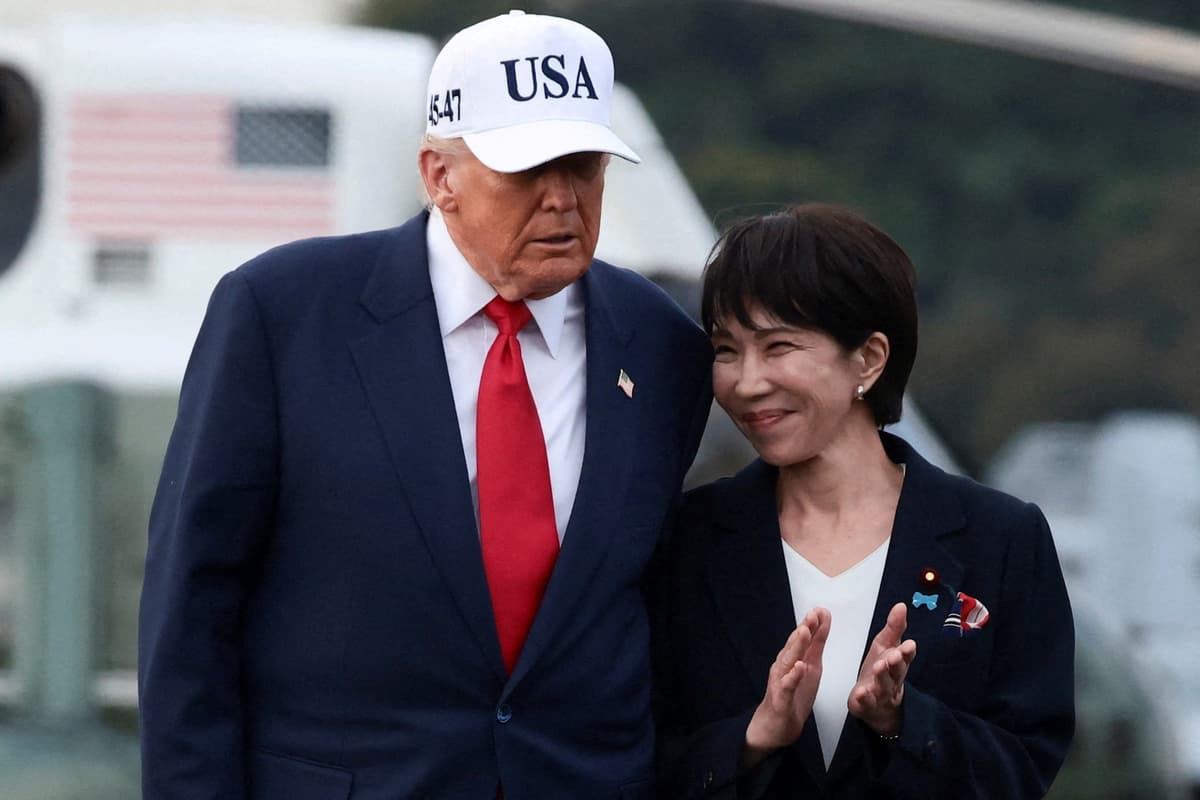
Japan Weighs Dispatch of Self-Defense Forces to Iran as Trump Pressures Ahead of Summit
11 sources compared

Daniel Biss Defeats Kat Abughazaleh in Democratic Primary to Replace Jan Schakowsky
23 sources compared

Trump vows to take Cuba as Russia responds
24 sources compared

UFW Cancels Cesar Chavez Events as Sexual Abuse Allegations Surface.
48 sources compared