South America23 April, 20267 min read
Javier Milei Blocks Accredited Journalists From Argentina’s Casa Rosada Over Espionage Complaint
This article is an automated aggregation of coverage from news outlets. Our editorials offer in-depth analysis curated by the NewsCord team.
Milei government blocked accredited journalists from Casa Rosada, deactivated fingerprint access, affecting sixty reporters. Cited illegal espionage after footage recorded with smart glasses aired.

Fingerprint ban at Casa Rosada
Argentina’s President Javier Milei’s administration blocked accredited journalists from entering the Casa Rosada, the executive branch headquarters, on Thursday, escalating a feud with the press. Multiple outlets described how accredited reporters arrived and attempted to enter through fingerprint scanning “as they usually would,” but “were unable to pass the scan.” EFE reported that the government “deactivated the fingerprint registration system” that allowed “some 60 accredited journalists” to enter the press room for daily reporting.
“A Reuters journalist who regularly works from Casa Rosada, where government press conferences are held, was unable to enter on Thursday morning.”
Reuters and other reports said the move was announced by communications director Javier Lanari on X, with Lanari saying fingerprint access for journalists was removed as a “preventative measure” after a security complaint. Reuters also reported that a Reuters journalist who regularly works from Casa Rosada was unable to enter on Thursday morning.

The Buenos Aires Herald said the government denied entry to “all journalists accredited to cover the presidency” after it “failed to renew the press credentials of every media outlet assigned there,” and that the presidential press room was shut when fingerprint permissions were removed. In the midst of the access disruption, Lanari issued a clarification that “their press accreditation had not been revoked,” framing the action as a security step tied to “illegal espionage.”
Espionage complaint and TN footage
The access restriction was tied to a complaint the government filed in court against journalists Luciana Geuna and Ignacio Salerno of the local television network Todo Noticias (TN), after the channel aired footage recorded inside the Casa Rosada. EFE said the government filed the court complaint “shortly after the government filed a complaint in court against journalists Luciana Geuna and Ignacio Salerno of the local television network Todo Noticias (TN) for an alleged security breach at the Casa Rosada involving the recording of footage inside the building.” Reuters described the trigger as an incident of “illegal espionage” after a local television network aired footage recorded with smart glasses, and said the government cited that incident when it blocked accredited journalists.
In Reuters’ account, Milei posted a photo of two TN journalists on Wednesday and called them “DISGUSTING TRASH” after the channel aired a report featuring footage from Casa Rosada recorded with smart glasses. Reuters also reported that the report included an image of cabinet chief Manuel Adorni walking through Casa Rosada.
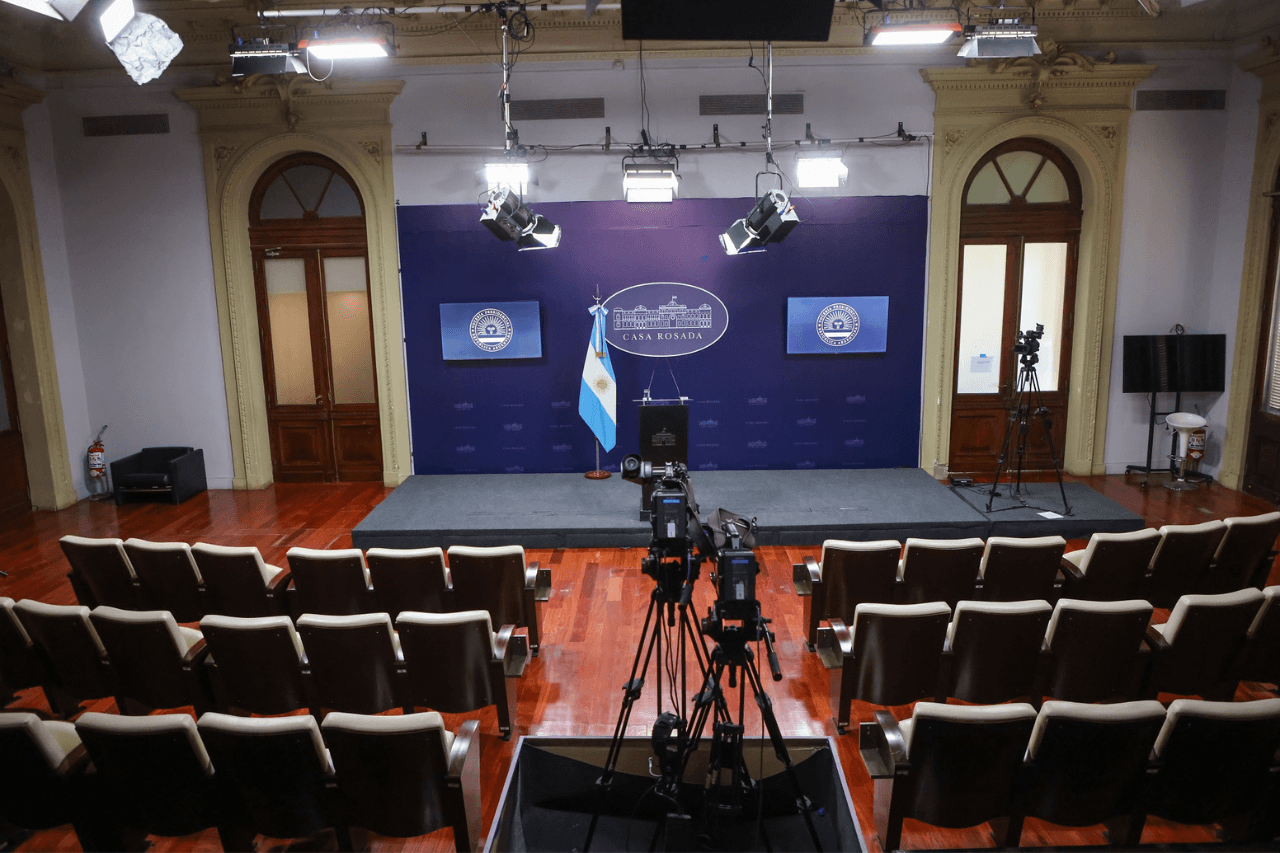
Al Jazeera similarly described how Lanari’s post cited an incident in which “two journalists from the Argentinian channel TN were accused of secretly filming inside the government palace,” and said the Milei administration accused them of endangering government security by showing parts of the Casa Rosada “reportedly off limits.” Across the accounts, Lanari’s justification centered on national security, with Reuters quoting him saying, “The sole purpose is to ensure national security,” and EFE quoting Lanari arguing that removing fingerprints was “The sole purpose is to ensure national security.”
Milei attacks and press response
Milei’s public messaging accompanied the access restriction, with multiple outlets quoting his social media attacks on journalists.
Al Jazeera reported that on Wednesday Milei took to social media to call the journalists “repugnant trash,” and challenged other members of the news media to justify their actions, saying, “I would love to see that filthy scum — the 95% who carry press credentials — come out and defend what these two criminals did.”
EFE reported that Milei wrote “we don’t hate journalists enough” on social media on Thursday and added, “being corrupt and violating security laws isn’t free. Someday, the filthy trash that is the press (95%) will have to understand that they are not above the law.”
Reuters described Milei posting a photo of two TN journalists and calling them “DISGUSTING TRASH,” and Reuters also reported that journalists accredited to work from Casa Rosada published a statement saying the “unjustified” decision to deny reporters access “suggests an explicit attack on press freedom, the practice of journalism, and the public’s right to access information.”
EFE quoted Tatiana Scorciapino, a journalist for the newspaper Tiempo Argentino accredited at the Casa Rosada, saying, “Nothing of this magnitude has ever occurred in the nation’s democratic history,” and also saying, “So far, we have received no official communication regarding why the Secretary General of the Presidency, Karina Milei (the president’s sister and right-hand woman), decided to bar journalists from entering and arbitrarily close the press room.”
Opposition and media organizations also condemned the measure, with EFE reporting that ADEPA, which brings together “180 media companies,” expressed its “utmost concern” and said the decision “has no precedent in Argentina’s democratic history.”
EFE also reported that the Argentine Journalism Forum (FOPEA) and the Buenos Aires Press Union (SiPreBa) condemned the measure as “of extreme institutional gravity,” while Amnesty International warned on X that “the deterioration of the environment for the exercise of freedom of expression and journalism in Argentina is rapid and sustained.”
Lawmakers file complaints
Argentina’s opposition figures and lawmakers moved quickly to challenge the press blockade, filing complaints and demanding explanations. EFE reported that a dozen lawmakers from various opposition blocs gathered at the gates of the Casa Rosada to express solidarity with journalists and submitted a letter addressed to the heads of the Military House and the Media Secretariat requesting urgent explanations. At the gates, Congresswoman Mónica Frade of the ARI Civic Coalition told EFE that “this government cannot tolerate the press being nearby,” and said, “Many things are coming to light about this government that it needs to hide.”
EFE also reported that opposition lawmaker Marcela Pagano filed a criminal complaint against Milei for preventing journalists from entering, warning on social media that “prohibiting journalists from exercising their freedom of expression is the first step toward silencing any dissenting voice.” Al Jazeera said Pagano filed a criminal complaint on Thursday and quoted her statement that “The Casa Rosada is not private property,” adding that “Still less does a head of state — or his henchmen officials — have the authority to decide whether the press may access the building.”
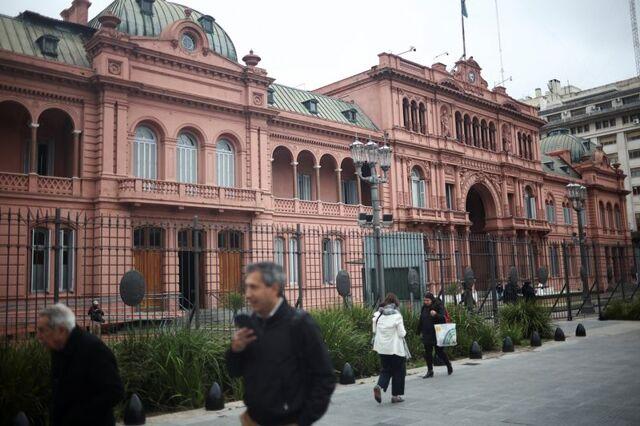
teleSUR English reported that Pagano’s judicial text named Javier Lanari and Sebastián Ignacio Ibáñez as responsible parties, and said Pagano described the ban as causing “irreversible damage” to the republican system and to the professional exercise of journalism. In parallel, EFE said accredited journalists affected by the measure planned to file a petition for judicial protection, and it described the situation as tense with journalists awaiting judicial resolution to resume daily work.
Different framings and next steps
While Reuters, EFE, and other outlets centered on the access mechanism and the espionage complaint, other reports emphasized different aspects of the same episode, including how many journalists were affected and how long the ban might last. EFE said the deactivated system allowed “some 60 accredited journalists,” while Buenos Aires Times said the measure affected “nearly 50 accredited professionals” and quoted Lautaro Maislin saying, “I'm told it's temporary,” after journalists were left outside the press room. Buenos Aires Herald reported that the government denied entry to all accredited reporters after it “failed to renew the press credentials of every media outlet assigned there,” and it said local media described the measure as without precedent since Argentina’s return to democracy in 1983.
Al Jazeera described the action as part of “an escalating feud with the country’s journalists,” and it said critics argue the policies are part of a broader broadside against journalism, citing Reporters Without Borders saying “a sharp decline in press freedom” since Milei took office in 2023. Reuters reported that press-freedom groups warned of “a sharp deterioration in relations between his government and the media since he took office in December 2023,” and it described the move as announced by Lanari on X with fingerprint access removed.
The immediate consequence described by multiple outlets was that accredited journalists were blocked from their daily reporting work at the Casa Rosada and were awaiting judicial resolution. EFE said accredited journalists planned to file a petition for judicial protection, and teleSUR said journalists were “awaiting a judicial resolution that would allow them to resume their daily work.”