
JD Vance Says US Making Progress in Iran Negotiations to End Hostilities
Key Takeaways
- US Vice President JD Vance says negotiations with Iran are making progress toward ending hostilities.
- Trump has rejected Tehran's latest peace proposal as unacceptable.
- Progress raises questions about meeting the president's red line.
Vance backs diplomacy
US Vice President JD Vance said on Wednesday that the United States is making progress in negotiations with Iran to end hostilities, after President Donald Trump rejected Tehran’s latest proposal as unacceptable.
“Here are the latest developments in the Middle East war: US must accept deal: Iran Iran's chief negotiator said on Tuesday that Washington must accept Tehran's latest peace plan or face failure”
Vance told reporters at the White House that “I think that we are making progress,” and he framed the “fundamental question” as whether the US can make enough progress to satisfy the President’s “red line.”
Vance said the red line is “very simple” and that Trump needs to feel confident that “we put a number of protections in place such that Iran will never have a nuclear weapon.”
When asked if he agrees with Trump’s statements on Tuesday, Vance said, “I don’t think the president said that — I think that’s a misrepresentation of what the president said.”
Strait of Hormuz pressure
As the US and Iran negotiations continue, the Strait of Hormuz remains a focal point for shipping disruptions, with the Iranian government described as having effectively blocked the strait since the United States and Israel began their strikes on Iran.
Radio Free Europe/Radio Liberty reported that India’s External Affairs Ministry called an attack on a ship flying its flag “unacceptable,” after it said the incident took place on May 13 off the coast of Oman.

The same report said the Vanguard maritime security company named the vessel the MSV Haj Ali and said the 54-meter wooden barge sank off the coast of Lima in Oman after an explosion while transporting livestock from the port of Berbera in Somaliland to Sharjah, United Arab Emirates.
US Secretary of State Marco Rubio said it is in China’s interest to pressure Iran to open the Strait of Hormuz, adding, “We’ve made the argument to the Chinese, and I hope it’s compelling.”
Congress, ceasefire, and risk
Beyond diplomacy, the sources describe ongoing friction over the ceasefire and the scope of US actions, with the US Senate rejecting a resolution calling for withdrawal of American forces participating in the war on Iran.
Al Arabiya Persian reported that Vance said Washington continues to pursue diplomacy to prevent Iran from obtaining a nuclear weapon, but “if negotiations fail, the military option will also be on the table.”
The same Al Arabiya Persian account said Vance stressed that Trump’s aim is to safeguard the security of the United States and prevent threats to global security, while also announcing progress in negotiations without providing further details.
Al Arabiya Persian also said Washington has intensified diplomatic efforts through regional mediators, including Pakistan and China, to prevent the collapse of the fragile ceasefire between the two sides, as disagreements over Iran’s nuclear program remain unresolved.
More on Iran

Iran Parliament Drafts Strait of Hormuz Security Plan to Ban Hostile Vessels
12 sources compared

Iran’s Abbas Araqchi Accuses UAE of Direct Military Involvement at BRICS Meeting in New Delhi
16 sources compared
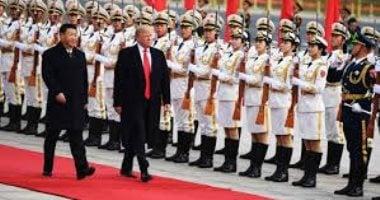
Trump Meets Xi in Beijing as Iran War Kills Eight in Israeli Strikes on Beirut
13 sources compared

Netanyahu’s Office Says He Secretly Met UAE President Sheikh Mohamed bin Zayed Al Nahyan
17 sources compared