Technology and Science · 05 May, 2026 · 7 min read
Jensen Huang Says AI Creates Jobs and Re-Industrializes America at Milken Institute Event
Huang says AI will create an enormous number of jobs and reindustrialize America. AI-focused factories and advanced computing hardware will drive industrial-scale job growth.
What Huang said about why 'doomer' rhetoric is worrying/important.
5 of 6 outlets skipped it: huang discusses U.S. semiconductor export strategy toward China (arguing China doesn’t need the latest semiconductors; exporting can slow China’s development)..
10outlets compared
Same story, two versions
tap a side to read it in full
TechCrunch
“My greatest concern is that we scare…people—all the people that we’re telling these science fiction stories to, to the point where AI is so unpopular in the United States, or people are so afraid of it, that they don’t actually engage it,”Read the original ↗
Fortune
“If we convinced all the young college graduates to not be software engineers, and it turns out the United States needs more software engineers than ever, that’s hurtful,”Read the original ↗
Both outlets attribute Huang’s concern to communication effects, but one foregrounds public fear reducing engagement with AI, while the other frames it as discouraging people from choosing needed careers (software engineering). The emphasis changes how readers interpret the 'risk'—social adoption vs. labor supply planning.
Huang’s job-creation argument
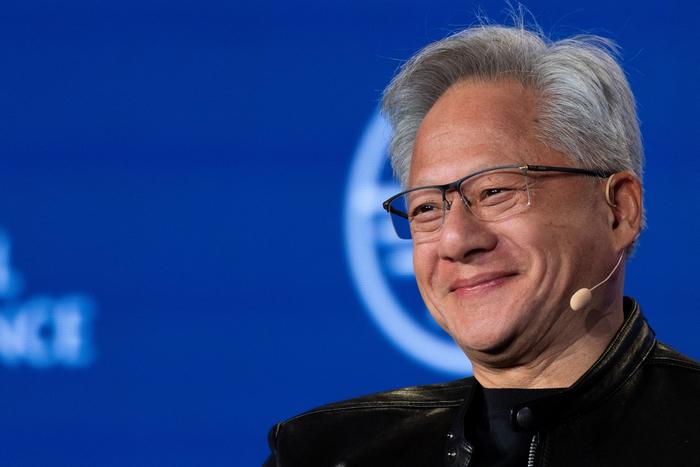
Nvidia CEO Jensen Huang used a Milken Institute event on Monday to argue that AI will create jobs and help re-industrialize America rather than eliminate workers’ roles.
““AI creates jobs,” Huang asserted during the discussion”
Speaking with MSNBC’s Becky Quick, Huang pushed back against fears of AI-driven unemployment, contending that automating specific tasks within a role does not eliminate the broader purpose an employee serves in an organization.

Huang framed AI as an “industrial-scale generator of jobs” and said “AI creates jobs,” describing the technology as “the United States’ best opportunity to re-industrialize” itself.
In the same discussion, Huang warned that excessive “doomer” rhetoric could make AI so unpopular that Americans “don’t actually engage it,” which he described as his greatest concern.
TechCrunch reported that Quick asked, “This is happening so quickly. TIs there a bigger dislocation than we’ve seen in the past that leads to greater inequality? And what do we do about that?”
Huang’s response emphasized the distinction between “the purpose of a job and the task of a job” and argued that people who believe otherwise “misunderstand” that relationship.
The debate over AI’s labor impact also appeared alongside references to estimates that “as much as 15% percent of jobs in the U.S. will be eliminated over the next several years,” a figure repeated in multiple accounts of the conversation.
Factories, tasks, and messaging
Huang’s job-creation case rested on the idea that AI is tied to new industrial capacity, including hardware systems and data centres that require workers to operate and support them.
Multiple accounts of the Milken Institute discussion described Huang’s argument that AI-driven industries resemble “modern factories” that depend on human labour, positioning AI as economic expansion rather than contraction.

In the same vein, Laodong.vn reported Huang said AI opens opportunities for re-industrialization through the construction of a “new generation factory” serving AI infrastructure, adding that these factories “not only produce hardware but also play a foundational role for the entire AI ecosystem.”
Huang also returned to the distinction between tasks and jobs, saying that automating a specific task does not mean completely removing a job position, because “each job includes many different tasks and AI only replaces a part of them.”
Laodong.vn quoted Huang’s concern that negative scenarios are exaggerated, saying, “The most worrying thing is that we are making people afraid of AI to the point of not daring to use it,” while TechCrunch highlighted his warning about “science fiction stories” that lead people to disengage.T
The conversation also included a direct framing of how communication affects adoption: Huang told Fortune that if people are convinced not to become software engineers and the United States needs more, “that’s hurtful,” and he said “we have to be mindful of how we communicate the importance of this technology and what it’s able to do.”F
Fortune further reported Huang’s view that scaring people with claims like “eliminate 50% of entry-level jobs” is “ridiculous,” while also noting that he estimated AI has created “more than half a million jobs in the last few years.”F
Semiconductors and export strategy
Beyond labor, Huang’s remarks at the Milken Institute Global Conference were also used to frame semiconductor strategy toward China, with the Asian-language report describing him arguing that “China does not need to have the latest semiconductors.”
““China does not need to have the latest semiconductors,””
The same account said Huang added, “We need to compete on a global scale, and that is how we can maximize exports,” and it described his position as advocating aggressive export of U.S. semiconductors to China.
The report stated that Nvidia is “currently exporting only lower-end semiconductors to China under U.S. export controls, while excluding high-performance chips,” and it said Huang argued that exporting even high-performance chips could slow China’s pace of technological development.
In that context, the report quoted Huang saying, “If we can export energy, we should. We should export chips, infrastructure, and applications as well.”
The same report tied the export stance to a broader reindustrialization message, saying Huang argued “AI is creating an enormous number of jobs” and that “AI is the best opportunity for the United States to reindustrialize.”
It also described Huang’s reference to the “CHIPS and Science Act (CHIPS Act) era,” saying he explained that “everyone hesitated to build factories in the United States,” but that “now everyone has come here,” with “hundreds of thousands of jobs over the past four to five years.”
The report further included Huang’s claim that “Last year, $100 billion was invested in startups, the largest amount in human history,” and it said Huang added that “that money went straight into jobs.”
Other leaders weigh in
The Milken Institute discussion and related coverage also brought in other named figures who offered contrasting perspectives on AI’s effects and the scale of change.
The Asian-language report said Geoffrey Hinton, described as the “godfather of deep learning,” said claims that AI will affect “20% to 30% of humanity” are “completely wrong” because they overlook “the fact that many smart people are working to prevent that from happening.”

It also quoted Hinton saying, “There are 10 times more people trying to make cars safe than trying to make them fast,” and added, “There are 10 times more people trying to make AI safe and useful.”
The same report quoted Robin Vince, CEO of The Bank of New York Mellon, saying, “The places growing the fastest and hiring the most people are actually the ones adopting AI,” and it said Vince argued that AI adoption is about “doing more work without significantly increasing costs.”
Jenny Johnson, CEO of Franklin Templeton Investments, was quoted explaining why concerns recur with new technology, saying “this is why every new technology in history has always raised concerns about mass unemployment.”
Jonathan Gray, CEO of Blackstone Inc., was quoted saying blue-collar hiring will be important over the next five years, and the report added that Blackstone’s data center construction workforce grew from 10,000 last year to 40,000 this year.
The report also included a more cautious note from Jim Zelter, president of Apollo Global Management, who said there is “clearly a question mark over whether the massive spending in AI can generate real returns,” and it added that investors may be winners in 2028 and 2030 but that may not lead to long-term profitability.
Conflicting forecasts and stakes
While Huang’s optimism emphasized job creation, the coverage repeatedly juxtaposed his claims with forecasts and concerns about displacement and inequality.
““This is happening so quickly. Is there a bigger dislocation than we’ve seen in the past that leads to greater inequality? And what do we do about that?””
TechCrunch noted that Quick asked about “greater inequality” and “bigger dislocation,” and it ended by pointing to “reputable financial and academic organizations” suggesting “as much as 15% percent of jobs in the U.S. will be eliminated over the next several years as a result of AI.”T

Laodong.vn similarly said “Some forecasts show that about 15% of jobs in the US may disappear in the next few years due to the impact of automation and AI,” and it described the issue as an open question about whether AI becomes an opportunity or a challenge.
The same Laodong.vn report also acknowledged that “Reality shows that both trends, creating new jobs and replacing old labor, can take place in parallel,” while still quoting Huang’s insistence that AI is “not a mass unemployment threat.”
Fortune added another dimension by quoting Huang’s dismissal of extreme scenarios, saying scaring people into believing AI will “eliminate 50% of entry-level jobs” is “ridiculous,” and it reported Huang’s estimate that AI has created “more than half a million jobs in the last few years.”F
The stakes in the coverage also extended beyond employment to how AI adoption and regulation might evolve, with the AI Insider account referencing a “greatest concern” about fear-driven messaging and with Gotrade framing investor attention around AI valuation and risk-reward.
Across the accounts, the consequences of the debate were framed as both economic and communicative: Huang’s warning that fear could make AI “so unpopular…that they don’t actually engage it” sits alongside the repeated mention of job-elimination estimates and the question of whether AI spending yields “real returns” as Jim Zelter put it.