Technology and Science · 03 May, 2026 · 8 min read
NHS Rolls Out One-Minute Keytruda Injection for 14,000 Cancer Patients in England
England rolls out one-minute pembrolizumab injection to replace intravenous infusions. Around 14,000 NHS patients in England will begin using the injection annually.
How much time is saved (range and framing of the reduction).
8 of 9 outlets skipped it: a specific numerical estimate that the change could save the NHS about 100,000 hours annually and increase capacity by up to 30%..
10outlets compared
Same story, two versions
tap a side to read it in full
The Independent
““This new injectable form of pembrolizumab (Keytruda) can reduce treatment time by up to 90 per cent compared to the previous intravenous drip method.””Read the original ↗
Most outlets emphasize “up to 90%,” but the specific phrasing (percentage vs. “one-minute/two-minute” vs. “a couple of minutes”) can change how readers interpret the typical patient experience vs. best-case ranges.
A faster Keytruda jab
The NHS is rolling out a one-minute immunotherapy injection for thousands of cancer patients in England, using an injectable form of pembrolizumab (Keytruda) that is designed to replace hour-long intravenous infusions.
“The NHS is rolling out a one-minute immunotherapy injection for over a dozen types of cancer”
The Independent says the NHS is introducing the “one-minute immunotherapy injection” for “over a dozen types of cancer,” including “lung, breast, and cervical cancer,” and it reports that the new injectable form can reduce treatment time by “up to 90 per cent” compared with the previous intravenous drip method.T
BBC News similarly describes an injectable form of Keytruda that should cut the procedure “to just a couple of minutes,” with the BBC adding that the approach is intended to save “patients and staff valuable time.”
The Guardian reports that the injectable form “can be administered in under two minutes,” and it says the NHS expects “Most of the 14,000 patients already taking pembrolizumab” to benefit.
Sky News frames the rollout as a way to help patients who “had to spend long periods on a drip,” while stating that “treatment time can be cut by up to 90% using the injection.”S
Across the coverage, the treatment schedule is consistent: it is given “every three weeks as a one-minute injection or every six weeks as a two-minute injection,” depending on the cancer type, according to The Independent, the BBC, and the Guardian.T
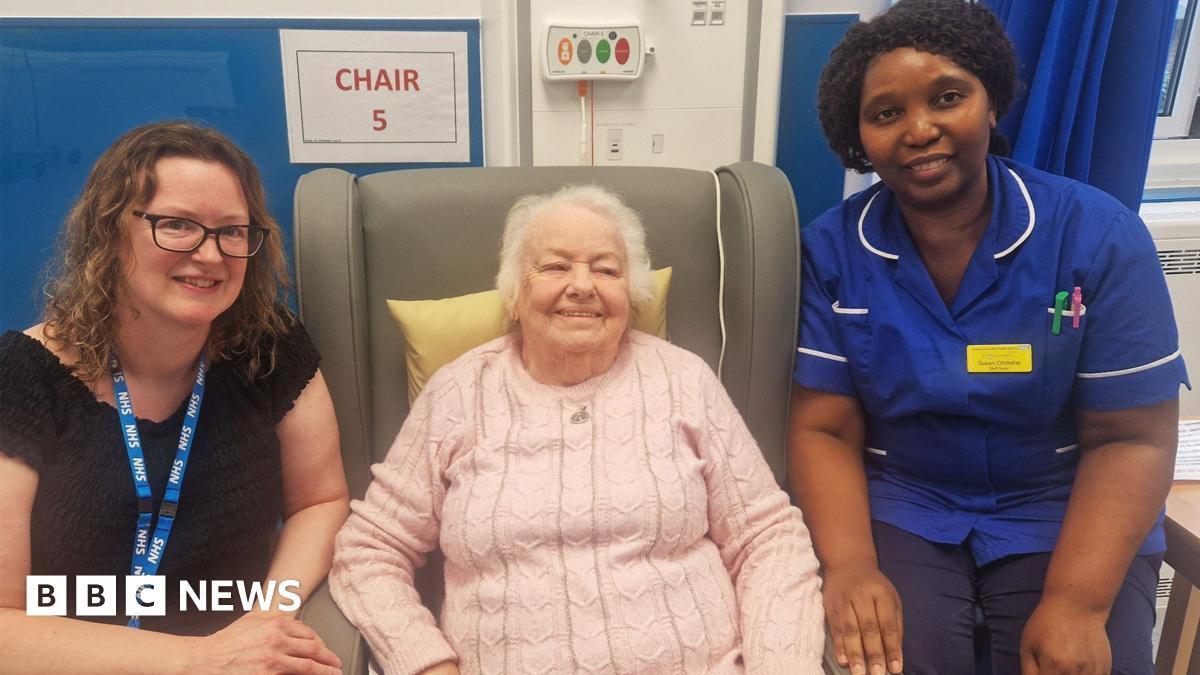
The first patients described in the reporting include Shirley Xerxes, an 89-year-old in The Independent and Manchester Evening News and an “86-year-old” in the BBC, who received the injection at the Mount Vernon Cancer Centre in Hertfordshire and said she was in the chair “for a matter of minutes instead of an hour or more.”T
How the jab works
The reporting ties the new delivery method to the same immunotherapy mechanism already used for Keytruda, describing how pembrolizumab targets a protein that regulates immune responses.
The Guardian says the injectable form “kills cancer cells by blocking a protein called PD-1, which acts as a brake on immune responses,” and it adds that this allows the immune system to “recognise and attack cancer cells.”
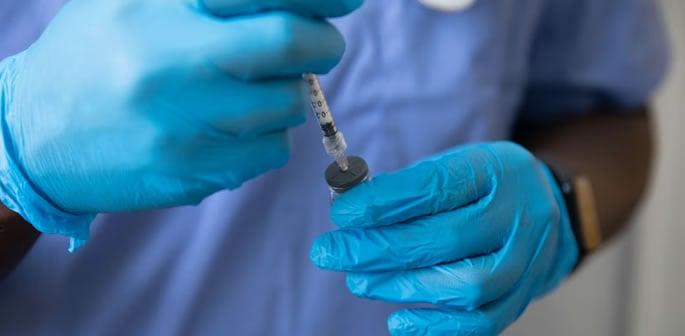
Sky News likewise states that pembrolizumab “works by blocking a protein called PD-1, which acts as a brake on immune responses, releasing the immune system to recognise and attack cancer cells.”S
The BBC explains the underlying immunology in more general terms, saying cancer can “hide from the body's own immune system by producing proteins that send a ‘stop signal’,” and it describes immunotherapy as blocking that signal so cancer cells can be “more easily recognised and destroyed.”
The Independent and DESIblitz both describe Keytruda as an immunotherapy that helps the immune system attack cancer cells, with DESIblitz adding that “Keytruda is a type of immunotherapy that helps the immune system attack cancer cells.”T
The Independent also notes that the injectable form is a new version of pembrolizumab (Keytruda), and it frames the change as an NHS operational shift that aims to “free up significant NHS staff time.”T
In the same coverage, the BBC connects the immunotherapy concept to Nobel recognition, stating that the discovery “won two scientists - James Allison and Tasuku Honjo - the Nobel Prize for medicine in 2018.”
Patients and staff reactions
The rollout is presented not only as a clinical change but as a shift in day-to-day experience for patients and the NHS teams delivering treatment.
“Having the injection has been great and the nurse was so good, so kind. I just had it in my tummy.”
The Independent describes Shirley Xerxes, an “89-year-old” with bowel cancer, saying she has already benefited from the new treatment and praising its “convenience and speed,” while Manchester Evening News quotes her directly about the injection: “Having the injection has been great and the nurse was so good, so kind. TI just had it in my tummy.”
Manchester Evening News adds that she said, “But it's not as quick as a Covid jab. It takes a couple of minutes,” and it reports that she felt “appreciative” because “we don't have to pay for it.”
Sky News also quotes her, saying, “I just had it in my tummy. SBut it's not as quick as a COVID jab. It takes a couple of minutes.”
The Guardian includes a different direct quote from Shirley Xerxes about time in the chair, saying, “I can’t believe how little time it took,” and “I was only in the chair for a matter of minutes instead of an hour or more.”
Another patient described in Manchester Evening News is Stephen Friend, “67,” who has melanoma, and he said, “This new process takes away a lot of the stress, I think.”
On the operational side, pharmacy and NHS leaders emphasize capacity and efficiency: Manchester Evening News quotes Vikash Dodhia, head of pharmacy at Mount Vernon, explaining that the old approach involved an IV drip where “that’s probably about 100mls – so about a third of a coke can almost,” while the new method is “4mls – less than a teaspoon.”
Capacity, time savings, and policy
NHS leaders and health officials describe the injection rollout as a way to reduce time spent preparing and administering immunotherapy, with multiple outlets citing large annual time savings and specific staffing impacts.
The Guardian says the NHS estimates the treatment “will save the NHS more than 100,000 hours of preparation and treatment time each year,” and it frames the change as freeing up time for “clinical teams to treat more people and continue to bring down waiting times.”
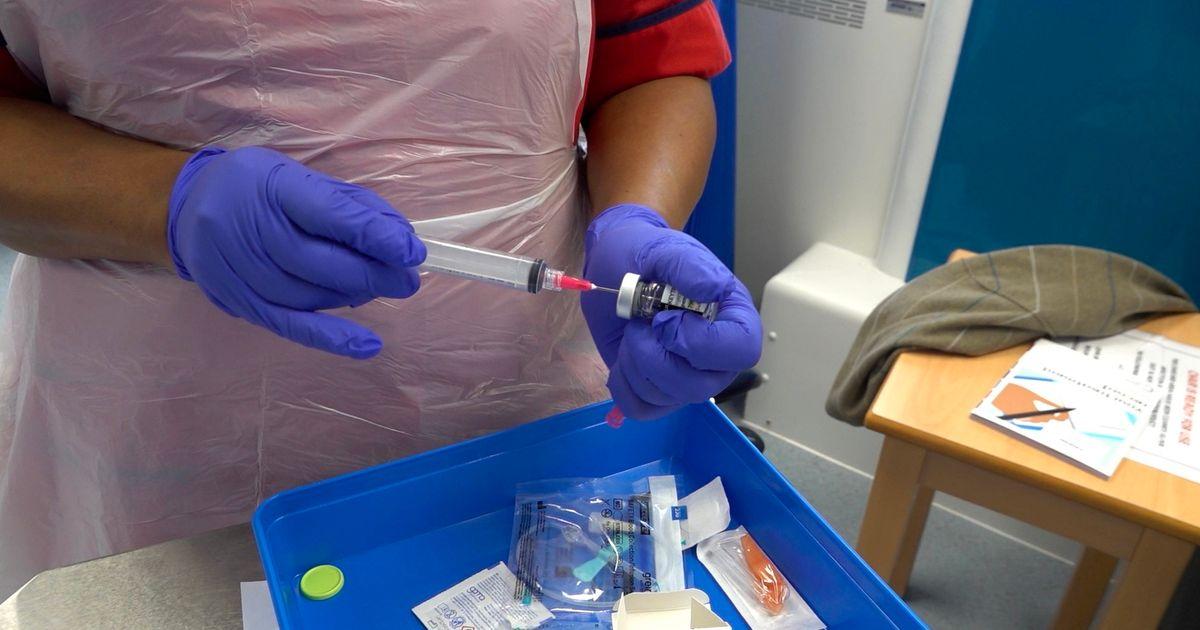
The Independent similarly says the innovation aims to “free up significant NHS staff time,” and it reports that the NHS expects “Approximately 14,000 patients in England who start pembrolizumab therapy each year” to transition to the quicker jab.T
Sky News adds a specific operational metric from MSD analysis, stating that the ready-to-use injection “reduces the amount of time that workers spend on preparing treatment by 44%.”S
Manchester Evening News quotes Professor Peter Johnson, NHS national clinical director for cancer, describing the injection as “lifeline” care and saying, “This immunotherapy offers a lifeline for thousands of patients and it's fantastic that this new rapid jab can now take just a minute to deliver.”
The BBC quotes Johnson as well, saying “Managing cancer treatment and regular hospital trips can be really exhausting,” and it adds that if the process is shorter, it “frees up space in our chemotherapy units and means we can start thinking about giving treatment in the community and away from hospitals.”
Health policy is also reflected in quotes from Health and Social Care Secretary Wes Streeting, who is quoted in Manchester Evening News as saying, “As a cancer survivor, I know how important quick treatment is,” and that the rollout will offer “quicker, more convenient care, saving patients time.”
Different outlets, different emphases
While the core facts of the NHS rollout are shared across outlets, the reporting diverges in what it stresses—patient experience, NHS logistics, and the broader implications of patents and competition.
“Approximately 14,000 patients in England who start pembrolizumab therapy each year are expected to transition to the quicker jab”
The Independent emphasizes the scale of the transition, saying “Approximately 14,000 patients in England who start pembrolizumab therapy each year are expected to transition to the quicker jab,” and it frames the change as reducing treatment time by “up to 90 per cent.”T
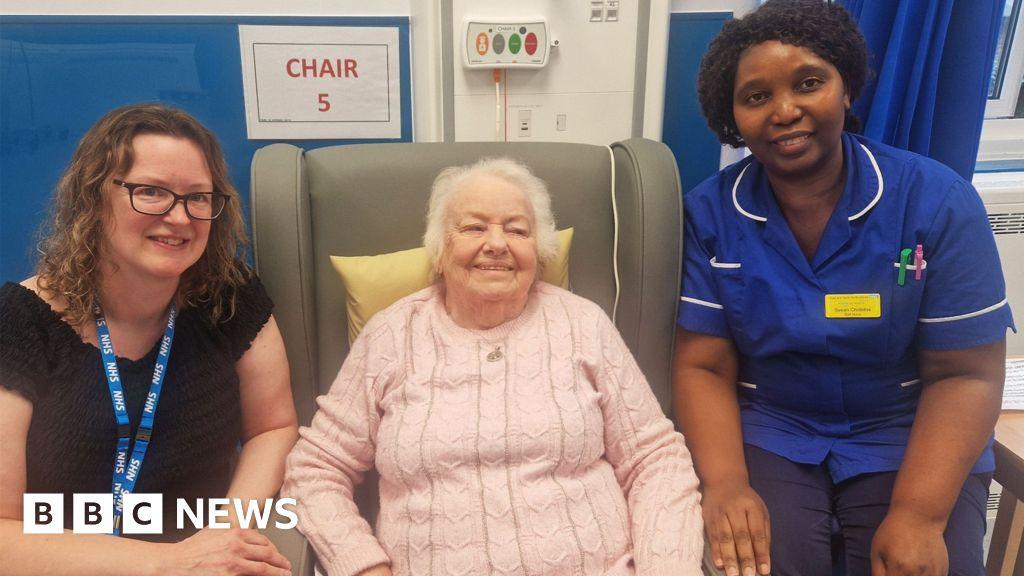
BBC News focuses on the patient time comparison, quoting Shirley Xerxes as being “in the chair ‘for a matter of minutes instead of an hour or more’,” and it also explains the immunotherapy concept with the “stop signal” and “invisibility cloak” language.
The Guardian highlights the annual system-level savings, repeating that the NHS estimates “more than 100,000 hours” saved each year, and it adds that “With the addition of this treatment, there are now two immunotherapies available for almost 30 types of cancer on the NHS.”
Sky News foregrounds the operational detail that pharmacy teams must prepare the drug “in intravenous bags under sterile conditions,” and it states that the ready-to-use injection reduces preparation time by “44%,” while also quoting Professor Peter Johnson’s “lifeline” message.
DESIblitz, by contrast, includes additional context about the drug’s approval and dosing cadence, stating that the drug is “approved to treat 14 cancers in the UK” and that the injectable version is given “every three weeks as a one-minute injection” or “every six weeks as a two-minute injection.”
It also introduces a commercial and global pricing angle, saying “global sales reaching £22 billion in 2025” and that “Patents protecting the original drug are set to expire in 2028 in the US” and “2031 in Europe” are part of the competitive timeline discussed in the broader coverage.
What comes next
The rollout’s immediate next steps in England are tied to which NHS trusts will provide the treatment first and how the NHS expects to use freed capacity.
The Guardian names “University hospitals Bristol and Weston NHS foundation trust” as one of the first in England to provide the treatment, alongside “the East and North Hertfordshire teaching NHS trust.”
BBC News similarly places early treatment at the “Mount Vernon Cancer Centre near Watford,” and it describes Shirley Xerxes receiving the jab there.
The Guardian also quotes James Richardson, the “national specialty adviser for cancer drugs at NHS England,” saying, “This is a win-win innovation, because patients will spend far less time in hospital and, crucially, our clinical teams will have more capacity to care for others.”
The Guardian’s framing extends to waiting times, with it stating that the time saved is “a huge gain for the NHS” and that it “demonstrates how we are continuing to modernise cancer care for the benefit of patients.”
The Independent and BBC both connect the shorter administration time to the possibility of shifting care away from hospital chairs, with The Independent saying the innovation aims to “free up significant NHS staff time” and the BBC quoting Johnson about “giving treatment in the community and away from hospitals.”
The policy and political dimension is reflected in the quoted Health and Social Care Secretary Wes Streeting, who says the rollout will offer “quicker, more convenient care” and “saving patients time,” while also freeing clinicians to “care for even more people.”