
Joachim Dos Santos Becomes New English Teacher At Montgomery International School
Key Takeaways
- Joachim Dos Santos named new English teacher for IB DP seniors at Montgomery International School.
- He is in his first three months at the school.
- He teaches English to senior IB students in the Diploma Programme.
Montgomery International School
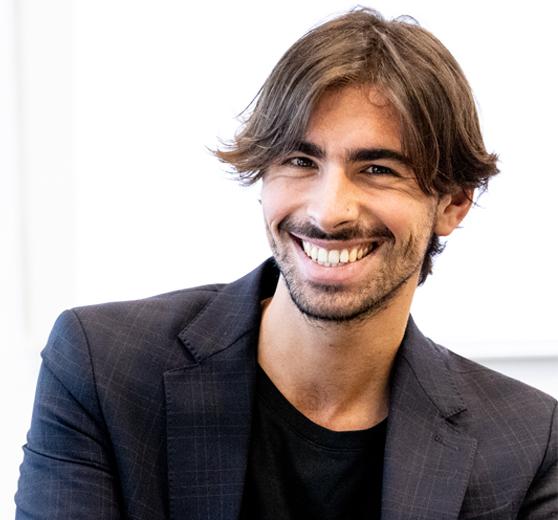
Joachim Dos Santos writes that he is the new English teacher at Montgomery International School and that his first three months have been shaped by the school’s “family of students and its staff.”
“By Joachim Dos Santos My name is Joachim Dos Santos, and I am the new English teacher for the students in the last four years of the International Baccalaureate (IB) Diploma Programme”
He describes the school as “a small haven of education hidden beneath the blooming trees at the crossroads between the municipalities of Etterbeek and Woluwe-Saint-Lambert,” and says students greeted him with “Bonjour, Monsieur” and “Good morning, Sir” despite having “absolutely no idea who I was.”
Dos Santos frames the school’s approach around Aristotle’s quote, writing that “educating the mind without educating the heart is not education at all,” and he links it to the International Baccalaureate (IB) Diploma Programme’s “IA, EE, TOK, HL, SL” requirements.
He also depicts daily life in the corridors and library, including MYP5 students “chatting with their seniors” and DP1 or DP2 students with “bright smiles on their faces,” while students and teachers work “around a round table evoking the great Arthurian legends.”
In his final reflection, he says the “social and emotional cohesion among students, between teachers and staff, among all members of the MIS community, is a true gift.”
Telde’s Dream Big
In Telde, the educational community of José Frugoni Pérez High School inaugurated cultural and community-life spaces within its facilities under a project titled Dream Big, framed by the motto “Educating the mind without educating the heart is not education at all.”
The event invited the city’s mayor, Juan Antonio Peña, the Councilor for Education, Juan Pablo Rodríguez, and Juan Francisco Artiles, and it included announcements spanning the Mini Gallery, the Coexistence Classroom, and a “new play library.”
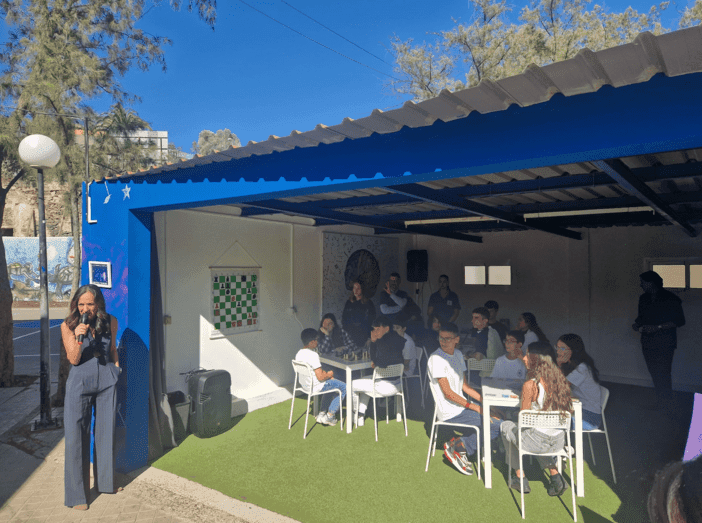
Principal Luisa Santana said the educational community “has been working for many years with enthusiasm together with its students from different axes and projects,” adding that the initiatives were completed “thanks to the involvement and participation of the families, teachers and students of La Rocha.”
Santana also tied the project to recognitions including the “National Prize for Good Practices from the Ministry of Education” and the “Educational Excellence Award from the Department of Education of the Canary Islands Government.”
Mayor Juan Antonio Peña emphasized that “initiatives like this demonstrate the commitment of our educational community to the holistic development of young people,” while Juan Pablo Rodríguez called the project “an example of how collaboration among students, families, and teachers can transform educational centers into dynamic and creative spaces.”
Aristotle’s education challenge
The Times of India presents Aristotle’s quote—“Educating the mind without educating the heart is no education at all”—as a challenge to education measured only by “marks, degrees, achievements and professional success.”
“Education is often measured by marks, degrees, achievements and professional success”
It argues that the quote remains relevant because “His famous words” still question whether “knowledge is enough,” and it frames the issue as a need for compassion, empathy, ethics, and emotional understanding alongside intellectual development.
The article also states that Aristotle distinguishes “two types of development, the mind and the heart,” describing the “mind” as “the logic, the reasoning, the memory, the analysis, and the intellectual learning.”
It then defines the “heart” as including “compassion, morality, empathy, emotional understanding, kindness, integrity and self-awareness,” and says education is incomplete if it produces “skilled individuals lacking emotional maturity and ethical values.”
In its discussion of modern relevance, it says “Discussion about anxiety, burnout, loneliness, and emotional exhaustion is more common in schools and workplaces,” and it concludes that the quote connects to current emphasis on emotional learning and emotional intelligence.
More on Other

Israel Faces Unprecedented Isolation as Boycotts Widen and Sanctions Expand Across Europe
10 sources compared

Ukrainian Marine Drone Explodes Near Constanta Oil Terminal, Romania Reports No Casualties
21 sources compared

Bangladesh Foreign Minister Khalilur Rahman Defeats Cyprus’ Andreas Kakouris for UN General Assembly Presidency
12 sources compared

Conflicts and Violence Drove 32.3 Million New Internal Displacements in 2025, IDMC and NRC Say
11 sources compared