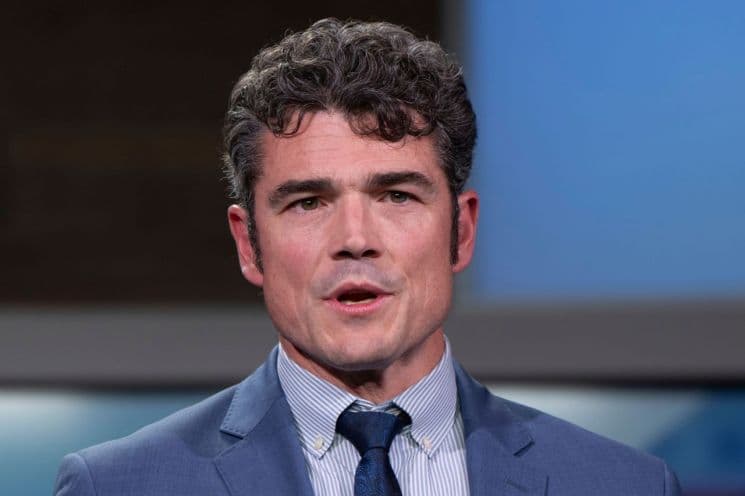
Joe Kent resigns as National Counterterrorism Center Director over Iran war
Key Takeaways
- Joe Kent resigns as National Counterterrorism Center director citing opposition to Iran war.
- Iran posed no imminent threat; blamed Israel pressure for starting the war.
- First senior U.S. counterterrorism official to resign in protest of Iran war.
Resignation Announcement
Joe Kent, director of the National Counterterrorism Center (NCTC), announced his resignation on March 17, 2026, citing deep opposition to the Trump administration's war with Iran.
“Personalized content and ads can also include things like video recommendations, a customized YouTube homepage, and tailored ads based on past activity, like the videos you watch and the things you search for on YouTube”
In his resignation letter posted on social media, Kent stated he 'cannot in good conscience support the ongoing war in Iran' and claimed that Iran 'posed no imminent threat to our nation.'
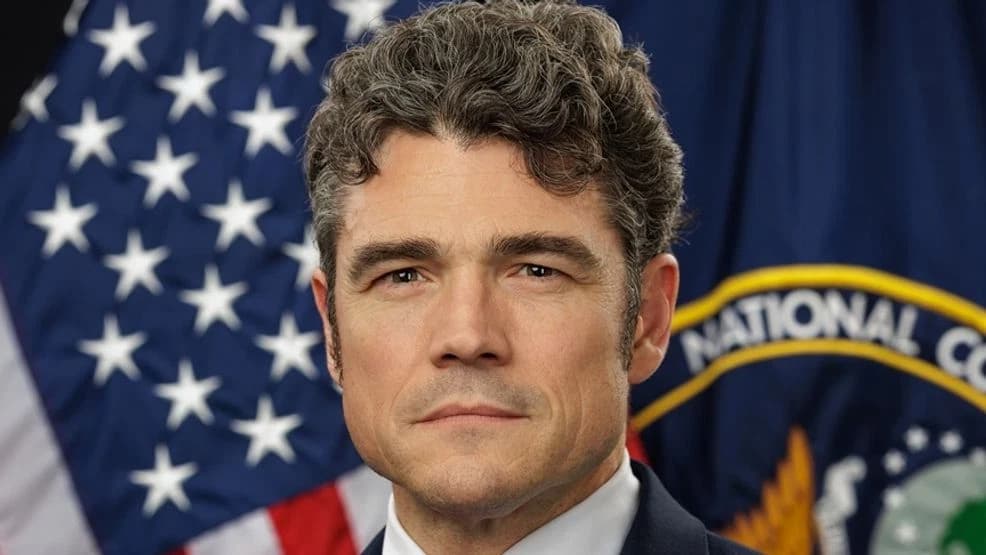
Kent asserted that the conflict was driven by 'pressure from Israel and its powerful American lobby,' comparing the situation to the lead-up to the Iraq War.
As head of the NCTC, which operates under the Office of the Director of National Intelligence and coordinates U.S. counterterrorism efforts, Kent's resignation marked the first high-level departure from the Trump administration over the Iran conflict that had entered its third week.
Background and Experience
Kent's background adds context to his unexpected resignation.
A decorated military veteran who served 11 deployments as a Green Beret and later worked as a CIA field officer, Kent had been confirmed as NCTC director last July on a 52-44 Senate vote along mostly partisan lines.

His political history includes two unsuccessful runs for Congress in Washington state's 3rd District in 2022 and 2024, where he attracted support from far-right figures including members of the Proud Boys and Christian nationalist groups.
Kent's personal experience with war was particularly poignant, as his wife Shannon Kent, a U.S. Navy cryptologist, was killed in a 2019 suicide bombing in Syria – a loss he referenced in his resignation letter to emphasize his opposition to sending 'the next generation off to fight and die in a conflict that serves no benefit to the American people.'
Administration Response
The Trump administration reacted swiftly and critically to Kent's resignation.
“military intervention abroad”
President Trump dismissed Kent's judgment during an Oval Office appearance, stating 'I always thought he was weak on security' and declaring it 'a good thing that he's out because he said Iran was not a threat.'
White House Press Secretary Karoline Leavitt rejected Kent's allegations about Israel as 'insulting and laughable,' emphasizing that 'the Commander-in-Chief determines what does and does not constitute a threat, because he is the one constitutionally empowered to do so.'
House Speaker Mike Johnson also pushed back, claiming he had received briefings that clearly showed 'an imminent threat that Iran was very close to the enrichment of nuclear capability.'
In contrast, some Democrats expressed agreement with Kent's core assessment about the lack of imminent threat, though they remained critical of his overall record.
Director of National Intelligence Tulsi Gabbard, Kent's supervisor, distanced herself from the resignation while defending Trump's decision-making authority.
Israel Influence Controversy
Kent's resignation sparked significant controversy over his allegations regarding Israeli influence on U.S. policy.
In his letter, Kent claimed that 'high-ranking Israeli officials and influential members of the American media deployed a misinformation campaign' that led to the war, directly comparing it to tactics used to draw the U.S. into the Iraq War.
These accusations drew sharp criticism from multiple quarters, with some accusing Kent of promoting anti-Semitic tropes.
The Jewish Democratic Council of America's Halie Soifer stated that Kent's 'scapegoating Israel and its 'powerful American lobby'' for the war 'puts Jews in danger,' while Rep. Josh Gottheimer called it a 'tawdry anti-Semitic metaphor.'
However, Kent's allegations received support from some unexpected sources, including Secretary of State Marco Rubio, who told reporters that 'Israel had made a decision to attack first — and Iran would retaliate against American troops if the Trump administration didn't launch its own preemptive strikes.'
The controversy highlighted the complex and often sensitive nature of discussions about Israel's influence on U.S. foreign policy decisions.
Broader Implications
Beyond the immediate controversy, Kent's resignation carries broader implications for U.S. policy and the Trump administration.
As the first Senate-confirmed official to resign in protest during Trump's second term, Kent's departure signaled growing divisions within the administration over Iran policy and potentially other foreign policy decisions.

Analysts noted that his resignation could embolden other officials who privately disagree with the administration's approach to Iran, though few are likely to follow his lead given Kent's controversial background.
The resignation also highlighted the administration's struggle to justify the Iran war, as CNN reported that 'the administration has struggled mightily to explain why Iran posed an 'imminent' threat' after cycling through several different justifications.
Kent's decision to invoke his personal military experience and the loss of his wife lent credibility to his opposition, even among critics of his other views.
The timing of his resignation, as the conflict entered its third week with no clear end in sight, suggested deepening concerns about the war's trajectory and potential escalation.
More on USA

Daniel Biss Defeats Kat Abughazaleh in Democratic Primary to Replace Jan Schakowsky
23 sources compared

Trump vows to take Cuba as Russia responds
24 sources compared

UFW Cancels Cesar Chavez Events as Sexual Abuse Allegations Surface.
48 sources compared

District Court Judge Royce Lamberth Orders Voice of America Employees Back to Work
17 sources compared