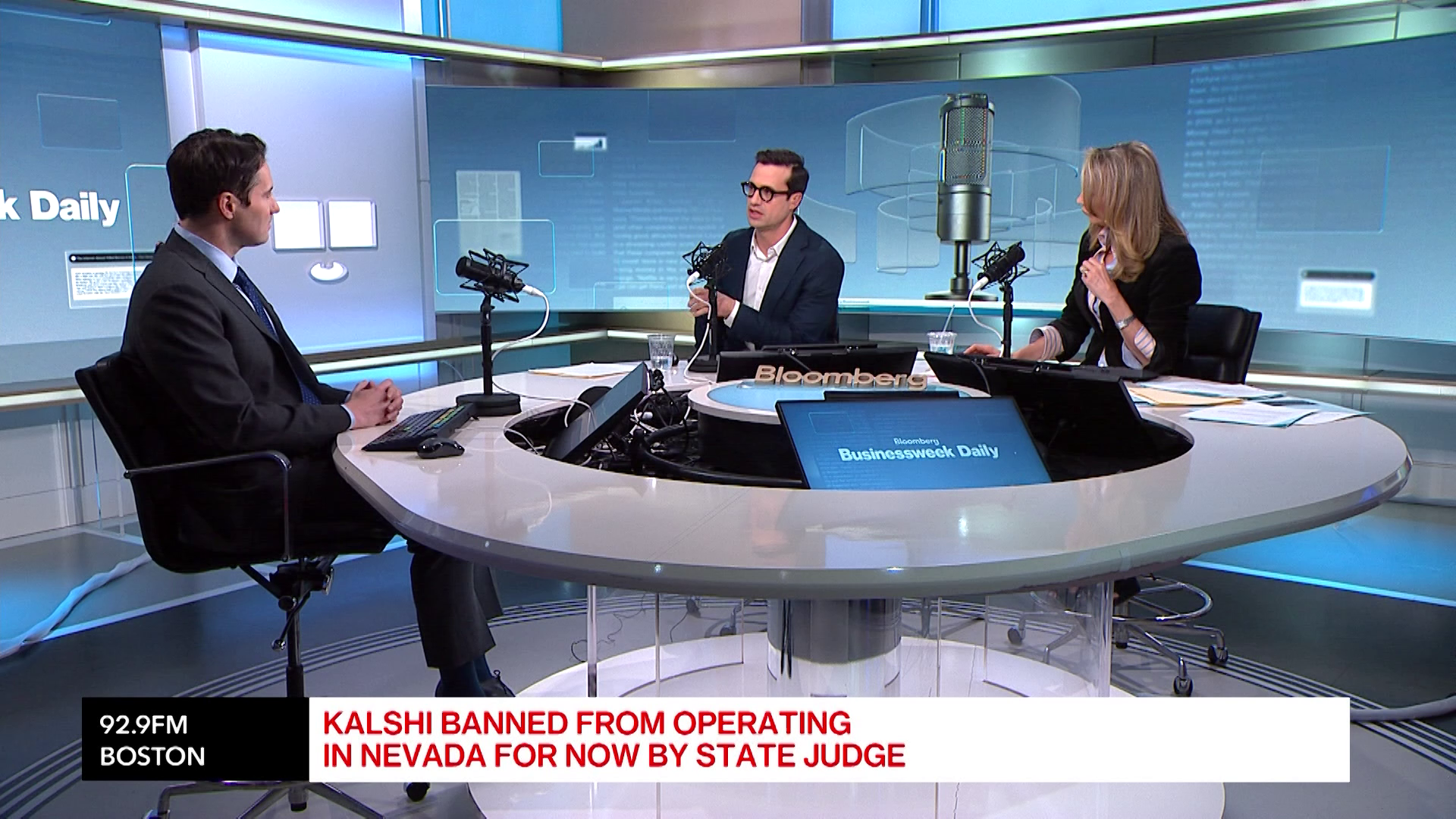
Judge Jason Woodbury Blocks Kalshi From Operating in Nevada
Key Takeaways
- Carson City District Court Judge Jason Woodbury issued a 14-day TRO blocking Kalshi's Nevada operations.
- Regulators say Kalshi's contracts violate gambling laws; Kalshi argues CFTC jurisdiction.
- The next injunction hearing is set for April 3.
Court Blocks Kalshi Operations
Judge Jason D. Woodbury of Carson City District Court has temporarily barred prediction market operator Kalshi from operating in Nevada.
“Table of Contents A Nevada court has mandated that prediction market operator Kalshi suspend its event contract offerings within the state for a minimum of two weeks”
The judge issued a 14-day restraining order that prohibits the company from offering event contracts related to sports, elections, and entertainment.
This represents a significant legal setback for Kalshi and marks the first time any U.S. state has successfully forced the prediction market platform to halt its operations.
The ruling came after Nevada Gaming Control Board Chair Mike Dreitzer argued that prediction markets facilitating unlicensed gambling are illegal in Nevada.
Dreitzer stated they have a statutory duty to protect the public from such activities, which formed the basis for the legal action.
Judge Woodbury's order found that state authorities are reasonably likely to prevail in their legal fight against Kalshi.
The decision creates a temporary but significant disruption to the company's business operations in one of the country's most important gaming markets.
Nevada's Legal Arguments
The Nevada Gaming Control Board initiated legal action against Kalshi in February, arguing the prediction market platform constitutes illegal gambling.
Board officials contend Kalshi should be regulated under state gaming laws rather than federal commodity regulations.
Board Chairman Mike Dreitzer emphasized that Kalshi has repeatedly claimed its operations are legal in all 50 states, which he dismissed as clearly false.
The regulatory board contends that Kalshi's business model—allowing users to bet on future events and taking commissions on contracts—fits Nevada's definition of a 'percentage game' under state gambling laws.
This legal stance reflects Nevada's broader efforts to protect its massive gaming industry.
The state's gaming industry generated over $66 billion in commercial gaming revenue in 2023, with sports betting alone contributing more than $11 billion.
Kalshi's Federal Defense
Kalshi has consistently maintained that its event-based contracts fall under federal jurisdiction regulated by the Commodity Futures Trading Commission (CFTC).
“The appeals court’s decision arrived after U”
The company argues that its registration with the CFTC places it under federal oversight, which should exempt it from state-level gambling regulations.
However, Judge Woodbury noted in his order that the issue of whether federal law overrides state gambling regulations remains unsettled.
The judge observed that courts have generally not been leaning in favor of federal preemption in these cases.
CFTC Chairman Michael Selig has strongly supported Kalshi's position, condemning Arizona's criminal charges as 'inappropriate'.
Selig emphasized that this is a jurisdictional dispute that should be resolved through regulatory channels rather than criminal prosecution.
Despite these federal regulatory arguments, Kalshi now faces the immediate challenge of complying with Nevada's restraining order while fighting legal battles in multiple other states.
National Legal Battle
The temporary restraining order represents just one front in Kalshi's increasingly complex legal battle across multiple states.
Earlier this week, Arizona Attorney General Kris Mayes filed criminal charges against Kalshi, accusing it of operating an illegal gambling business.

The company is also appealing a similar temporary ban in Massachusetts, while other states including New York have begun investigating Kalshi's contracts.
This patchwork of state regulations creates significant operational challenges for prediction market platforms.
Forces them to potentially implement geofencing, user offboarding, or product redesigns on a state-by-state basis.
Despite these legal challenges, investors remain confident in Kalshi's business model.
The company recently raised $1 billion in new financing that values it at $22 billion—double its valuation from late 2025.
Future Implications
The outcome of Kalshi's Nevada case could have far-reaching implications for the entire prediction markets industry.
“A Nevada judge has temporarily blocked Kalshi from operating in the state, finding that state authorities are reasonably likely to prevail in a legal fight over whether the company’s event contracts violate Nevada gambling laws”
The scheduled April 3 hearing on whether to convert the temporary restraining order into a longer-lasting preliminary injunction will be crucial.
Legal experts note that temporary restraining orders under Nevada law are not appealable, meaning Kalshi must cease operations in the state for at least two weeks.
The hearing will determine whether Nevada's regulatory framework for gambling extends to prediction market platforms.
This case represents a critical test of whether prediction markets are financial instruments under federal rules or bets requiring state gaming oversight.
Whatever the outcome, the growing legal uncertainty suggests operators should expect more patchwork regulations.
The industry will likely continue facing courtroom battles and operational whiplash as it navigates this evolving regulatory landscape.
More on Finance

President Donald Trump Threatens to Obliterate Iran's Power Plants as Oil Prices Rise
12 sources compared

Jury Rules Elon Musk Misled Twitter Investors in $44B Acquisition Case
20 sources compared

Coinbase Launches Stock Perpetual Futures for Non-U.S. Users
12 sources compared
Coatue Management-Led Round Drives Kalshi's $1B Funding, Valuation Soars to $22B
12 sources compared