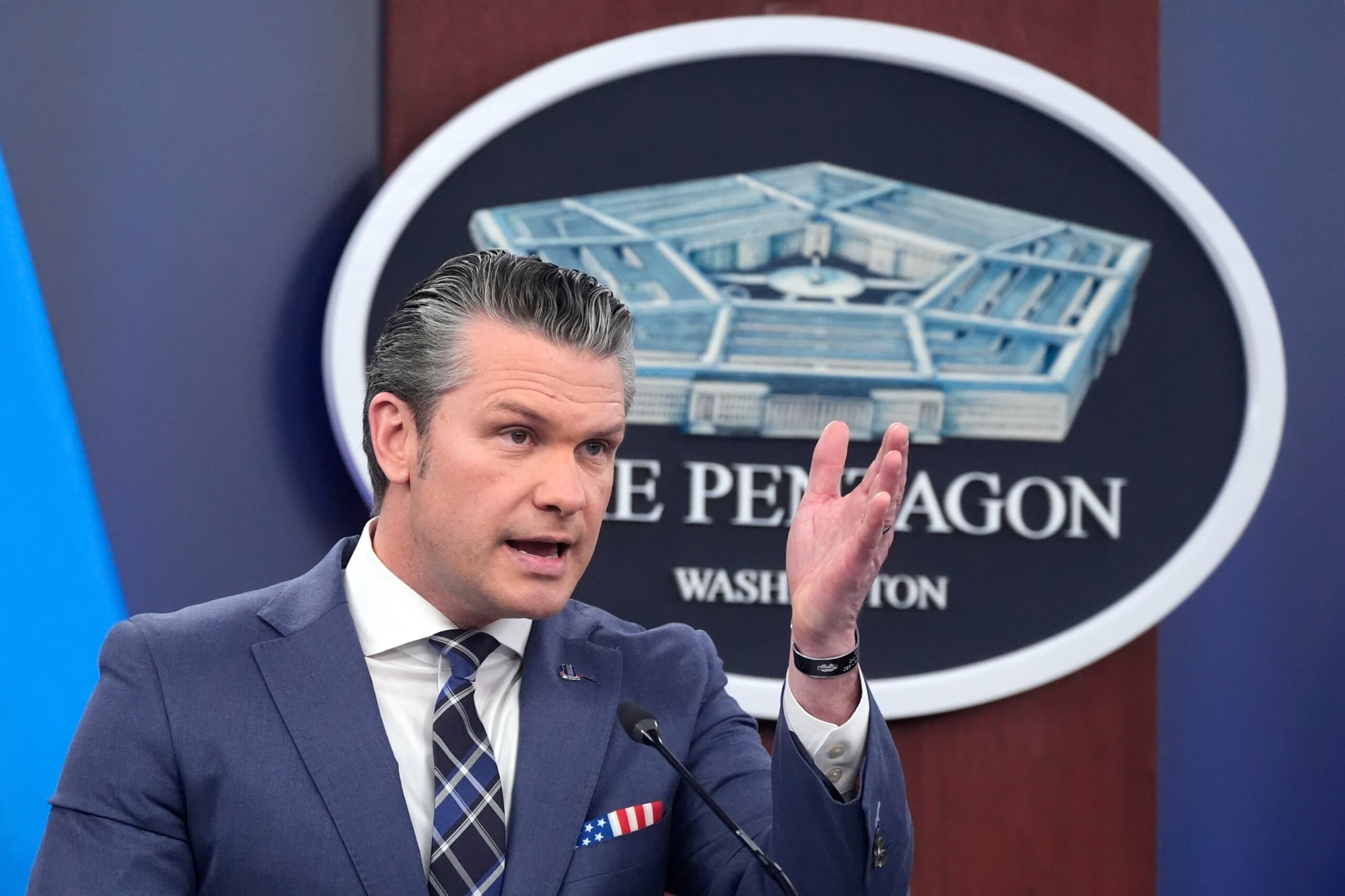
Judge Paul Friedman Blocks Pentagon Press Policy After NYT Lawsuit
Key Takeaways
- Judge Friedman voided key parts of Pentagon press policy violating First, Fifth Amendments.
- Policy allowed outlets to be labeled security risks and lose access.
- New York Times lawsuit; court sides with NYT; government will appeal.
Judge Blocks Pentagon Policy
A federal judge has blocked the Trump administration's controversial Pentagon press policy in a major victory for press freedom advocates.
“Reporters from outlets that refused to consent to the new rules, including those from The Associated Press, have continued reporting on the military”
U.S. District Judge Paul Friedman ruled on Friday that key provisions of the Defense Department's new credentialing policy were unlawful, siding with The New York Times in a lawsuit that challenged restrictions on journalists' access to the Pentagon.

The judge found that the policy violated the First and Fifth Amendments by imposing unreasonable and viewpoint-discriminatory restrictions on press credentials.
Friedman ordered the Pentagon to reinstate the press credentials of seven Times journalists who had surrendered their passes rather than comply with the new rules, stating that his decision applies to 'all regulated parties.'
The ruling represents a significant setback for Defense Secretary Pete Hegseth's efforts to exert greater control over press coverage from military headquarters.
Policy Implementation Details
The Pentagon policy, implemented under Defense Secretary Pete Hegseth in October 2025, required journalists to sign a pledge not to gather information unless officials from the Department of Defense formally authorized its release.
The controversial rules extended beyond classified information to include a prohibition on reporting even unclassified material without the approval of Pentagon officials.

Out of 56 news outlets belonging to the Pentagon Press Association, only one agreed to sign an acknowledgment of the new rules.
The Pentagon assembled a new press corps consisting largely of conservative outlets and media personalities who complied with the restrictions, while mainstream news organizations including The New York Times, Associated Press, and CNN refused to sign and forfeited their credentials.
The policy stated that publishing sensitive information 'is generally protected by the First Amendment' but claimed that soliciting such information could result in journalists being labeled 'security or safety risks' and having their credentials revoked.
Judge's Constitutional Analysis
In his comprehensive ruling, Judge Paul Friedman delivered a scathing rebuke of the Pentagon's approach, emphasizing that 'a primary purpose of the First Amendment is to enable the press to publish what it will and the public to read what it chooses, free of any official proscription.'
“A federal judge on Friday voided various parts of a restrictive press policy rolled out by Defense Secretary Pete Hegseth last year, ruling that they trampled on the constitutional rights of reporters who seek to cover the US military from within its sprawling headquarters”
The judge acknowledged the Pentagon's legitimate need to protect national security but stressed that 'especially in light of the country's recent incursion into Venezuela and ongoing war with Iran, it is more important than ever that the public have access to information from a variety of perspectives about what its government is doing.'
Friedman concluded that the policy amounted to illegal viewpoint discrimination, stating that 'the undisputed evidence shows that the policy is designed to weed out "disfavored journalists" and replace them with those who are "on board and willing to serve" the government.'
The judge found the policy also violated the Fifth Amendment due process clause because it was too vague, noting that 'in sum, the Policy on its face makes any newsgathering and reporting not blessed by the Department a potential basis for the denial, suspension, or revocation of a journalist's (credentials),' providing no way for journalists to know how to do their jobs without losing access.
Stakeholder Reactions
The ruling elicited strong reactions from stakeholders across the political spectrum.
New York Times spokesperson Charlie Stadtlander hailed the decision as 'a powerful rejection of the Pentagon's effort to impede freedom of the press and the reporting of vital information to the American people during a time of war,' emphasizing that 'Americans deserve visibility into how their government is being run, and the actions the military is taking in their name and with their tax dollars.'
Pentagon Press Association, which represents affected journalists, called the ruling 'a great day for freedom of the press in the United States,' while Freedom of the Press Foundation's chief of advocacy Seth Stern criticized the Pentagon's policy as 'outrageous censorship' and lamented that 'it's unfortunate that it took this long for the Pentagon's ridiculous policy to be thrown in the trash.'
Pentagon spokesperson Sean Parnell immediately announced the administration's intention to appeal, posting on X that 'We disagree with the decision and are pursuing an immediate appeal.'
The Pentagon had asked the judge to suspend his ruling for a week to allow for an appeal, but Friedman refused, instead giving the department one week to file a written report on compliance with the order.
Broader Context
The legal battle over Pentagon press access occurs within a broader context of mounting tensions between the Trump administration and independent journalism.
“A federal judge in the United States has agreed to block the administration of President Donald Trump from enforcing a policy limiting news reporters’ access to the Pentagon”
This ruling represents the second major press-related legal setback for the administration this month, following another federal judge's decision requiring more than 1,000 laid-off journalists at Voice of America to return to work.

The Pentagon case is particularly significant given the expanded military operations under the Trump administration, including the recent 'incursion' into Venezuela and ongoing war with Iran.
Multiple sources noted that the Pentagon's policy change was part of a pattern of the administration challenging or undermining norms of independent journalism, which has included filing defamation lawsuits against news organizations, rescinding protections for reporters caught in leak investigations, and searching a Washington Post reporter's home.
Judge Friedman's ruling stands as 'a vigorous affirmation of constitutional press freedom' at a time when traditional journalism faces unprecedented challenges from government attempts to control information flow and narrative.
More on USA

California lawmakers rename Cesar Chavez Day to Farmworkers Day amid sexual abuse allegations.
17 sources compared

Robert Mueller Dies at 81; Former FBI Director
73 sources compared
Trump threatens to deploy ICE to airports amid DHS shutdown
13 sources compared

Trump Administration Waives Iranian Oil Sanctions for 30 Days to Ease Global Energy Prices
14 sources compared