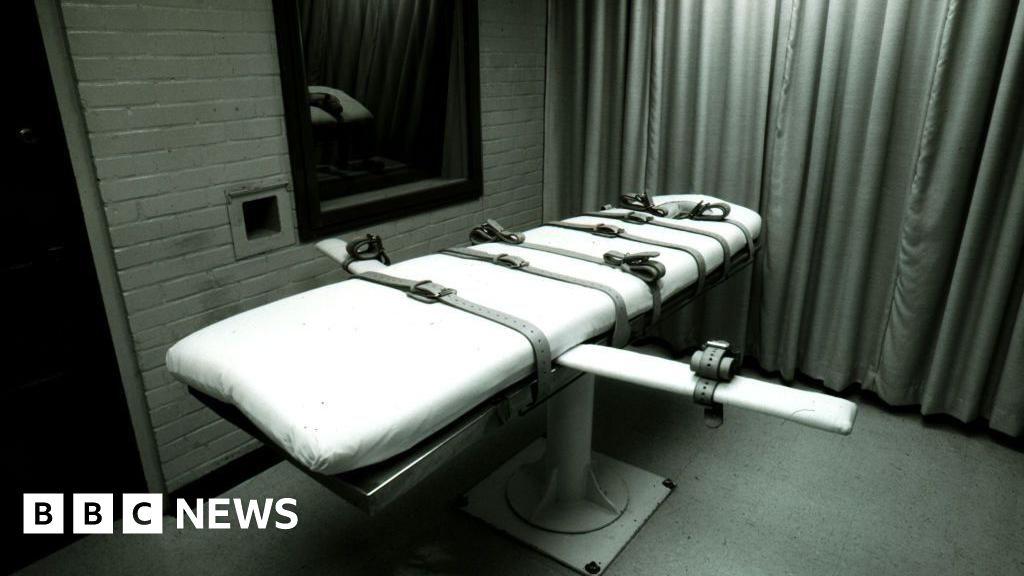
Justice Department Adopts Firing Squads And Pentobarbital To Ramp Up Federal Executions
Key Takeaways
- DOJ reintroduces firing squads as a permitted method for federal executions.
- Pentobarbital will be used for single-drug lethal injections in federal executions.
- Policy aims to ramp up, expedite, and expand federal death penalty prosecutions and executions.
Federal executions expanded
The Justice Department moved to expand federal execution methods by adopting firing squads as a permitted option and reauthorizing the use of single-drug lethal injections with pentobarbital, as the Trump administration seeks to “ramp up and expedite capital punishment cases,” officials said Friday.
The NPR report, quoting an AP dateline from WASHINGTON, says the Justice Department will adopt firing squads and also reauthorize pentobarbital, which had been used to carry out “13 executions during the first Trump administration.”

NPR adds that the Biden administration had removed pentobarbital from the federal protocol over concerns about “unnecessary pain and suffering,” and that the moves were announced after a moratorium under Biden.
Acting Attorney General Todd Blanche said in a statement, “The prior administration failed in its duty to protect the American people by refusing to pursue and carry out the ultimate punishment against the most dangerous criminals,” and added, “Under President Trump's leadership, the Department of Justice is once again enforcing the law and standing with victims.”
The Death Penalty Information Center is cited in NPR for the point that the federal government “has not previously included firing squad as a method of execution in its protocols.”
NPR also lists five states that “currently allow executions by firing squad: Idaho, Mississippi, Oklahoma, South Carolina, and Utah,” and notes that the pentobarbital protocol was adopted by Bill Barr during Trump’s first term.
The NPR account further places the current federal death-row population in context, saying “Only three defendants remain on federal death row after Democratic President Joe Biden converted 37 of their sentences to life in prison,” while also stating that “the Trump administration has so far authorized seeking death sentences against 44 defendants.”
Policy timeline and rationale
The policy change was framed as a reversal of the Biden administration’s approach to federal executions, with NPR describing that Biden removed pentobarbital from the federal protocol and that the Trump administration’s report released Friday said the Biden administration “got the standard and the science wrong.”
NPR quotes the report’s claim that the Biden administration “failed to address the overwhelming evidence” that an injected with pentobarbital “quickly quickly loses consciousness—rendering him unable to experience pain,” and it also says the report was released Friday as part of a broader push to step up federal executions after a moratorium.

NPR further connects the current federal protocol to earlier federal rulemaking, saying that in 2020, under Bill Barr’s leadership, the Justice Department published a rule in the Federal Register to allow lethal injection or use “any other manner prescribed by the law of the state in which the sentence was imposed.”
The Washington Post excerpt provided here focuses on public reaction to the proposal to add firing squads, showing “strong disapproval and outrage” over the Trump administration's proposal to add firing squads as a method of federal execution.
Democracy Now! adds a different timeline emphasis, saying “No federal executions have been carried out since 2020,” when the first Trump administration “broke with over a decade of precedent and executed 13 people on death row.”
Democracy Now! also says the second Trump administration is “pursuing the death penalty in dozens more cases across the country,” and it describes additional steps beyond methods, including “new restrictions on the ability of death row prisoners to seek clemency or pardons” and “a regulation designed to cut years off the federal appeals process.”
In the same Democracy Now! account, Sister Helen Prejean says the push to restart federal executions is “entirely unsurprising,” and she links the administration’s approach to a broader pattern of demonizing an enemy and killing them.
Voices oppose and defend
The sources include direct statements from both supporters of the policy and prominent opponents.
NPR quotes Acting Attorney General Todd Blanche defending the change, saying, “The prior administration failed in its duty to protect the American people by refusing to pursue and carry out the ultimate punishment against the most dangerous criminals, including terrorists, child murderers, and cop killers,” and adding, “Under President Trump's leadership, the Department of Justice is once again enforcing the law and standing with victims.”
Democracy Now! features anti-death-penalty activist Sister Helen Prejean, who tells Amy Goodman, “His first instinct almost always seems to be demonize someone as an enemy and then kill them and destroy them.”
Prejean also says, “Firing squad and the electric chair and gas, anything to get executions going, he has now done,” and she argues that “the death penalty writ large is Iran, it’s Gaza, and it’s solving all the problems by using violence.”
In the same interview, Prejean references the first Trump administration’s last six months, saying, “in the last six months of his first term, he designated that 13 people were to be executed,” and she adds, “Bill Barr, his attorney general, went in, gave the orders, and they were.”
Democracy Now! also includes a Vatican message delivered in a prerecorded video, with Pope Leo XIV saying, “We affirm that the dignity of the person is not lost even after various serious crimes are committed.”
The Pope’s message continues, “Consequently, the church teaches that the death penalty is inadmissible, because it is an attack on the inviolability and dignity of the person.”
Competing frames of the same move
The same policy shift is framed very differently across outlets in the material provided.
NPR presents the Justice Department’s actions as an administrative update to federal execution protocols, emphasizing the Justice Department’s plan to “adopt firing squads as a permitted method of execution” and to “reauthoriz[e]” pentobarbital, while also situating the change within a broader push to “step up federal executions after a moratorium under the Biden administration.”

Democracy Now! instead emphasizes the resumption of executions and the expansion of death-penalty tools, saying the Justice Department is bringing back “the use of firing squads and lethal injection using pentobarbital” to “expedite and expand federal death penalty convictions and executions,” and it adds that the administration is planning “new restrictions” on clemency and “a regulation designed to cut years off the federal appeals process.”
MS NOW’s opinion piece, in turn, characterizes the firing squad as “a particularly brutal way to put someone to death” and argues that the DOJ report is “mostly a political hit job on former President Joe Biden,” while also asserting that the report lays out “a plan to dramatically curtail the rights of people held on death row.”
The Washington Post excerpt, though it does not provide policy details, foregrounds public reaction, noting “strong disapproval and outrage” over the proposal to add firing squads.
International Business Times UK focuses on the Vatican condemnation, describing Pope Leo’s video message to DePaul University in Chicago and quoting the Pope’s view that the “right to life” sits at the core of human rights.
It also states that “The White House has not publicly responded to the Pope's statement,” which is a different kind of emphasis than NPR’s focus on protocol and legal steps.
What comes next
The sources describe immediate next steps and potential downstream effects, even as they differ on tone and emphasis.
NPR says the Justice Department is adopting firing squads and reauthorizing pentobarbital as part of a push to expedite and ramp up capital punishment cases, and it also notes that the Biden administration had removed pentobarbital from the federal protocol and that the Trump administration’s report claims the Biden administration “got the standard and the science wrong.”

NPR also identifies the current federal death-row defendants by name, stating that “Currently on death row are are Dylann Roof,” “Dzhokhar Tsarnaev,” and “Robert Bowers,” and it ties those names to specific attacks described in the NPR text.
Democracy Now! adds that the Justice Department is planning “new restrictions on the ability of death row prisoners to seek clemency or pardons,” and it says a regulation is designed “to cut years off the federal appeals process for state death penalty cases.”
MS NOW argues that the DOJ report lays out “a plan to dramatically curtail the rights of people held on death row,” and it also asserts that the report devotes “15 pages” to the history of capital punishment, with “five pages” covering “the years 1789 to 2021” and “10 pages to Biden’s single term.”
International Business Times UK says the policy change “expands the 'menu' of execution methods available at the federal level,” while also stating that “each case still requires lengthy legal steps, appeals and scheduling decisions before any execution can take place.”
In the Vatican-related coverage, Pope Leo’s message is presented as a moral counterpoint to the policy, with the Pope saying, “Consequently, the church teaches that the death penalty is inadmissible,” and that “the common good can be safeguarded and the requirements of justice can be met without recourse to capital punishment.”
More on USA

Cole Tomas Allen Opens Fire Outside White House Correspondents’ Dinner, Secret Service Officer Struck
51 sources compared

Trump Pushes White House Ballroom After Washington Hilton Shooting, Cole Tomas Allen Charged
12 sources compared

Cole Tomas Allen Charged With Attempting To Assassinate President Donald Trump At Washington Hilton
25 sources compared

Cole Tomas Allen Charged With Attempting To Assassinate Donald Trump At White House Correspondents’ Dinner
14 sources compared