
USA · 13 May, 2026 · 3 min read
Kathy Hochul Announces $268 Billion New York Fiscal Year 2027 Budget Deal With Lawmakers
Hochul announced a handshake deal on a $268B state budget with lawmakers. Plan includes a new pied-à-terre tax targeting luxury NYC second homes.
How much new help NYC receives for its deficit.
7 of 8 outlets skipped it: 3D-printed firearms policy is included in public safety provisions..
11outlets compared
Same story, two versions
tap a side to read it in full
THE CITY
“it’s unclear if there’s additional cash to help New York City fix its $5.4 billion deficit.”Read the original ↗
One frames uncertainty; another asserts a large NYC aid figure.
Hochul’s $268B deal
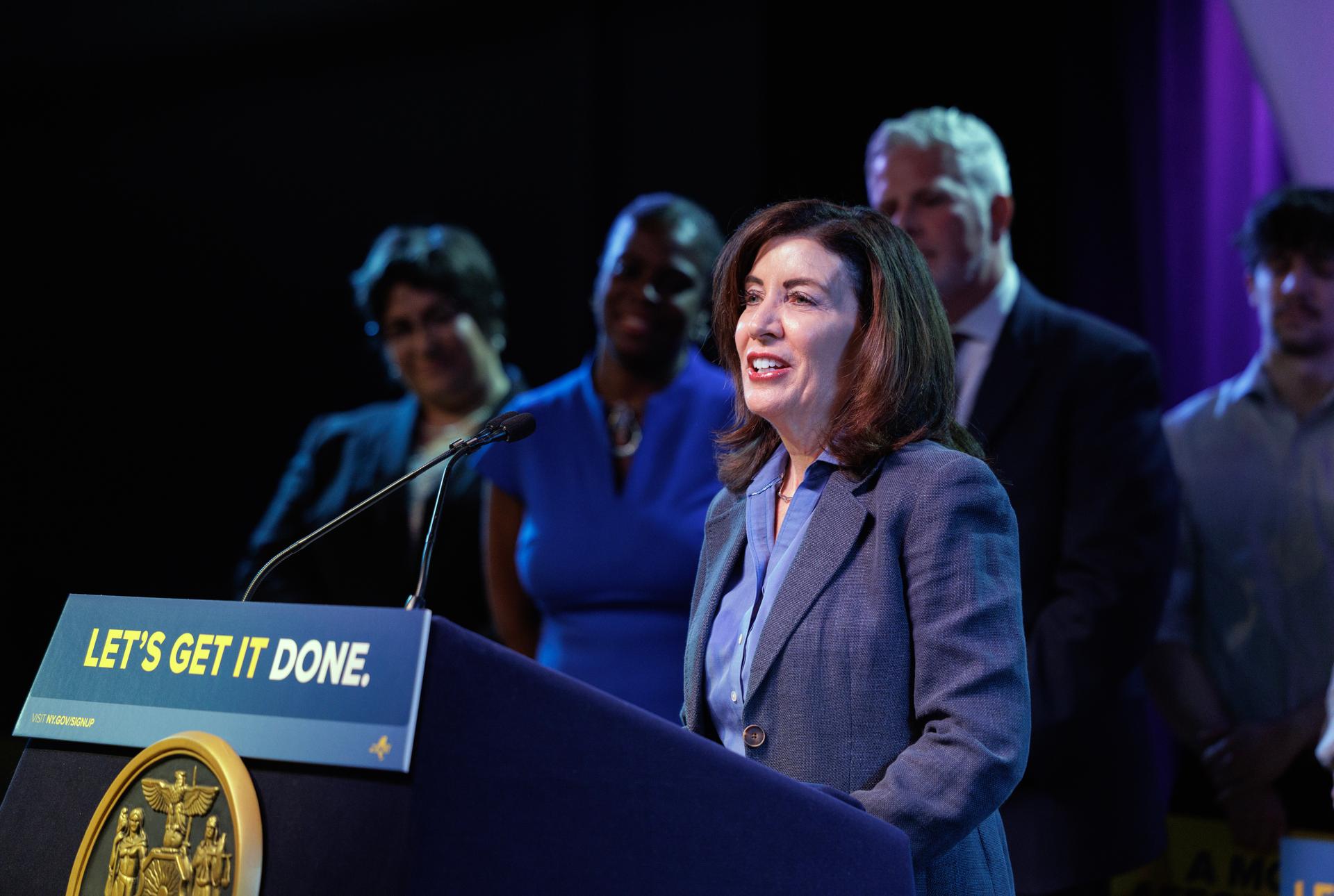
Gov. Kathy Hochul announced a conceptual agreement with legislative leaders on New York’s Fiscal Year 2027 state budget, a $268 billion plan that her office says avoids raising income or statewide business taxes while prioritizing cost relief, public safety, housing development, and protections for vulnerable communities.
The budget deal would add $1.7 billion for child care and pre-kindergarten, bringing total FY 2027 investment to $4.5 billion statewide, and it sets a goal of making high-quality pre-K seats available for all four-year-olds statewide by the start of the 2028-29 school year.

Hochul’s proposal also targets auto insurance, arguing fraud, litigation, and loopholes have driven New York’s average annual premiums above $4,000, and it includes reforms that would limit payouts for drivers engaged in criminal behavior at the time of an incident.
On energy, the plan includes a one-time $1 billion rebate intended to offset rising utility bills, alongside a Ratepayer Protection Plan to tighten oversight of utility spending and rate requests.
The agreement also frames immigration-related provisions as a response to an “unprecedented escalation” in federal enforcement by Immigration and Customs Enforcement, including barring 287(g) agreements that deputize local law enforcement for civil immigration enforcement.
Second-home tax and disputes
The City’s reporting on the same $268 billion budget deal said Hochul announced a pied-à-terre tax on luxury second homes, but it was unclear if there was additional cash to help New York City fix its $5.4 billion deficit.T
Hochul said, “I’m not going to mince the words. The negotiations were not easy,” adding that “There were very substantive disagreements, tough choices and powerful special interests trying to influence the outcome.”
Bloomberg Government News described the tentative deal as imposing a tax on second homes in New York City and weakening the state climate law, while also creating carveouts to the state’s environmental review process to streamline housing development.T
Bloomberg Government News also said New York City will receive $1.5 billion in operational aid, which Mayor Zohran Mamdani celebrated as city budget officials work to address a $5.4 billion two-year budget gap.T
The City reported that Hochul immediately shot down Mayor Zohran Mamdani’s push for changes to the pass-through entity tax, or PTET, which officials believed could bring in $1 billion in revenue.T
What’s at stake next
Gothamist said the framework deal includes money to help New York City and other municipalities close deficits, adds limits on local police cooperating with federal immigration enforcers, and creates new rebate checks to help defray the cost of utility bills. TGothamist reported that the emerging agreement would roll back the state’s climate change mandates, reshape the state’s auto-insurance laws, and eliminate an income tax on tips, while Hochul said, “We're delivering on affordability, on safety, on childcare, on the environment and on housing.” The Syracuse.com report said Hochul announced the framework of a deal more than five weeks after the April 1 deadline, and it described a budget agreement that includes $1 billion for utility rebate checks and a directive to end state income tax on tipped wages up to $25,000 per year.
““We're delivering on affordability, on safety, on childcare, on the environment and on housing,” Hochul said Thursday at the state Capitol.”
The New York Times reported that the spending plan will also include a raft of measures intended to push back against the Trump administration’s immigration crackdown, including banning Immigration and Customs Enforcement agents from wearing masks. The New York Times added that the most significant fiscal change is a new tax surcharge on multimillion-dollar second homes in New York City intended to raise $500 million each year to close the city’s estimated $5.4 billion budget deficit.T