
Keir Starmer Resigns as Labour Leader After Local Election Losses Pressure
Key Takeaways
- Starmer resigns as Prime Minister and Labour leader after local election losses.
- Andy Burnham is the front-runner to replace him.
- The resignation triggers a leadership contest to pick a new Labour leader and prime minister.
Starmer quits, Burnham rises
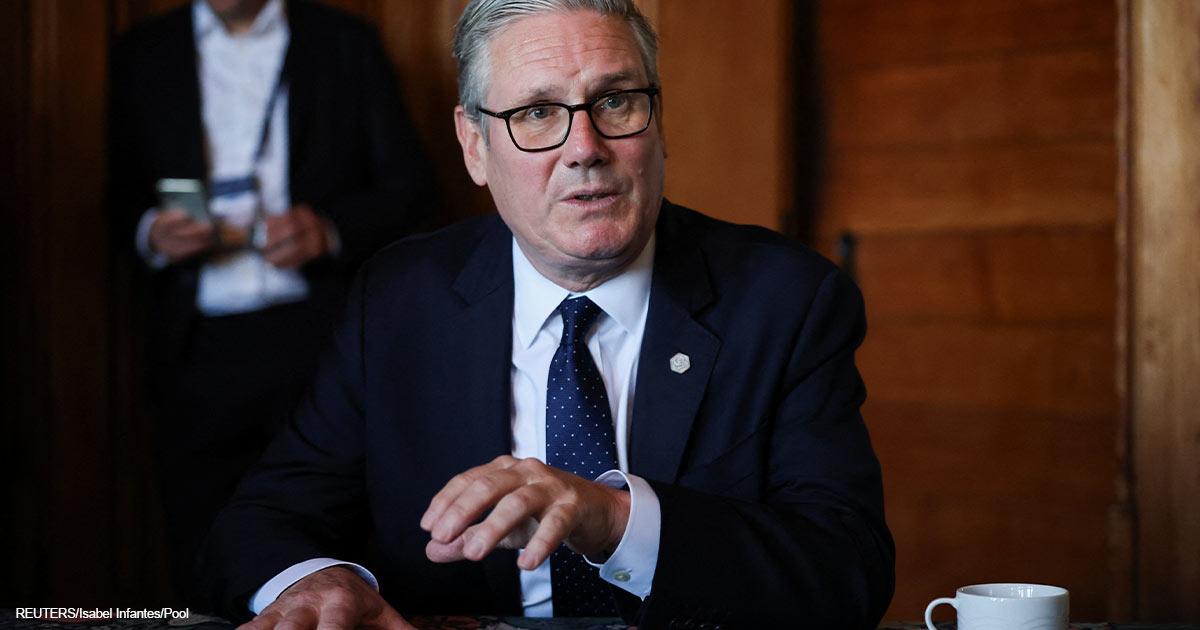
British Prime Minister Keir Starmer announced Monday that he will resign as Labour Party leader, after pressure from lawmakers within his own Labour Party following crushing losses in nationwide local elections last month.
Speaking in Downing Street, Starmer said he accepted he was not best placed to lead Labour into the next general election and that he had informed King Charles III of his decision to step down.
Starmer said he asked Labour's governing body to set out a timetable to replace him, with nominations opening on 9 July and ending by the summer recess on 16 July.
Andy Burnham, the former Greater Manchester mayor, said he would put himself forward as a candidate in the leadership contest before he boarded a train to London to take his parliamentary seat.
The BBC reported that Starmer would remain as prime minister until the leadership contest was complete, while the Washington Post said he was succumbing to a mutiny after local election losses.
Quotes, timing, and rivals
Starmer told the BBC that he would “do everything” he could to ensure an “orderly” transition of power, and he said he would remain in post until the contest was complete.
He also said he would give his successor “my full and unequivocal support,” adding that they would “inherit a Britain that is far stronger and fairer than the one I inherited two years ago.”

The BBC reported that Burnham was greeted by loud cheers from Labour benches and a few heckles from the opposition, with one MP shouting: "He's not the messiah."
Burnham’s chances got an immediate boost when former Health Secretary Wes Streeting offered his backing to the former Greater Manchester mayor, while former Armed Forces Minister Al Carns told ITV's Robert Peston that he was "not ready to make a decision".
The Financial Nigeria report said nominations for the leadership contest open July 9 and that if only one candidate comes forward, Labour could have a new leader by mid July; otherwise, the process would run until September.
What happens next for Britain
The BBC said Starmer’s decision to step down means the UK will soon have its seventh prime minister since 2016, and it placed his period in office as the shortest-serving Labour prime minister in history.
The Guardian framed the political stakes around the challenge posed by the populist-right Reform party led by Nigel Farage, saying Burnham is seen by many in Labour as the party’s best hope of defeating that challenge.
The BBC reported that Starmer was elected leader of the Labour Party in April 2020 and became prime minister on 5 July 2024 following Labour's landslide general election victory.
In the Daily Observer’s account of Brexit’s long shadow, it said the June 23, 2016 referendum saw 52% vote to leave the EU and 48% vote to remain, and it noted that the UK is now preparing to welcome its seventh prime minister since the referendum.
The Daily Observer also quoted political analyst Chris Grey comparing Brexit to a chronic illness, warning that Britain could continue to face a period of political and economic uncertainty unless its long-term effects are confronted.
More on Britain
MI5 Protected 'Stakeknife' Undercover Spy in IRA During 'The Troubles', Report Says
10 sources compared

East Midlands Railway Train 1H46 Driver Killed After Passing Red Signal Near Elstow, Bedfordshire
10 sources compared
Keir Starmer Resigns as Labour Forces Exit After Andy Burnham Oath in Parliament
19 sources compared

King Charles III And Queen Camilla Won't Move Into Buckingham Palace After Refurbishment
36 sources compared