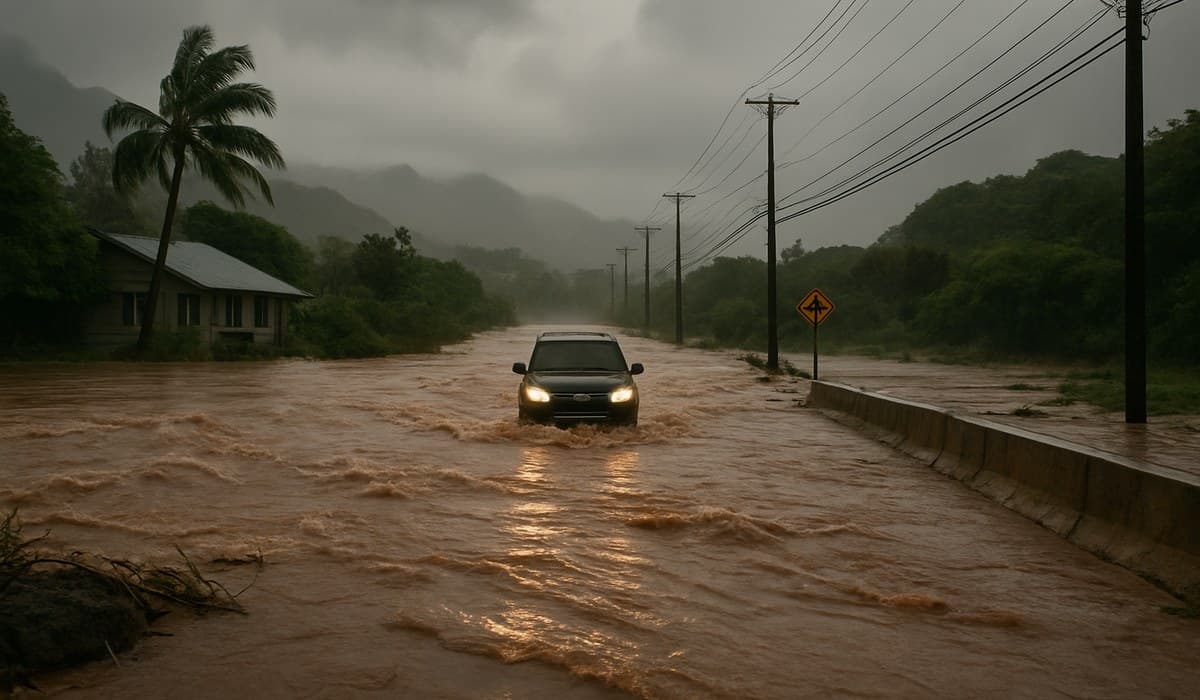
Kona Low Triggers Historic Flooding Across Hawaii, Forcing Mass Evacuations
Key Takeaways
- Kona Low 2.0 triggered historic flooding across Oahu, Maui, Molokai, and Lanai.
- Maui County evacuation warnings and advisories issued for multiple neighborhoods.
- Kona Low described as historic and rare meteorological emergency.
Historic Storm Unfolds
A historic Kona Low weather system brought unprecedented torrential rainfall and catastrophic flooding to Hawaii in March 2026.
“More news on this day A powerful Kona low storm system has unleashed Hawaii’s most severe flooding in more than two decades, inundating communities from Oahu’s North Shore to Maui, Molokai, Lanai and the Big Island, while rising waters at Oahu’s aging Wahiawa Dam have prompted mass evacuations and urgent safety warnings”
This atmospheric phenomenon, occurring once every decade or more, forced mass evacuations and created critical situations across multiple counties.
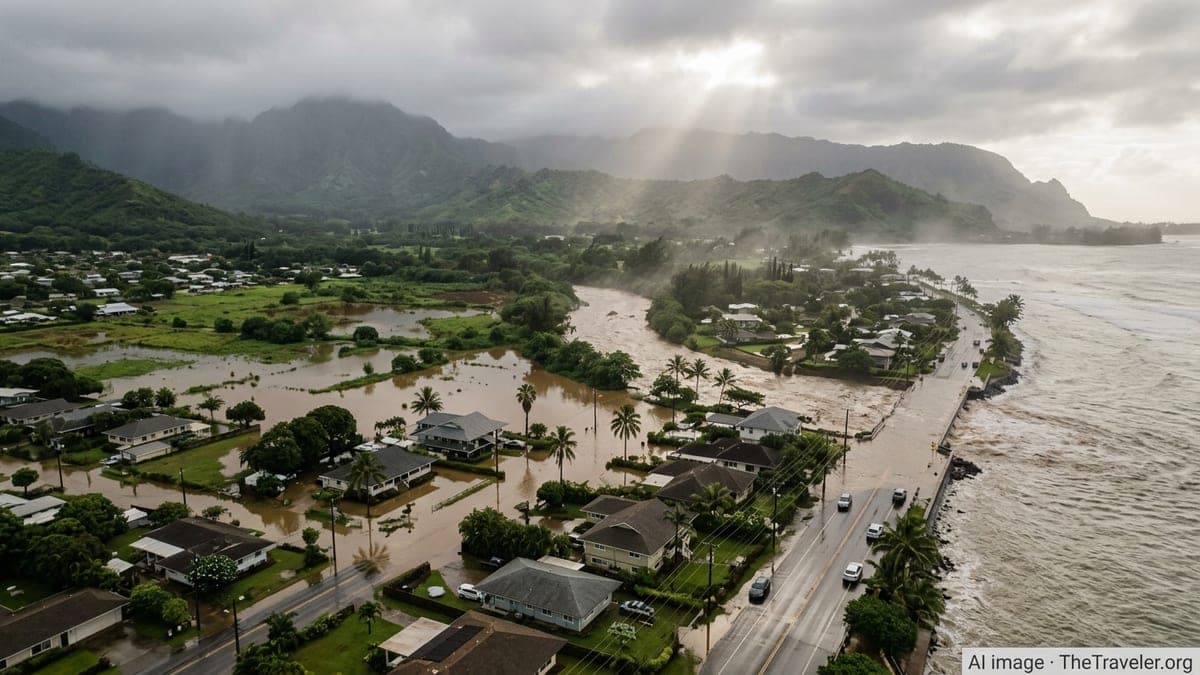
Emergency alerts issued on March 20 warned of imminent threats of dam failure or life-threatening downstream flooding as water levels continued to rise.
Sirens and text alerts urged residents in inundation zones to evacuate to higher ground.
The storm's intensity exceeded normal patterns with rainfall totals exceeding 15 inches in 24 hours in some areas.
This created a perfect storm scenario where aging infrastructure met extreme weather conditions.
The event tested Hawaii's emergency response systems and raised serious questions about long-term climate resilience.
Mass Evacuations
Mass evacuations rippled across Hawaii as authorities issued mandatory evacuation orders covering thousands of residents and tourists.
On Oahu, approximately 5,500 residents north of Honolulu were urged to leave flood-prone neighborhoods near streams and low-lying coastal areas.

Evacuation shelters were activated at school campuses and community centers, with one shelter having to be relocated due to encroaching floodwaters.
Maui's evacuation efforts were particularly poignant as advisories were upgraded to warnings for parts of Lahaina, still rebuilding from the devastating 2023 wildfires.
The on-and-off nature of evacuation orders created extended uncertainty for communities facing property damage.
Smaller islands like Molokai and Lanai became largely inaccessible as inter-island ferry services suspended operations.
Private charter flights were also grounded, isolating remote communities.
Aviation Disruptions
Hawaii's aviation infrastructure faced significant disruptions as the Kona Low grounded flights and stranded travelers.
“Digital Content Producer Kayli Pascal-Martinez, an Oahu native and Hawaiian Mission Academy graduate, earned her degree from UH West Oahu in 2024”
Daniel K. Inouye International Airport (HNL) implemented ground stops between 8 a.m. and 4 p.m. HST, affecting approximately 400 daily passengers.
Runway conditions remained suboptimal due to standing water on taxiways.
Maui's Kahului Airport (OGG) suspended operations for 18 hours on March 22 as widespread flooding inundated runway approach zones.
United Airlines and American Airlines cancelled 32 combined flights serving Maui.
Major carriers issued waivers allowing passengers to rebook without penalties.
Aloha Air Cargo continued limited operations for essential supply missions.
The disruptions impacted Hawaii's tourism economy, with resorts and tour operators adjusting schedules.
Dam Crisis
The Wahiawa Dam crisis emerged as the most critical infrastructure threat.
The aging structure rose to 96% capacity by late afternoon, triggering potential spillway activation.
Publicly available regulatory documents had long noted deficiencies at the dam, including its age and need for upgrades.
The current event brought those infrastructure concerns into sharp focus.
Billions of gallons of water pooled behind the structure while downstream communities managed ongoing flash flooding.
Monitoring data suggested reservoir height fluctuated just below the elevation associated with overtopping or structural failure.
Emergency management agencies remained vigilant as additional rounds of heavy rain remained in the forecast.
Broader Island Impact
Beyond Oahu's immediate crisis, the broader island chain experienced significant yet more dispersed impacts.
“More news on this day A powerful Kona low storm system has unleashed Hawaii’s most severe flooding in more than two decades, inundating communities from Oahu’s North Shore to Maui, Molokai, Lanai and the Big Island, while rising waters at Oahu’s aging Wahiawa Dam have prompted mass evacuations and urgent safety warnings”
On Maui, heavy showers triggered localized flash flooding in West Maui and windward valleys.
Steep topography funnels runoff into narrow gulches in these areas.
Molokai and Lanai saw intense rain and thunderstorms along with hazardous surf and strong winds.
The Big Island's Kona and windward districts faced saturated slopes sending water cascading onto highways.
Intermittent closures occurred along key corridors such as parts of Highway 11.
These secondary impacts strained emergency resources throughout the state's diverse communities.
Climate Context
Climatologists increasingly highlight the role of Kona lows in Hawaii's future.
Research suggests human-driven climate change contributes to increased intensity of heavy downpours.
This latest event aligns with emerging climate patterns from earlier winter storms.
The floods tested aging infrastructure including dams, drainage systems, and rural roads.
Questions emerged about long-term resilience for residents and tourism economy.
Public advisories recommend travelers approach island itineraries with flexibility.
Forecasts indicated the Kona low remained in the region with additional storms possible.
More on Technology and Science

OnlyFans owner Leonid Radvinsky dies at 43 after cancer battle
32 sources compared

UN Warns 2025 Heat Record Will Endure for Thousands of Years
14 sources compared

Kona Low Storms Strike Oʻahu and Maui, Hawaii Faces Worst Flooding in 20 Years
24 sources compared

Hawaii's Worst Flooding in 20 Years Threatens Dam, Prompts Evacuations as More Rain Looms
11 sources compared