Technology and Science17 May, 20263 min read
Kyverna’s CAR-T Therapy Miv-cel Targets Stiff Person Syndrome for Regulatory Approval
This article is an automated aggregation of coverage from news outlets. Our editorials offer in-depth analysis curated by the NewsCord team.
Kyverna's CAR-T therapy for stiff person syndrome nears regulatory approval. Stiff person syndrome is a rare autoimmune disorder causing muscle stiffness.
CAR-T nears approval
Kyverna Therapeutics’ CAR-T therapy miv-cel (mivocabtagene autoleucel, KYV-101) is being positioned as a potential regulatory-approval candidate for stiff person syndrome, a rare autoimmune condition that causes muscle stiffness and painful muscle spasms. Labiotech.eu says extremely rare stiff person syndrome affects around one in a million people, and it notes that there are no approved treatments for the condition while patients are often given muscle relaxants.
“Kyverna Therapeutics’ cell therapy has been making steady progress and is poised for regulatory approval.”
Kyverna’s chief medical and development officer Naji Gehchan said current off-label treatments fail the majority of people, require chronic dosing, and do not stop the progression of the disease, adding, “Current off-label treatments fail the majority of people with stiff person syndrome, require chronic dosing, and do not stop the progression of the disease,” In a study Kyverna Therapeutics conducted in 153 patients, the company tested off-label drugs using the Timed 25-Foot Walk (T25FW), and Labiotech.eu reports that the majority of patients showed minimal—less than <20%—and even no improvement while becoming increasingly reliant on walking aids over time.
CAR-T across autoimmune diseases
Beyond stiff person syndrome, iSanidad describes Bristol Myers Squibb advancing a CD19-directed CAR-T for systemic lupus erythematosus and aiming to expand it to other similar pathologies. iSanidad quotes Sandra Orta, CEO of Bristol Myers Squibb (BMS) in Spain and Portugal, warning that the draft Medicines Law must reach consensus on a regulatory framework that does not risk “the industrial fabric of our country or access to medicines.”
Orta also frames CAR-T development as part of a broader research strategy, saying BMS is one of the companies that initiates “the most early-phase clinical trials in Spain,” because multinationals tend to carry early phases to countries with research excellence. In parallel, Radio-Canada reports that a man from Quebec, Jean-Sébastien Durand, became the first Canadian patient to receive an experimental treatment to control progressive multiple sclerosis, with the call coming in March 2025 and the injection administered in June at the Integrated Cancer Center on the site of the Enfant-Jésus Hospital.

Risks, timelines, and targets
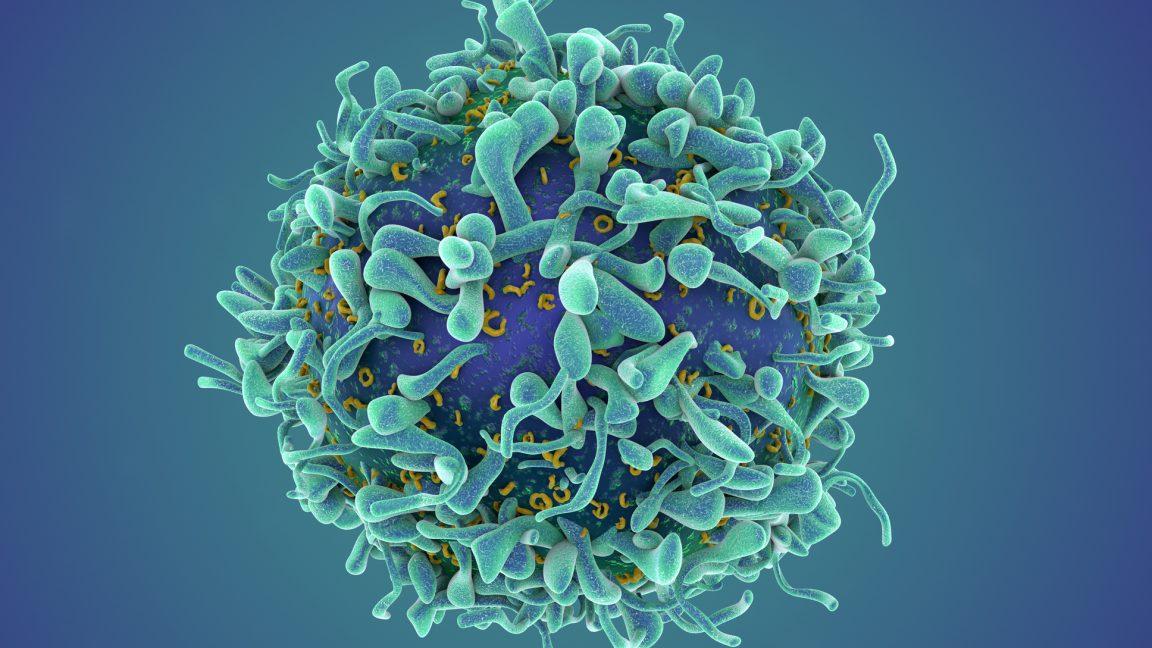
Ars Technica describes CAR T cell therapy being offered in autoimmune trials after being originally designed to target and wipe out cancer by reprogramming the patient’s immune cells, and it frames the approach as a potential “revolutionary” shift with uncertainty about how well it will work and how long benefits might last. The article says Jan Janisch-Hanzlik received the experimental treatment on June 9, 2025 at the University of Nebraska Medical Center in Omaha, near Blair, and it notes she would spend the next week being monitored for side effects including dangerous inflammation.
“Unexpected complications could arise, because cancer patients are different from those with MS.”
Doctissimo adds that CAR-T therapy in multiple sclerosis is being tested as a single-dose infusion after collecting and reprogramming a patient’s T lymphocytes, and it reports that Phase 1 trials include AUTO1-MS1 with 18 participants and Breakfree-2 with up to 120. Doctissimo also lists cancer-related risks closely monitored in people with MS, including cytokine release syndrome and neurotoxicity syndrome (ICANS), and it warns that “Unexpected complications could arise, because cancer patients are different from those with MS,” while Jeffrey Cohen says caution is warranted at this stage.