Full story
Scholar expelled in Riga
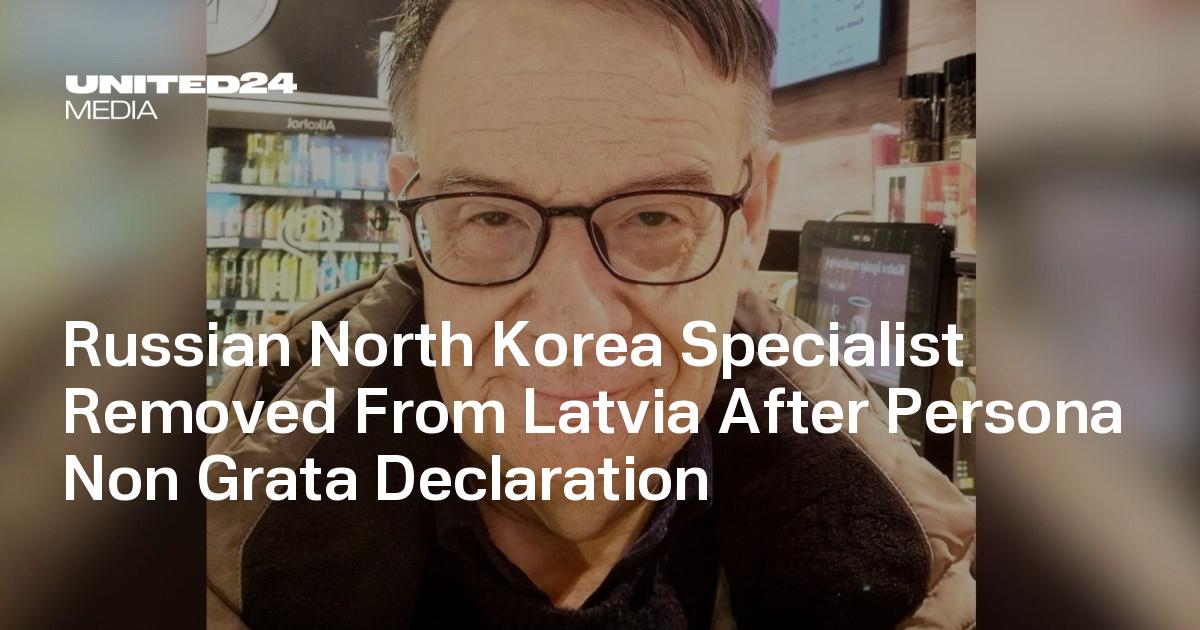
Andrei Lankov, a Russian-Australian scholar of North Korea, says he was detained by Latvian police while giving a lecture in Riga and then handed to immigration authorities and taken to the Estonian border, effectively expelled from the country, according to reporting that includes his own confirmation and institutional statements.
“Russian-born Korea expert Andrei Lankov says he was detained by Latvian police late Tuesday while giving a lecture in Riga and then handed to immigration authorities and taken to the Estonian border — effectively expelled from the country.”
The Associated Press reports Lankov’s account that he was detained late Tuesday, handed to immigration authorities and taken to the Estonian border.
Kookmin University in Seoul confirmed he was released and was heading to Estonia.
NK News records Lankov’s confirmation that he was detained in Latvia and expelled just before a scheduled public lecture.
The Moscow Times reports he was detained during the lecture, declared persona non grata and immediately expelled after police said he was on the foreign ministry’s banned-entry list.
Reports on Lankov's expulsion
Reporting differs on the procedural details surrounding Lankov's removal.
AP says he was handed to immigration authorities and taken to the Estonian border.

The Moscow Times reports police told Lankov he was on a foreign ministry banned-entry list and that he was declared persona non grata.
NK News corroborates that he was detained and expelled just before a public lecture.
All three sources note authorities provided no public reason.
The Moscow Times and AP say he subsequently reached Estonia where he was scheduled to speak again.
Lankov profile and controversies
All three sources say Lankov holds Russian and Australian citizenship and teaches at Kookmin University in Seoul.
“Lankov, a longtime North Korea scholar who teaches history at Kookmin University, holds Russian and Australian citizenship, lived in North Korea in the 1980s and is known for a realist, often critical analysis of Pyongyang — and for criticizing Russia’s war in Ukraine. In April 2025 he was fined in Moscow over alleged ties to an organization deemed “undesirable” by Russian authorities.”
AP and The Moscow Times describe him as a longtime North Korea scholar, an NK News contributor, and director at Korea Risk Group.
AP reports he lived in North Korea in the 1980s and is known for a realist, often critical, analysis of Pyongyang.
AP also reports he has criticized Russia’s war in Ukraine.
AP states that in April 2025 he was fined in Moscow over alleged ties to an organization deemed "undesirable" by Russian authorities.
Lankov expulsion reports
AP says Russian outlet RBK earlier reported he had been blacklisted.
The Moscow Times reports the Russian Anti-War Committee said Lankov’s lawyer was told of the ban last week and quotes Lankov that he believes the expulsion was due to his "excessively objective" views on North Korea.
NK News relays his confirmation of detention and expulsion without adding those attributions in the snippet provided.
None of the sources cite an official Latvian explanation in the excerpts, and both AP and The Moscow Times emphasize the lack of a public reason.