
Left Leads Paris in First Round as RN and LFI Push Across France
Key Takeaways
- Socialist Grégoire leads Paris in the first-round results.
- RN surges across France, gaining ground in multiple cities.
- Socialists maintain influence in major urban centers, including Marseille.
Paris Election Dynamics
The first round of France's 2026 municipal elections delivered significant political shifts with left-wing candidate Emmanuel Grégioire securing a commanding lead in Paris.
“This video is exclusive to subscribers”
The far-right National Rally (RN) and radical left La France Insoumise (LFI) made notable gains across the country.
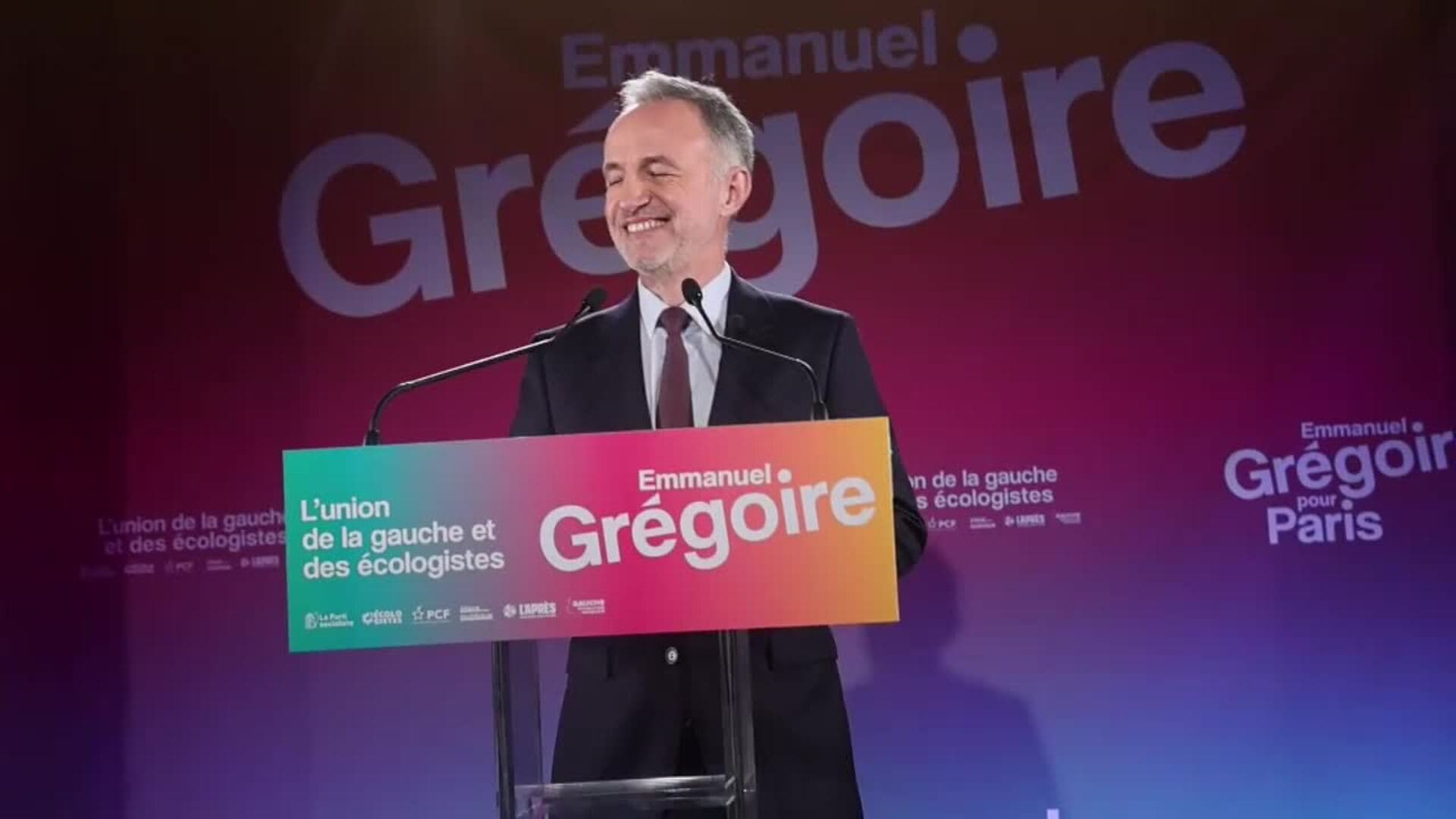
In Paris, Grégoire, leading a coalition between the Socialist Party, Greens, and PCF, won approximately 36% of the vote according to multiple polling institutes.
He placed well ahead of conservative candidate Rachida Dati who received around 24-25%.
This performance sets up a potentially complex four-way race for the second round with four candidates advancing.
The results reflect a fragmented political landscape in the capital where Grégoire seeks to continue outgoing Socialist mayor Anne Hidalgo's legacy after her twelve-year tenure.
RN Nationwide Gains
The National Rally emerged as the major beneficiary of the first round, establishing itself as a dominant force in several key cities across France.
In Toulon, RN deputy Laure Lavalette led with approximately 39-42% of the vote, significantly outperforming the incumbent mayor Josée Massi.
The southern port city of Perpignan saw RN deputy Louis Aliot re-elected in the first round with an absolute majority of 50.61%, making it the largest city with an RN mayor.
In Marseille, the incumbent left-wing mayor Benoît Payan faced a tight challenge from RN candidate Franck Allisio, with projections showing them virtually tied at around 35.4%.
RN president Jordan Bardella celebrated these results as voters expressing 'a deep desire for change' and called for alliances with 'sincere right-wing lists'.
LFI Breakthrough
La France Insoumise achieved significant breakthroughs across France, establishing itself as a major political force in multiple cities.
“In the French municipal elections, the right-wing populist Rassemblement National (RN) made a clear advance in the first round and leads in 58 municipalities”
In Roubaix, LFI candidate David Guiraud led by a wide margin with 46.56% of the vote, coming very close to winning in the first round.
The party also made substantial inroads in Saint-Denis, with LFI candidates qualifying for the second round in several major urban centers.
In Paris, LFI candidate Sophia Chikirou secured approximately 12% of the vote, qualifying for the second round.
Chikirou has announced her intention to maintain her candidacy in the second round if Emmanuel Grégoire refuses a merger, creating tension within the left coalition.
Regional Election Results
Beyond Paris, Marseille, and RN strongholds, several other major cities produced competitive races that could shape France's political landscape.
In Lyon, the incumbent Green mayor Grégory Doucet and his main rival Jean-Michel Aulas were virtually tied, with estimates showing them around 37-38% each.
In Le Havre, former Prime Minister Édouard Philippe established a commanding lead with approximately 43.8% of the vote.
The city of Nantes saw outgoing mayor Johanna Rolland (PS) heading the first round with 35%, followed by Foulques Chombart de Lauwe at 33.1%.
These results demonstrate the competitive nature of municipal politics across France and the varied fortunes of different political parties in different regions.
Political Alliances
The municipal elections have set the stage for complex second-round negotiations and potential realignments across France's political spectrum.
“Published on / Updated on With 36”
In Paris, the four-way race promises intense negotiations between Emmanuel Grégoire, Rachida Dati, Pierre-Yves Bournazel, and Sophia Chikirou.
Bournazel has already rejected any alliance with 'the extremes,' while Dati lamented that 'the division weakens us'.
Socialist Party leader Olivier Faure urged voters not to hand momentum to the National Rally as it gears up for the 2027 presidential election.
With turnout at approximately 57.6%, these municipal elections represent both a test of political machines and a preview of battles to come in next year's presidential race.
More on Europe

France's far-right gains threaten mainstream parties as mayoral vote tests 2027 presidential bid
16 sources compared
France's Municipal Elections Test Far-Right National Rally's Strength Ahead of 2027 Presidential Vote
10 sources compared
Muslim group claims responsibility for Amsterdam Jewish school explosion, mayor calls it attack on Jews
23 sources compared

Unknown Attackers Kill French Soldier in Erbil, Macron Says
11 sources compared