South America25 June, 20263 min read
Magnitude 7.5 Quake Kills At Least 920 in Venezuela, Android Alerts Reach 11.4 Million
This article is an automated aggregation of coverage from news outlets. Our editorials offer in-depth analysis curated by the NewsCord team.
Millions received Google Android Earthquake Alerts seconds before the tremor. At least 920 killed and more than 4,500 injured.

Quakes, alerts, casualties
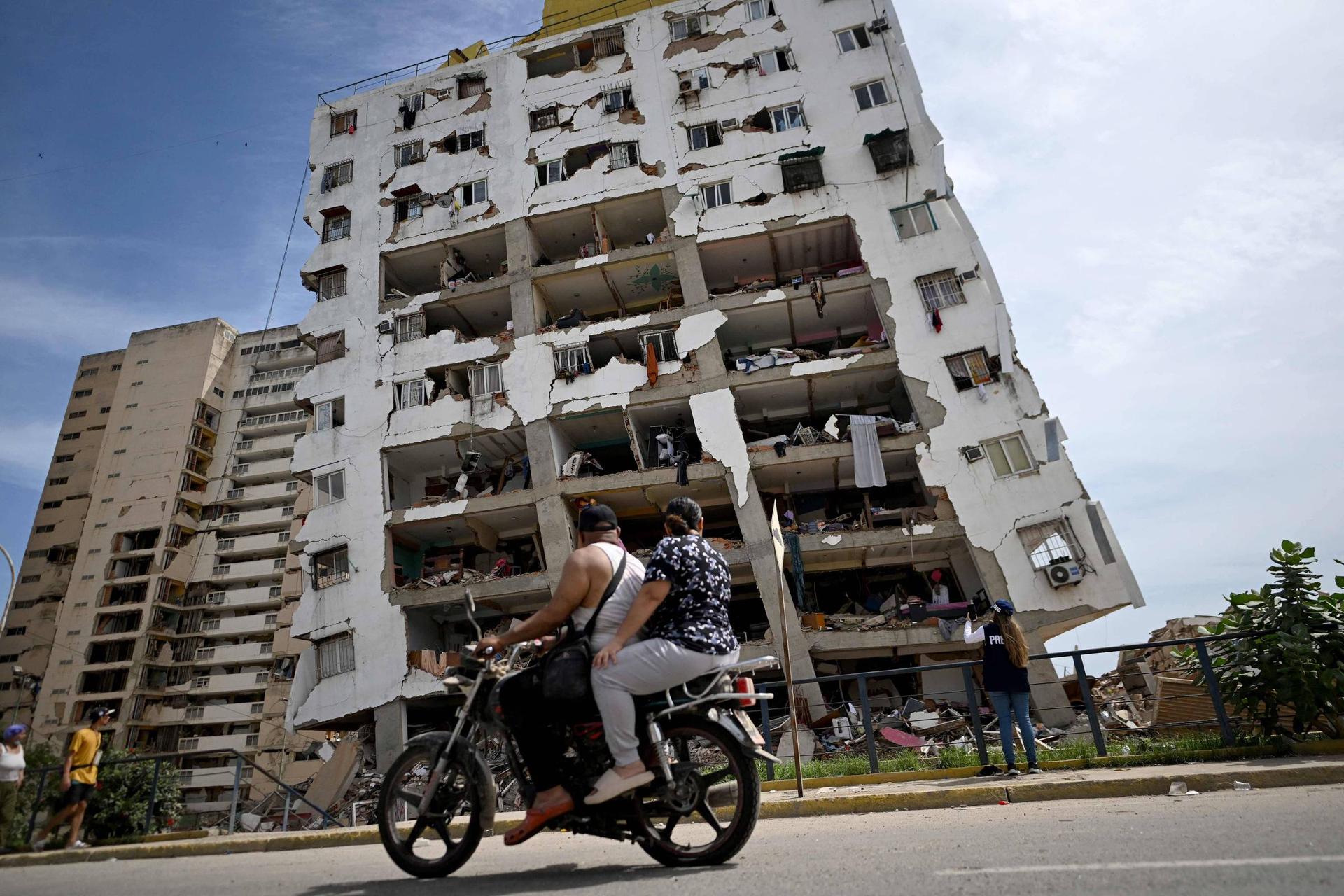
A magnitude 7.5 earthquake struck Venezuela on Wednesday, June 24, arriving 39 seconds after a magnitude 7.2 foreshock, with the epicenter in the municipality of Veroes in the state of Yaracuy in northern Venezuela. The earthquakes killed at least 920 people and left more than 4,500 injured, while the government had not confirmed that more than 50,000 people were missing as of the time of writing. In Caracas, Jose Flores was driving with his family when a loud earthquake alert went off on his wife’s Google Android phone, and six seconds later he felt the earth starting to shake.
The New York Times reported that Google’s Earthquake Alerts system sent warnings that reached 11.4 million people on Wednesday, giving users seconds or up to two minutes notice before back-to-back powerful earthquakes struck. The Christian Science Monitor described the quakes as leaving 920 people confirmed dead and more than 3,000 wounded, according to the government, and said more than 52,000 were reported missing on an independent website.
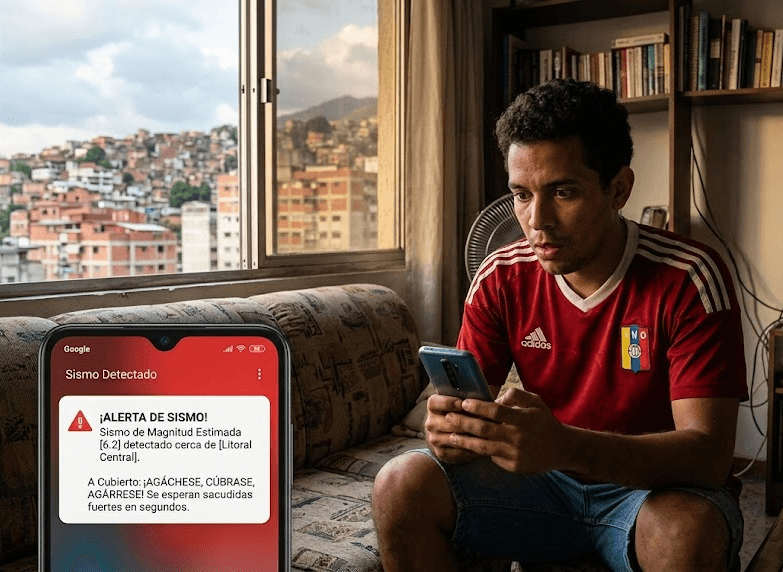
How phones warned
The New York Times said Venezuela does not have a national early warning system of its own, but people with Android phones received alerts from Google’s Earthquake Alerts system.
Google principal engineer Marc Stogaitis said, "Within three seconds, phones sensed the P-waves of the first quake," and six seconds later the system identified an earthquake and sent out the first alerts.
The system continuously received and processed data, and Mr. Stogaitis said, "the alert region grew as the earthquake grew," as the magnitude increased and the alert area expanded.
The Christian Science Monitor quoted Ramón Soto describing the shaking as "It was like a whip," and said the fifth, sixth, and seventh floors collapsed toward the basement in La Guaira.
Hindustan Times similarly framed the alerts as detection rather than prediction, quoting Nikhar Arora: "it was not Google who predicted the occurrence of the earthquake" but rather detected the earliest signs and sent out an alert.
What comes next
The Christian Science Monitor said Venezuela’s earthquakes hit at an already delicate moment, with the country emerging from overlapping humanitarian, economic, and political crises that drove nearly 8 million people to flee abroad. It also reported that in January the United States launched a military operation that ousted Nicolás Maduro, replacing him with party loyalist Delcy Rodríguez, and described the legitimacy of acting President Rodríguez as being tested by the disaster. The New York Times noted that it was too early to tell if the early warnings saved lives on Wednesday, but said several seconds can provide enough time for people to take action to protect themselves.
Folha de S.Paulo quoted USGS physicist Robert-Michael de Groot saying, "Building a complete system, like in the U.S., took decades," and described the need for many seismic stations and an efficient communication network. Folha de S.Paulo added that as of Friday, authorities confirmed 920 dead and 4,300 injured, while USGS calculated a 42% chance the total death toll would be between 10,000 and 100,000 and the UN estimated more than 50,000 missing.