
Mali Defense Minister Gen. Sadio Camara Killed in Suicide Car Bomb Attack Near Bamako
Key Takeaways
- Defense Minister Sadio Camara killed in suicide car bomb at his Kati residence near Bamako.
- Coordinated nationwide attack by jihadis and separatist rebels seized towns and bases nationwide.
- Malian government confirmed the minister's death.
Camara killed in Kati blast
Mali’s defense minister, Gen. Sadio Camara, was killed in an attack on his residence near the capital Bamako, after a suicide car bomber and other attackers struck the home in Kati on Saturday.
The Malian government confirmed his death in a post on the defense ministry’s Facebook page and state-run television broadcast the announcement by spokesman Gen. Issa Ousmane Coulibaly.
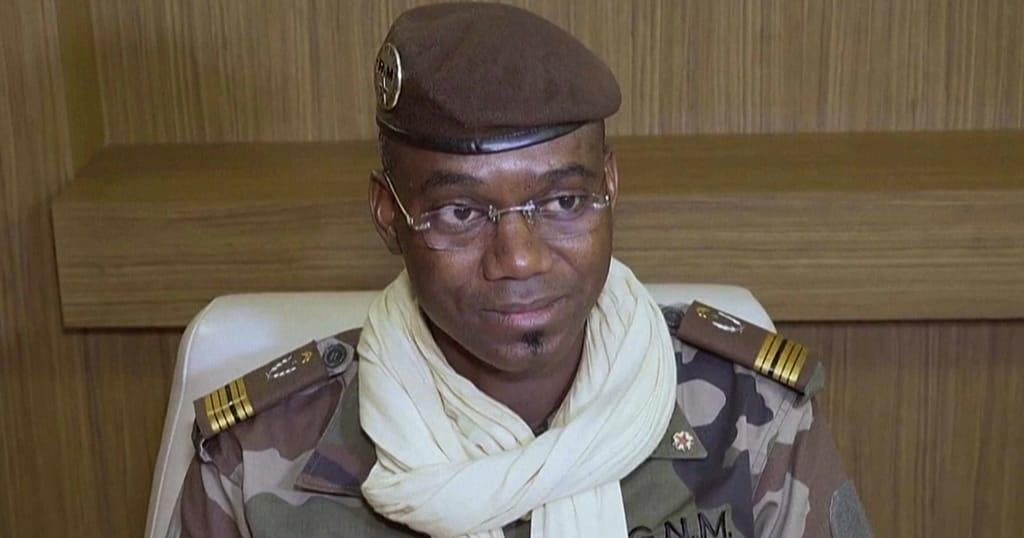
In the government account read out on state television, Camara “engaged in an exchange of fire with the assailants, some of whom he managed to neutralize,” and “During intense clashes, he was wounded and then transported to the hospital, where he unfortunately succumbed to his injuries.”
Multiple outlets described the attack as a coordinated wave that seized towns and military bases across Mali, with AP saying it was “one of the biggest coordinated attacks on its army in the capital, Bamako, and several other cities and towns.”
The BBC reported that the attack was an apparent suicide truck bombing on Camara’s residence, and said state TV confirmed he died of wounds received while engaging with the attackers.
The Guardian similarly said “A car laden with explosives driven by a suicide attacker drove into Sadio Camara’s residence in the town of Kati,” and described a firefight in which Camara sustained injuries before dying in hospital.
While the government did not provide a death toll, it previously said “at least 16 people were wounded” in what it denounced as terror attacks, according to AP and echoed by Euronews.
Kidal declared free
As Camara’s death was confirmed, separatist leaders and jihadist groups described battlefield gains that included the northern town of Kidal, with multiple reports tying the fighting to a broader, synchronized offensive.
AP said separatists claimed control of Kidal and quoted FLA spokesperson Mohamed El Maouloud Ramadan saying “Kidal is declared free,” after an agreement for a “peaceful exit” involving Russian Africa Corps troops and the Malian military.

The BBC reported that Russian mercenaries hired by Mali’s military agreed to withdraw from Kidal after two days of clashes, while the FLA said Kidal “had ‘not fallen completely’” at the time, adding that “elements of the Malian army and Russian mercenaries” were still present.
In later updates, the BBC said Ramadane told the BBC they were “permanently withdrawing from Kidal” and that “Kidal is now free,” while also noting there was “no confirmation of these claims from Mali's military.”
Euronews said the Malian army left the city and was repositioning in Anefis, a city about 100 kilometers (62 miles) south of Kidal, citing Gen. Oumar Diarra.
The Globe and Mail described the withdrawal as hundreds of Russian troops abandoning a key military base after insurgents overran Kidal, and said the Russians retreated to a former UN peacekeeping base on the outskirts of Kidal.
Arab News also reported that separatist leaders declared Kidal “free,” saying Malian forces and Russian Africa Corps troops had withdrawn following an agreement for a peaceful exit, and quoted Ramadan again: “Kidal is declared free.”
Coordination between groups
Several outlets emphasized that the weekend attacks combined separatist fighters with al-Qaeda-linked militants, describing it as an unprecedented or rare alignment.
AP said the wave of attacks was “the first time the separatists joined forces with the al-Qaida-linked group JNIM,” adding that JNIM said it was also part of the attack on Kidal and had targeted a town outside of the capital of Bamako and three other cities on Saturday.
The BBC similarly described the assault as primarily focused on northern cities while JNIM staged “simultaneous attacks on multiple locations across the country,” and quoted Ulf Laessing calling it “the largest co-ordinated jihadist attack on Mali for years.”
The Guardian said “The regional al-Qaida affiliate, Jama’at Nusrat al-Islam wal-Muslimin, known as JNIM, cooperated with a Tuareg-dominated rebel group to carry out more than half a dozen simultaneous attacks across the country,” according to claims by both groups.
In the FLA’s account, AP quoted spokesperson Mohamed El Maouloud Ramadan saying, “This operation is being carried out in partnership with the JNIM, which is also committed to defending the people against the military regime in Bamako.”
Euronews echoed the same partnership framing, quoting Ramadan: “in partnership with the JNIM, which is also committed to defending the people against the military regime in Bamako,” and reported that militants also targeted areas near Bamako and three other cities.
Wassim Nasr, a specialist for the region and senior research fellow at the Soufan Center, was quoted by AP as saying the coordination—“conducting attacks all over the country at the same time”—and the political alignment because both groups “acknowledged that they worked together.”
Reactions and official response
Malian officials, regional leaders, and international figures reacted to the attacks and to Camara’s death, while the government also took steps to tighten security in Bamako.
AP reported that Mali’s government spokesperson Coulibaly said civilian and military personnel were among the 16 wounded and that several militants were killed, while also saying the attacks appeared to be over but leaving questions about control of a key northern city.

The BBC said a nationwide alert was issued with “large-scale patrols stepped up and checkpoints reinforced to tighten security,” and that curfews were imposed in some areas, including a Bamako curfew from 21:00 to 06:00 local time expected to end on Monday.
Euronews described a three-day overnight curfew from 9 p.m. to 6 a.m. for the Bamako district, and said troops erected roadblocks around key installations as residents reported explosions and gunfire.
The BBC also reported that UN chief Antonio Guterres condemned the “acts of violence” and expressed “solidarity with the Malian people,” while Ecowas condemned the attacks.
Mahmoud Ali Youssouf, chair of the African Union Commission, said he was following the situation with “deep concern,” and Captain Ibrahim Traoré of Burkina Faso condemned the attacks as “barbaric and inhumane” and said they were “backed by the enemies of the Sahel liberation struggle.”
The separatists called on Russia to “reconsider its support for the military junta” in Mali, saying its “actions have contributed to the suffering of the civilian population,” as quoted by AP and Euronews.
Stakes for junta and Russia
The attacks and Camara’s death were framed across outlets as a major test for Mali’s junta and for Russia’s Africa Corps presence, with analysts describing setbacks and a possible need for Russian disengagement.
The Guardian said analysts and diplomats described Saturday’s operation as “one of the largest coordinated attacks in the country in recent years,” and reported that Ulf Laessing said the attack was a setback for Russia, quoting him: “For Russia the attack has been a disaster,” and “They were unable to prevent the fall of the highly symbolic Tuareg stronghold of Kidal and now need to leave this northern city.”

AP similarly quoted Wassim Nasr saying the coordination and the call for the Russian military to leave was a first, extending beyond the military to the political level because both groups “acknowledged that they worked together.”
The Globe and Mail described the offensive as a humiliating setback for Mali’s military junta and its Russian allies, and said the Russians retreated to a former UN peacekeeping base on the outskirts of Kidal after negotiations and an agreement allowing their withdrawal.
It also reported that Africa Corps acknowledged repelling a “massive offensive” and coup attempt but said the situation “remains difficult,” while making no mention of retreat from Kidal.
The Globe and Mail further said insurgents attacked the Bamako international airport, the Kati army base near Bamako, and several other military bases, and that they “shot down a Russian helicopter” and “seized most of the northern city of Gao.”
Looking ahead, the BBC said the violence would “not go unanswered” and that a nationwide alert and tightened security measures were in place, while the Guardian said Mali would observe “two days of mourning,” underscoring the immediate political and security pressure on the junta.
More on Africa
Morocco Kills Polisario Leader Lahbib Abdelaziz With Drone Attack in Western Sahara
19 sources compared
Nigeria’s Army Frees 360 Boko Haram Captives From Borno’s Mandara Mountains
12 sources compared

Truck Breakdown Kills At Least 49 Nigerien Nationals Of Thirst In Northern Niger Sahara
12 sources compared
Hundreds of Libyan Protesters Block UNHCR Office in Tripoli, Demand Closure Over Migrant Assistance
12 sources compared