USA21 May, 20263 min read
Marco Rubio Says Cuba Accepted $100 Million in U.S. Humanitarian Aid
This article is an automated aggregation of coverage from news outlets. Our editorials offer in-depth analysis curated by the NewsCord team.
Cuba accepted a $100 million U.S. humanitarian aid offer, Rubio says. Some outlets report a $140 million aid figure instead.

Aid Offer, Murder Charges
U.S. Secretary of State Marco Rubio said Cuba has accepted an offer of $US100 million ($140 million) in American aid, while warning that a negotiated settlement between the countries is "not high" as tensions continue to deteriorate.
Rubio told reporters in Miami, "They say they've accepted it," and added that the United States would not allow the aid to flow without controls, saying, "We're not going to do humanitarian aid that falls into the hands of their military company that they have."
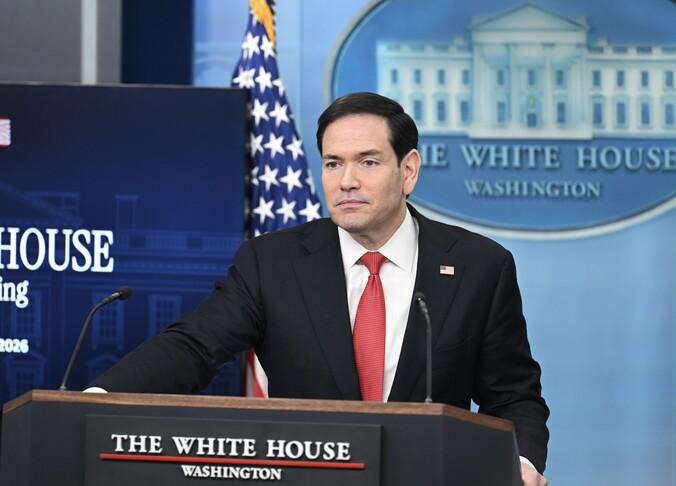
The escalation comes after the United States announced murder charges against former Cuban President Raúl Castro on Wednesday, and Rubio said the indictment in Miami over a 1996 downing of two aircraft raised speculation that President Donald Trump could use the charges as a pretext to attack the island and seize him.
In the same Reuters report, the U.S. Supreme Court ruled in an 8-1 decision that businesses could sue for compensation in a case tied to Cuba's 1959 seizure of American assets, setting aside a lower court's decision to throw out judgments against Carnival, Norwegian Cruise Line Holdings, Royal Caribbean Cruises and MSC Cruises.
The Supreme Court ruling means the four cruise operators face $US440 million in combined judgments, after the Havana Docks Corporation sued under the Helms-Burton Act for compensation over a 99-year concession for piers at the port of Havana granted in 1934.
Rubio’s Threat Framing
Rubio warned Thursday that the United States was focused on rapidly changing Cuba's communist system, describing the island 145 kilometers off the U.S. coast as a "failed state" as it suffers from a major economic crisis.
"Their economic system doesn't work. It's broken and you can't fix it with the current political system that's in place," Rubio told reporters in Miami, and he said Cuba had been "buying time" while the United States was "very serious" and "very focused."
Rubio also said, "Cuba has always posed a threat to the national security of the United States," pointing to the presence of Russian and Chinese weapons and intelligence on the island.
The U.S. military announced that the aircraft carrier USS Nimitz and its accompanying warships had entered the Caribbean, while President Donald Trump, when asked if the deployment was meant to intimidate Cuba, said, "No, not at all."
Cuban authorities called on citizens to protest the "disgusting" indictment, with the official newspaper Granma urging Cubans to gather outside the U.S. embassy in Havana on Friday morning, and Fabian Fernandez, a 30-year-old accountant, told AFP, "It's a matter of politics and public image."
Terms, Humanitarian Crisis
Multiple outlets tied the accepted $100 million aid to conditions and distribution plans, with Rubio saying the offer was accepted but that it would depend on whether the United States could ensure it did not fall into the hands of Cuba's military-backed enterprise. An Anadolu Ajansı report said Rubio told reporters, "They say they've accepted it," and it added that the U.S. pledged $100 million in collaboration with the Catholic Church, proposing distribution through the Church and other independent organizations rather than the Cuban government. Cuba's response was cautious, with the report quoting Cuban President Miguel Diaz-Canel saying his government would be willing to accept the assistance "if the US government is truly willing to provide assistance in the amount it has announced, and in full accordance with universally recognized humanitarian aid practices."
The humanitarian backdrop described in the same coverage included power outages of up to 20 hours a day and running taps, and it said the economic crisis has escalated after Washington cut off oil supplies to the island. In NewsNation’s account of daily life, a U.S. relief worker, Brian Trascher of the United Cajun Navy, said, "Cuba is a tale of haves and have-nots," describing blackouts lasting up to 23 hours a day and fuel available only to government officials and tourists.