Russia · 21 May, 2026 · 3 min read
Maria Zakharova Says Russia Will Help Iran And U.S. Implement Enriched Uranium Agreements
Russia will help Iran and the U.S. implement enriched uranium agreements from negotiations. Iran nuclear issue can only be resolved through diplomacy accounting for Iranian interests.
Whether diplomacy is making progress.
11 of 12 outlets skipped it: iran’s proposal via Pakistan uses prior rejected terms.
PressTV was read line by line by the Watchdog: 4.1. See the score →
19outlets compared
Same story, two versions
tap a side to read it in full
Signals competing assessments of momentum toward settlement.
Russia backs uranium talks
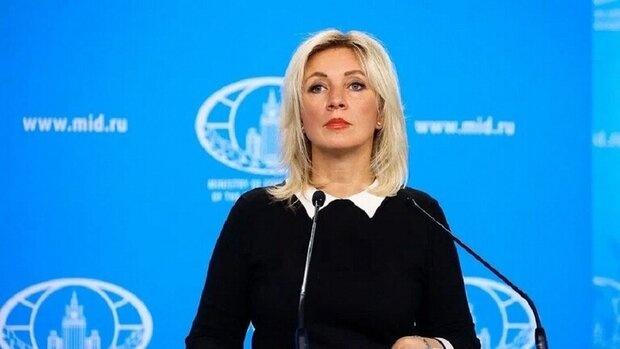
Russian Foreign Ministry spokeswoman Maria Zakharova said Moscow is fully prepared to help Iran and the United States implement any agreements on enriched uranium reached in negotiations, while reiterating Russia’s position on Iran’s right to develop a peaceful nuclear program under the Treaty on the Non-Proliferation of Nuclear Weapons. Zakharova told reporters that “Only the Iranian people can decide how to exercise this right, including in the context of uranium enrichment and the nuclear material at their disposal,” and she said the issue “can only be resolved through political and diplomatic means.”
In a separate report, Zakharova also said Moscow is “fully committed to providing the necessary assistance to Tehran and Washington in carrying out any decisions that may be reached during the negotiations,” and she declined to disclose details of the talks, saying they were continuing “behind closed doors.” The same Reuters-based reporting described the negotiations as centered on Iran’s enriched uranium programme, with the dispute framed around decisions on uranium enrichment and nuclear material management that Russia says should remain solely in Iranian hands.

US, Iran clash over terms
US Secretary of State Marco Rubio said there were “some good signs” in talks, but he warned a diplomatic solution would be “unfeasible if Tehran implemented a tolling system in the Strait of Hormuz.”
Rubio also said, “We want it open, we want it free. We don't want tolls,” framing Trump’s position that the Strait of Hormuz is “an international waterway.”

The Express Tribune report said Iran’s Revolutionary Guards warned that renewed attacks would trigger retaliation beyond its region, and it described Tehran’s latest offer as repeating terms Trump previously rejected, including demands for control of the Strait of Hormuz, compensation for war damage, lifting of sanctions, release of frozen assets and withdrawal of US troops.T
In the same reporting, Iran’s deputy foreign minister restated Tehran’s claims to sovereignty over the strait, saying aggression from the US, Israel and some regional states had “fundamentally altered security in the waterway,” while a legal commentary by Kazem Gharibabadi argued Iran could adopt “practical and proportionate measures” under international law.
Negotiations, pressure, and risk
Russian Deputy Foreign Minister Sergei Ryabkov accused the United States and Israel of trying to provoke Iran and push it toward violent and escalatory responses, saying the pressures related to the Iranian nuclear issue aim to push Tehran to take dangerous steps that could include withdrawing from the Nuclear Non-Proliferation Treaty. Ryabkov also argued that bombing nuclear facilities inside Iran disrupted the IAEA’s ability to conduct verification and monitoring on Iranian soil, and he said the United States and Israel refused to provide guarantees preventing future attacks, which he said threatens “the foundations of the Nuclear Non-Proliferation Treaty.”
In parallel, a separate Russian framing from Zakharova emphasized that the Iranian nuclear issue can only be resolved through political and diplomatic means “based on international law and with due regard for Iran’s interests,” and she said she was “not fully aware of the details of the exchange of messages between Iran and America.” The PressTV report added that Iranian officials confirmed the exchange of messages between Tehran and Washington is continuing under Pakistani mediation, and it said the exchange comes after the cessation of the US-Israeli war of aggression on Iran, which PressTV said started on February 28 with the assassination of Ayatollah Seyyed Ali Khamenei.